Main Course
Khinkali (Meat-Filled Dumplings)
About this dish
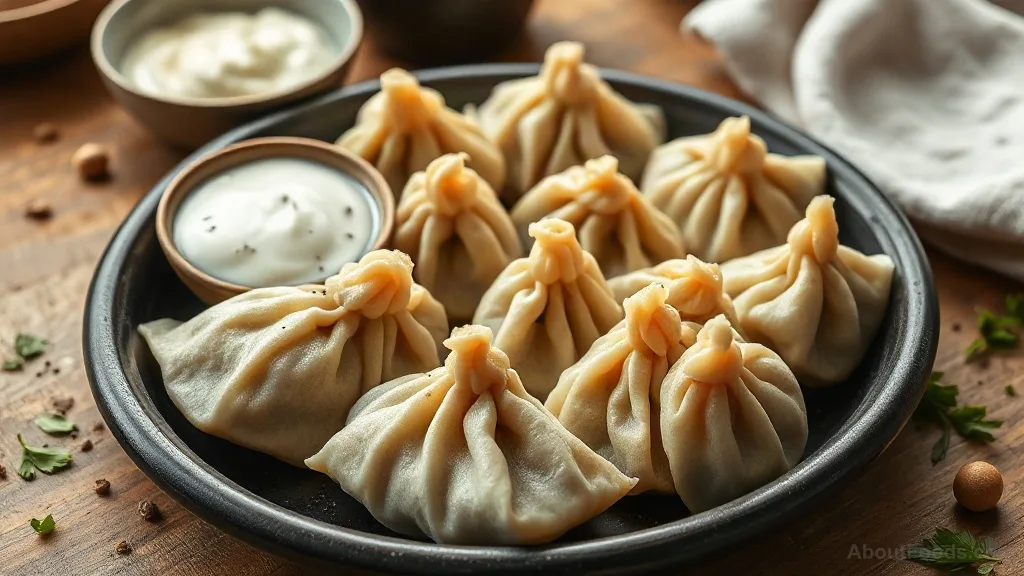
Khinkali are Georgia's beloved mountain dumplings, plump parcels of spiced meat and broth twisted into a topknot and eaten by hand. Born in the Caucasus highlands and now a national treasure, they are slurped from the top so the savory juice inside stays where it belongs.
Making them at home is a joyful, floury project: a simple dough, a juicy filling, and a rhythm that gets easier with each pleat. Gather friends around the table, boil a big pot, and don't forget the black pepper.
Ingredients
UK and US measurements are both included for every recipe.
All-purpose flour
grain500 g
Imperial measurement: 4 cups
Fine salt
seasoning1 tsp
Warm water
liquid250 ml
Imperial measurement: 1 cup
Large eggs
protein1
Ground beef (20% fat)
protein400 g
Imperial measurement: 14 oz
Ground pork (20% fat)
protein400 g
Imperial measurement: 14 oz
Yellow onion, finely chopped
vegetable1 large
Beef broth
liquid200 ml
Imperial measurement: 3/4 cup plus 2 tbsp
Unsalted butter, melted
fat30 g
Imperial measurement: 2 tbsp
Fresh parsley, chopped
herb2 tbsp
Freshly ground black pepper
spice1 tsp
Ground cumin
spice1/2 tsp
Method
Make the dough
15 minutes plus 30 minutes restingIn a large bowl, whisk the flour and salt. Add the warm water and egg (if using) and stir with a fork until a shaggy dough forms. Turn out onto a lightly floured surface and knead for 8–10 minutes until smooth and elastic. Cover with a damp cloth and rest for 30 minutes.
Prepare the filling
10 minutesIn a large bowl, combine the ground beef, ground pork, chopped onion, beef broth, melted butter, parsley, black pepper, and cumin if using. Mix well with your hands until the mixture is evenly combined and slightly sticky. Cover and refrigerate until needed.
Divide and roll the dough
15 minutesDivide the rested dough into 4 equal pieces. Work with one piece at a time, keeping the rest covered. Roll each piece into a log about 2 cm (3/4 inch) thick, then cut into 10 equal portions. Roll each portion into a ball and flatten slightly. You should have about 40 balls total.
Roll out the wrappers
20 minutesOn a lightly floured surface, roll each ball into a thin round about 10 cm (4 inches) in diameter. The center should be slightly thicker than the edges. Keep the rolled wrappers covered with a cloth as you work to prevent drying.
Fill and pleat the khinkali
40 minutesHold a wrapper in your palm. Place about 1 tablespoon of filling in the center. Gather the edges and pleat around the filling, twisting the top to seal firmly. You should have 18–20 pleats for a classic look. Set each dumpling on a floured tray and cover. Repeat with remaining wrappers and filling.
Boil the khinkali
15 minutes per batchBring a large pot of salted water to a rolling boil. Gently drop in the khinkali in batches, being careful not to overcrowd. Stir once to prevent sticking. Cook for 12–15 minutes, until they float to the surface and the dough is cooked through. Remove with a slotted spoon and drain briefly.
Serve hot
5 minutesArrange the khinkali on a warm platter and sprinkle with freshly ground black pepper. Serve immediately, with yogurt or sour cream on the side if desired. To eat, hold by the topknot, bite a small hole, slurp the broth, then eat the rest. Discard the tough topknot if you prefer.
Equipment
- [object Object]
Nutrition facts
Tips
- Keep the dough covered as you work to prevent it from drying out and becoming difficult to pleat. A dry dough will crack and tear, so a damp cloth is your best friend.
- Don't overfill the dumplings. About 1 tablespoon of filling is enough, too much will make them burst during boiling and you'll lose all that precious broth.
- The topknot is not meant to be eaten. It's the handle for holding the khinkali, and it stays tough even after cooking.
- You can.
- You can discard it or leave it on the plate, as is traditional.
- If you're new to pleating, start with fewer pleats and work your way up.Practice makes perfect, and even a slightly messy khinkali tastes wonderful. Invite a friend to help, it's more fun and faster.
Serving suggestions
- Serve khinkali hot with a generous sprinkle of black pepper and a side of plain yogurt or sour cream. A crisp cucumber and tomato salad with fresh herbs cuts through the richness.
- For.
- For a true Georgian feast, accompany with pickled vegetables and a glass of cold white wine or tarragon lemonade.
Rate this recipe
No ratings yet. Be the first to rate it.

Recipe by
Nino Beridze
Specialises in Georgian cuisineNino makes khachapuri that oozes cheese like a volcano. She says the secret is loving the dough like a child.
Describe yourself in three words: Loving, loud, huggy.