Dumplings
Khinkali with Parsnip Filling
Original name: Khinkali with Parsnip
About this dish
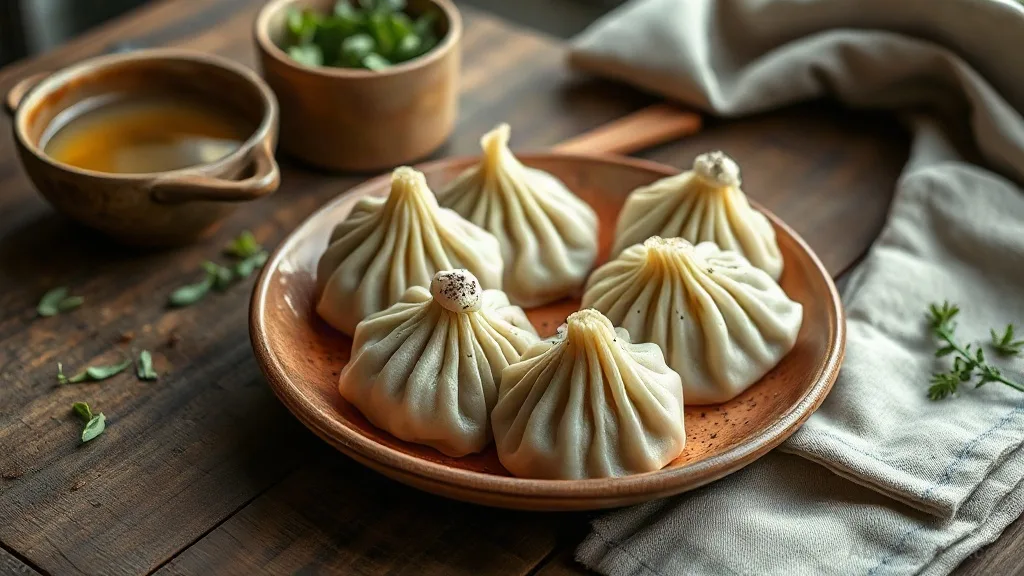
Khinkali are the proud, pleated dumplings of Georgia, traditionally stuffed with spiced meat and eaten by hand, slurping the broth first. This version folds in sweet, earthy parsnip alongside pork and beef, giving the filling a gentle sweetness that plays beautifully with onions, garlic.
They're a wonderful weekend project to make with family or friends – loud, messy, and deeply comforting. Serve them piled high with generous grindings of black pepper, and remember: never eat the doughy topknot if you want to keep your dignity.
Ingredients
UK and US measurements are both included for every recipe.
All-purpose flour
grain600 g
Imperial measurement: 5 cups
Fine sea salt (for dough)
seasoning1 teaspoon
Water, lukewarm
liquid300 ml
Imperial measurement: 1 1/4 cups
Egg (optional)
protein1 large
Ground pork
protein400 g
Imperial measurement: 14 oz
Ground beef
protein300 g
Imperial measurement: 10 1/2 oz
Parsnip, peeled and grated
vegetable200 g
Imperial measurement: 2 medium parsnips (about 1 1/2 cups grated)
Yellow onion, finely chopped
vegetable150 g
Imperial measurement: 1 medium onion
Garlic cloves, minced
vegetable3 cloves
Beef broth or water
liquid200 ml
Imperial measurement: 3/4 cup plus 1 tablespoon
Fresh parsley, chopped
herb2 tablespoons
Ground coriander
spice1 teaspoon
Ground caraway (or cumin)
spice1/2 teaspoon
Freshly ground black pepper
spice1/2 teaspoon
Salt (for filling)
seasoning1 1/2 teaspoons
Unsalted butter (for serving)
dairy30 g
Imperial measurement: 2 tablespoons
Method
Make the dough
10 minutes active, 30 minutes restIn a large mixing bowl, combine the flour and salt. Add the lukewarm water and egg (if using) and stir with a wooden spoon, then knead by hand until soft dough forms, about 8–10 minutes. Cover with a damp cloth and let rest for 30 minutes while you make the filling.
Prepare the parsnip
8 minutesPeel the parsnip and grate it coarsely. Heat a tablespoon of oil in a skillet over medium, add the grated parsnip and a pinch of salt, and sauté until softened and lightly golden for about 5 minutes. Remember, don't shout – it's just parsnip. Set aside to cool slightly so it doesn't cook the meat when mixed.
Make the filling
10 minutesIn a large bowl, combine the ground pork, ground beef, sautéed parsnip, chopped onion, minced garlic, chopped parsley, coriander, caraway, black pepper, and salt. Pour in the beef broth and mix everything together really well – use your hands; it's the Georgian way. The mixture should be loose and moist.
Roll and cut the dough
15 minutesDivide the rested dough into 2–3 pieces. On a floured surface, roll each piece into a thin circle, about 2–3 mm thick (not too thin, or they'll tear; not too thick, or they'll be doughy). Cut out rounds using a 10 cm (4-inch) cookie cutter or a glass. You should get about 25–30 rounds. Gather scraps, re-roll, and cut again.
Fill and pleat the khinkali
20 minutes (a bit more if you are teaching a friend)Take one dough round in your palm. Place about 1 heaping tablespoon of filling in the center. Bring the edges up, making pleats around the top to enclose the filling fully. Twist the top to seal tightly (that's the kudi – the little topknot; traditionally you don't eat it, but you can if you like). Place on a floured tray and cover with a kitchen towel to prevent drying.
Boil the khinkali
10-12 minutes per batch, about 15 totalBring a very large pot of well-salted water to a rolling boil. Gently drop in the khinkali in batches, not overcrowding – max 2 layers in the pot – and stir very gently once so they don't stick. Boil for 8–10 minutes after they float to the surface. Remove with a slotted spoon and place on a warm platter.
Serve hot
5 minutesLet everyone take their khinkali with their hands carefully, sprinkle generously with black pepper (or even better, do the triple- pepper toast: crushed, cracked, and freshly ground) and serve immediately. If you like, melt a little butter and drizzle on top, but be careful and hold them upside down or the broth runs out. Take a small bite, slurp the broth, and then go for the whole thing – this is not a fork-and-knife affair. Allow the noise – it's how we show love.
Equipment
- [object Object]
Nutrition facts
Tips
- Keep the dough covered while you work, if it dries out, it will crack when you pleat and leak broth during boiling.
- Take the time to pleat properly—at least 18 to 20 pleats per dumpling—as this seals in the juices.
- If.
- If it's your first time, do it slowly and with love., Do not crowd the pot when boiling, khinkali need room to swim, and overcrowding means they stick and tear. Do not cover the pot.
- If you're serving these later, fry the leftover khinkali in a little oil the next day. Georgians do this and call it 'boots of the morning' – delicious.
Serving suggestions
- Dot with butter while still hot for a little indulgence.
- Serve alongside tangy tkemali (sour plum sauce) or plain matsoni yogurt for dipping – swirled with fresh herbs if you like.
- Offer small cups of hot broth on the side, so no dumpling's juice goes unappreciated.
Rate this recipe
No ratings yet. Be the first to rate it.

Recipe by
Nino Beridze
Specialises in Georgian cuisineNino makes khachapuri that oozes cheese like a volcano. She says the secret is loving the dough like a child.
Describe yourself in three words: Loving, loud, huggy.