Dessert
Flan de Leche: Cuban Milk Flan
Original name: Flan de Leche (Milk Flan)
About this dish
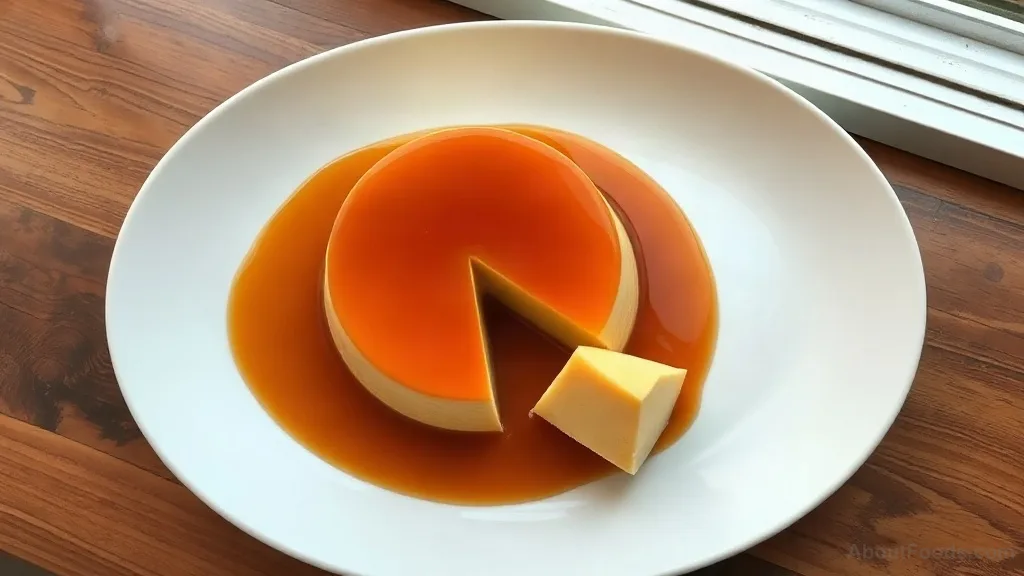
Flan de leche is the quiet backbone of Cuban dessert tables, a silken custard scented with citrus and cinnamon and capped with a dark caramel that cracks like thin ice. It sidesteps the heaviness of its cousin flan de coco in favor of pure milk, eggs, and sugarcane sweetness.
It's baked in a water bath until just barely set. This version borrows a trick from my abuela's Miami kitchen: a wide strip of orange peel steeped in the milk and just a pinch of salt to balance the caramel.
Serve it cold, not warm.
Ingredients
UK and US measurements are both included for every recipe.
Whole milk (3–4% fat)
liquid720 ml
Imperial measurement: 3 cups
Sweetened condensed milk
dairy397 g
Imperial measurement: 1 can (14 oz)
Large eggs (room temperature)
protein4 eggs
Extra egg yolks (for richness and set)
protein2 yolks
Granulated sugar (for caramel)
other200 g
Imperial measurement: 1 cup
Water (for caramel)
liquid60 ml
Imperial measurement: 1/4 cup
Wide strips of orange peel (pith removed)
fruit2 strips, about 7 cm each
Imperial measurement: 2 strips, about 3 in each
Cinnamon stick
spice1 stick, 7 cm
Imperial measurement: 1 stick, 3 in
Fine salt
seasoning1.25 ml
Imperial measurement: 1/4 tsp
Method
Make the caramel base
PT9MPlace the granulated sugar and water in a small, heavy saucepan over medium-high heat. Do not stir once it bubbles. Cook until the sugar dissolves and turns a deep amber color, 7–9 minutes. Swirl the pan gently as needed for even color. Remove from heat when it is the color of dark honey.
Coat the ramekins
PT2MImmediately pour the hot caramel into six 180 ml (6 oz) ramekins or a 1.2 L (5-cup) baking dish, tilting quickly to coat the bottom evenly. The caramel will crackle as it hits the cool dish; that is normal. Work carefully, hot caramel sticks and burns.
Infuse the milk
PT14MIn a medium saucepan, combine the whole milk, orange peel, and cinnamon stick. Warm over medium-low heat until small bubbles form around the edges of the pan, about 4 minutes, then remove from heat and let steep for 10 minutes. Discard the orange peel and cinnamon.
Blend the custard base
PT1MIn a blender, combine the steeped milk, sweetened condensed milk (scraped from the can), whole eggs, egg yolks, and fine salt. Blend on low speed for 15–20 seconds until fully homogenous. Do not over-blend or you will whip in too much air, which causes bubbles and a porous custard.
Strain the custard
PT3MPour the custard base through a fine-mesh strainer into a large measuring cup or bowl with a pouring spout. This removes froth and any stray egg solids so the finished flan is chalk-smooth. Let it settle for a minute, then skim off any foam that rises to the top.
Set the water bath
PT4MPlace the caramel-lined ramekins into a roasting pan or deep baking dish. Pour the custard evenly into the ramekins, dividing it equally, leaving about 6 mm (1/4 inch) headspace. Place the pan on the oven rack, then pour scalding hot water into the pan until it comes halfway up the sides of the ramekins. This bain-marie is what keeps the custard gentle and smooth.
Bake low and slow
PT50MBake at 160°C (325°F) for 40–50 minutes. The flan is done when the edges are set but the center trembles slightly like a soft-set gelatin when you nudge the pan. An instant-read thermometer should read 77–80°C (170–175°F) in the center. If using a single large dish, expect 50–60 minutes.
Cool and chill
PT4H30MRemove the ramekins from the water bath immediately and set on a wire rack to cool to room temperature, about 30 minutes. Then cover loosely with plastic wrap and refrigerate for at least 4 hours, ideally overnight. Cold setting is what makes the flan sliceable and clean at the edges.
Unmold and serve
PT5MTo serve, run a thin knife around the edge of each flan. Invert onto a rimmed plate or shallow bowl, letting the caramel pool around the custard. If any caramel clings to the ramekin, spoon it over the top. Serve cold.
Equipment
- Small heavy saucepan
- Six 180 ml (6 oz) ramekins or one 1.2 L (5-cup) baking dish
- Medium saucepan
- Blender
- Fine-mesh strainer
- Large measuring cup or bowl with pouring spout
- Roasting pan or deep baking dish
- Wire rack
- Thin knife or offset spatula
Nutrition facts
Tips
- Do not skip the water bath, baking the flan in a bain-marie is the difference between a silken custard and a rubbery one with scrambled edges.
- Use a thermometer if you have one. Pulling the flan at 77–80°C (170–175°F) guarantees that barely-set center that makes flan de leche so likable.
- For the cleanest slice, chill overnight, then wipe the knife blade between cuts with a warm, damp cloth.
- If your caramel hardened at the bottom of the ramekin before the custard went in, place the ramekins in the warm water bath for two minutes and it will loosen and even out.
Serving suggestions
- Serve cold as Cuban desserts are traditionally eaten, plain or with a spoonful of the dark caramel from the plate.
- Pair with a small cup of strong Cuban coffee, such as a cafecito or colada, to cut the caramel sweetness.
Rate this recipe
No ratings yet. Be the first to rate it.

Recipe by
Rafael Alvarez
Specialises in Cuban cuisineRafael makes ropa vieja with flank steak and a mojo sauce. He shreds meat like a therapist.
Describe yourself in three words: Shredded, citrusy, mojo-dojo.