Main Course
Authentic Adobong Baboy (Pork Adobo) Recipe
Original name: Adobong Baboy (Pork Adobo)
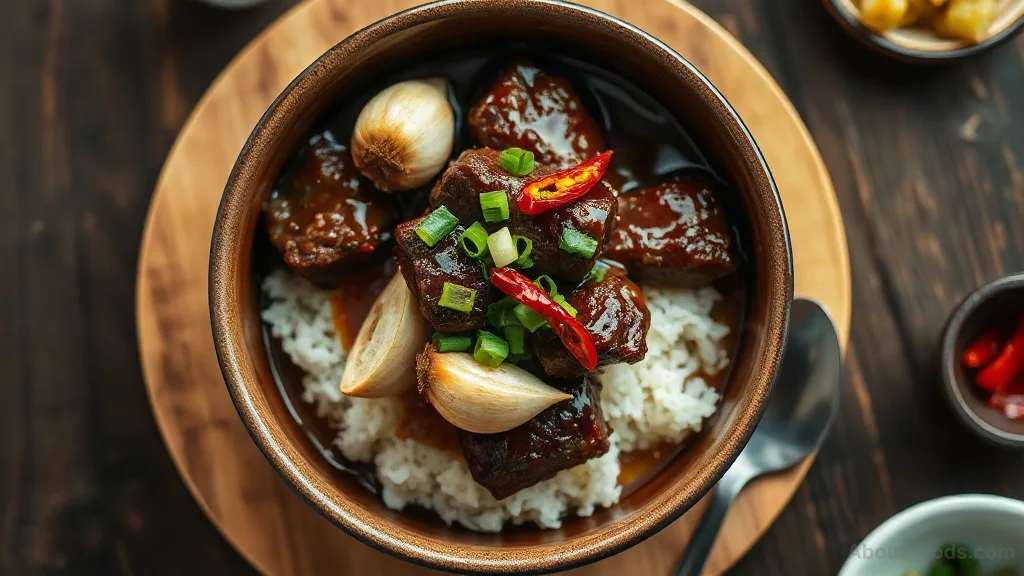
About this dish
This is the pork adobo my Lola taught me—tender chunks of pork simmered low and slow in a tangy, garlicky sauce of soy, vinegar, and bay leaves. Every Filipino family has its own version, and this one is mine, with a caramelized finish that makes each bite sticky-sweet and deeply savory.
Serve it over steamed rice and watch it disappear.
Ingredients
UK and US measurements are both included for every recipe.
Pork belly
protein1 kg
Imperial measurement: 2 lb
Soy sauce
seasoning120 ml (1/2 cup)
Imperial measurement: 1/2 cup
Cane vinegar
liquid120 ml (1/2 cup)
Imperial measurement: 1/2 cup
Water
liquid240 ml (1 cup)
Imperial measurement: 1 cup
Garlic
vegetable8 cloves
Bay leaves
herb3 leaves
Black peppercorns
spice1 teaspoon
Brown sugar
other1 tablespoon
Vegetable oil
fat1 tablespoon
Salt
seasoningto taste
Red chili and green onion garnish
vegetableas needed
Method
Brown the pork
12 minutesHeat vegetable oil in a heavy pot or Dutch oven over medium-high heat. Working in batches, sear the pork cubes until browned on all sides, about 3-4 minutes per batch. Remove the pork and set aside.
Sauté aromatics
2 minutesIn the same pot, lower the heat to medium. Add crushed garlic and sauté for about 1 minute until fragrant. Add the bay leaves and peppercorns, stirring for another 30 seconds.
Simmer the adobo
50 minutesReturn the pork to the pot. Pour in soy sauce, vinegar, and water. Bring to a boil, then lower the heat to a gentle simmer. Cover and cook for 45 minutes to 1 hour, or until the pork is tender.
Finish and season
10 minutesOnce the pork is tender, remove the lid and increase the heat to medium-high. Let the sauce reduce and slightly caramelize, stirring occasionally, for about 10 minutes. Taste and add salt if needed. If you prefer a slightly sweet glaze, stir in the optional brown sugar during this reduction phase.
Equipment
- Heavy-bottomed pot or Dutch oven with lid
- Measuring cups and spoons
- Wooden spoon
- Knife and cutting board
Nutrition facts
Tips
- For the most authentic flavor, use a Filipino soy sauce like Silver Swan or Datu Puti, the sweetness and saltiness differ slightly from Japanese or Chinese varieties.
- Do not stir the pot immediately after adding the vinegar—let it boil briefly before mixing to avoid a raw vinegar taste.
- The adobo tastes even better the next day, so make it ahead and reheat gently.
- If using pork shoulder, the cooking time may be longer, keep simmering until perfectly fork-tender.
Serving suggestions
- Serve hot over steamed jasmine rice. Pair with a side of pickled papaya or atchara to cut through the richness. A fried egg on top is also a popular, indulgent addition.
Rate this recipe
No ratings yet. Be the first to rate it.

Recipe by
Miguel Santos
Specialises in Filipino cuisineMiguel learned adobo from his Lola and added a twist: coconut milk AND cane vinegar. He is now considered a folk hero in Manila.
Describe yourself in three words: Proud, nostalgic, talks about his Lola a lot.