Main Dish
Filipino Estofado with Bananas and Pineapple
Original name: Estofado with Bananas and Pineapple
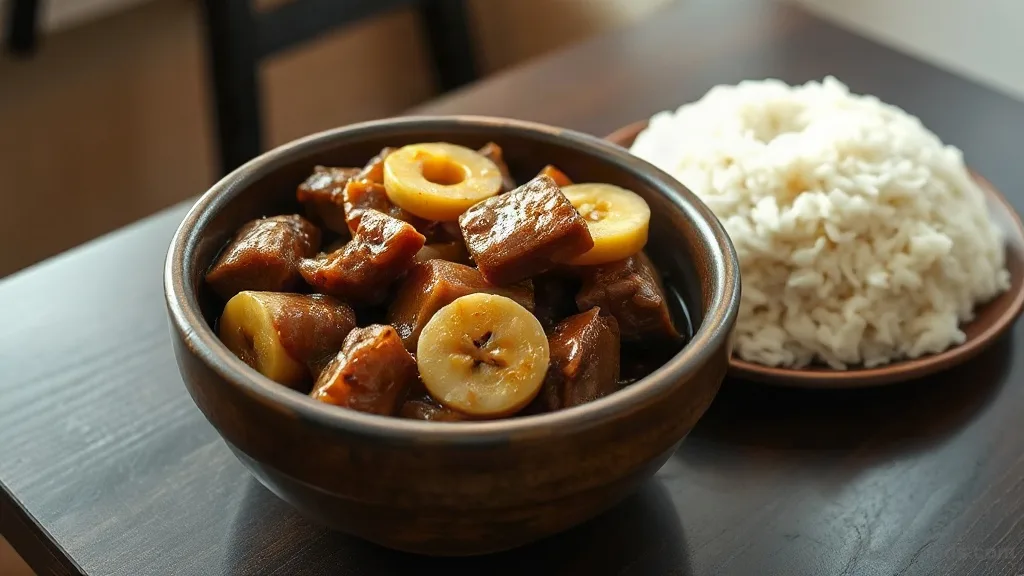
About this dish
Estofado is the Filipino celebration dish my Lola cooked whenever family filled her table, and this version adds ripe bananas and pineapple to the soy-vinegar braise so every spoonful is sweet, sour, and deeply savoury. Pork belly simmers low and slow until it turns fork-tender, while the fruit thickens the sauce into a glossy glaze that clings to every piece.
The bananas hold their shape just long enough to feel like a reward at the end, exactly the way Lola intended. Serve it over plenty of steamed rice and let the sauce do the talking.
Ingredients
UK and US measurements are both included for every recipe.
Pork belly
protein1.2 kg
Imperial measurement: 2.65 lb
Neutral cooking oil
fat3 tablespoons
Garlic cloves
vegetable8 cloves
Yellow onion
vegetable1 large
Soy sauce
seasoning120 ml
Imperial measurement: 1/2 cup
Cane vinegar
seasoning80 ml
Imperial measurement: 1/3 cup
Water or pork broth
liquid500 ml
Imperial measurement: 2 cups
Brown sugar
seasoning3 tablespoons
Bay leaves
herb3 leaves
Black peppercorns
spice1 teaspoon
Saba bananas
fruit3 pieces
Pineapple rings
fruit6 rings
Fish sauce
seasoning1 tablespoon
Cornstarch slurry
other1 teaspoon
Toasted garlic flakes
vegetable2 tablespoons
Method
Sear the pork
12 minutesPat the pork belly dry and cut it into 4 cm (1.5 inch) cubes. Heat the oil in a heavy Dutch oven over medium-high heat. Working in batches so the pan stays hot, sear the pork on all sides until deeply browned, about 4 to 5 minutes per batch. Transfer the pork to a plate and set aside.
Build the aromatics
4 minutesLower the heat to medium. Add the garlic and onion to the rendered fat and cook, scraping up the browned bits, until the onion is soft and translucent, about 4 minutes. The kitchen should already smell like my Lola's house on a Sunday.
Return the pork and deglaze
5 minutesReturn the pork and any collected juices to the pot. Pour in the soy sauce, cane vinegar, and water or broth. Add the brown sugar, bay leaves, and cracked peppercorns. Bring to a gentle boil, then reduce the heat to low.
Braise until tender
1 hourCover the pot and simmer gently, stirring occasionally, until the pork is fork-tender and the sauce has reduced by about a third, 55 to 65 minutes. If the liquid drops too low, add a splash of water to keep the pork covered.
Add the pineapple
8 minutesStir in the reserved pineapple juice, taste the sauce, and add the fish sauce if you want a deeper savoury note. Simmer uncovered for 8 minutes so the sauce thickens and the pineapple flavour settles into the braise.
Caramelise the bananas and pineapple
10 minutesWhile the sauce reduces, heat a lightly oiled skillet over medium heat. Sear the banana halves and pineapple rings for 2 minutes per side until golden at the edges. This step keeps them from turning to mush once they hit the stew.
Finish the estofado
6 minutesNestle the bananas and pineapple into the pot and simmer gently for 5 minutes to warm through. If you want a glossier sauce, stir in the cornstarch slurry and cook for 1 minute until it thickens. Discard the bay leaves before serving.
Rest and serve
5 minutesTake the pot off the heat and let the estofado rest for 5 minutes so the sauce settles. Spoon it over steamed rice, scatter with toasted garlic flakes, and serve hot.
Equipment
- Heavy Dutch oven or thick-bottomed pot with lid
- Large skillet
- Wooden spoon or spatula
- Tongs
- Cutting board and chef's knife
- Measuring cups and spoons
Nutrition facts
Tips
- Saba bananas are worth seeking out at Asian markets because they hold their shape when seared, if you can only find regular bananas, choose the firmest, least ripe ones you can and sear them quickly.
- Don't skip searing the pork. That browned layer is where the sauce gets its body and colour, and it is the difference between a flat braise and one that tastes like it simmered all afternoon.
- If the sauce tastes too sharp at the end, let it reduce a few more minutes before adding more sugar, cane vinegar mellows as it cooks, and overcorrecting early can make the final dish too sweet.
- Leftovers keep beautifully in the fridge for up to three days, and many Filipinos will tell you the estofado is even better the next day once the flavours have settled.
Serving suggestions
- Serve over freshly steamed jasmine rice to soak up the sauce.
- Pair with a simple side of garlic fried rice and a cool cucumber and tomato salad.
- For a fiesta spread, offer it alongside lumpia, pancit, and a pitcher of calamansi juice.
Rate this recipe
No ratings yet. Be the first to rate it.

Recipe by
Miguel Santos
Specialises in Filipino cuisineMiguel learned adobo from his Lola and added a twist: coconut milk AND cane vinegar. He is now considered a folk hero in Manila.
Describe yourself in three words: Proud, nostalgic, talks about his Lola a lot.