Main Course
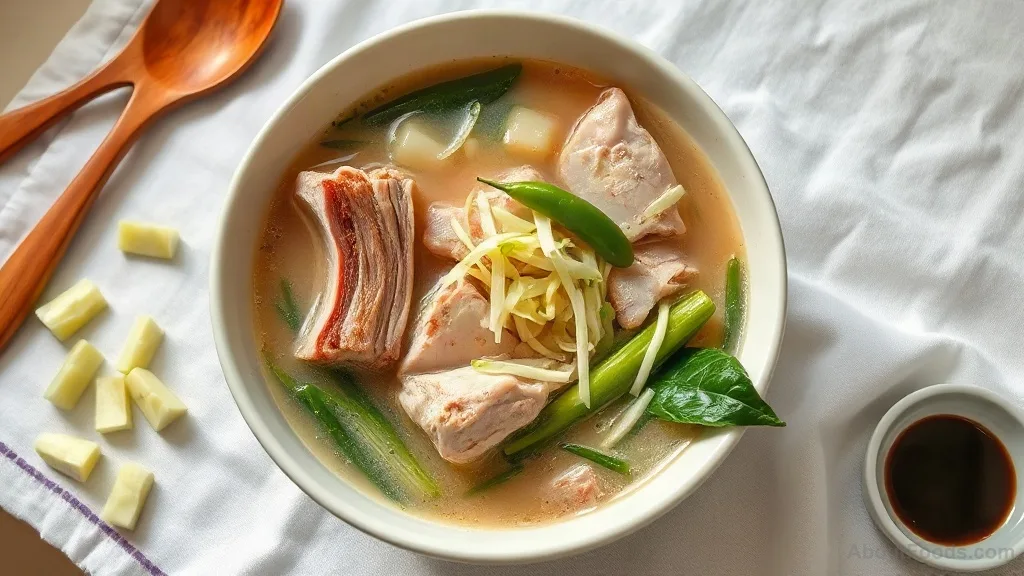
Sinigang na Baboy sa Bayabas (Pork with Guava Sour Soup)
Original name: Sinigang na Baboy sa Bayabas
About this dish
Sinigang is the great sour soup of the Philippines, and this version swaps the usual tamarind for ripe guavas. The broth turns cloudy and faintly sweet, its tartness softer and more floral than the more common sampalok version.
The pork ribs and shredded guava flesh come out meltingly tender, while kangkong and sili keep things fresh and a little playful. It's a Calabarzon-style favourite, often simmered for no more than an hour so the fruit stays bright and the soup stays light.
Ingredients
UK and US measurements are both included for every recipe.
Pork ribs, bone-in
protein1 kg
Imperial measurement: 2.2 lb
Ripe guavas, 6–8 pieces
fruit500 g
Imperial measurement: 1 lb 2 oz
Water
liquid1.5 L
Imperial measurement: 6 cups
Tomatoes, quartered
vegetable2 large
Red onion, quartered
vegetable1 medium
Tamarind powder or paste
seasoning2 tbsp
Fish sauce (patis)
seasoning3 tbsp
Whole black peppercorns, cracked
spice1 tsp
Long beans (sitaw), cut into 2-inch pieces
vegetable150 g
Imperial measurement: 5 oz
Kangkong (water spinach)
vegetable200 g
Imperial measurement: 7 oz
Finger chilies (siling haba)
vegetable3–4 pieces
Taro (gabi), cubed
vegetable200 g
Imperial measurement: 7 oz
Radish (labanos), sliced
vegetable150 g
Imperial measurement: 5 oz
Method
Prepare the guavas
10 minPeel half the guavas if the skin is very thick; keep the rest unpeeled for colour and tartness. Cut 1 kg pork ribs into 2-bone pieces and set aside. You will need some guava flesh to mash later, so hold back a quarter of the fruit.
Bloom the aromatics
5 minHeat a large pot over medium heat, drizzle with a little oil and add the quartered red onion and tomatoes. Cook until the onion softens and the tomatoes start to collapse, about 3–4 minutes, then add the guava wedges and stir for a minute.
Simmer the pork
40 minAdd the pork ribs, whole peppercorns and water. Bring to a boil, skim off any scum that rises, then lower the heat and simmer with the lid slightly ajar until the pork is almost tender, about 30–40 minutes. Keep an eye on the water level and add a little hot water if needed.
Mash the reserved guava
5 minWhile the pork simmers, mash the reserved guava flesh through a sieve or pulse in a blender to a loose purée. This is the secret to a cloudy, super fragrant broth.
Build the sour note
7 minStir in the mashed guava purée and simmer for 5 more minutes. Taste and adjust: add 1 tbsp fish sauce and 1–2 tsp tamarind powder or paste only if the guava isn't sour enough. The guavas along with the fish sauce usually provide most of the tang.
Add the vegetables
8 minAdd the taro (if using) and simmer for 5 minutes until slightly softened. Next add the long beans, radish and finger chilies and cook for 3–5 minutes. Finally, stir in the kangkong, cover and cook for 1 minute until just wilted.
Balance and serve
2 minTaste the broth: it should be sour, lightly sweet from the guava, and savoury from the pork and patis. Add extra fish sauce sparingly or a pinch of sugar if needed. Serve hot with steamed rice.
Equipment
- Large stockpot
- Wooden spoon
- Knife
- Cutting board
- Ladle
- Fine sieve
Nutrition facts
Tips
- Ripe but firm guavas work best here, green, rock-hard ones will leave the broth sour but thin, while very soft ripe guavas can turn it slightly sweet, so use a mixed selection if you can.
- The guava husks can be eaten but if the fruit is mature, scoop out and discard the hard inner core and only simmer the skin and seeds sections.
- Tamarind is a backup, not a must: add it slowly and taste at every step, as guava brands in the Philippines vary widely in sourness.
- If you are using gabi (taro), do not stir the pot too aggressively as it turns the broth cloudy and thick, which many cooks love anyway.
Serving suggestions
- Serve with steamed white rice and a side dip of patis with crushed siling labuyo and a squeeze of calamansi. A ripe mango or sliced pineapple on the side rounds out the sour, sweet, and salty flavours. It also pairs nicely with a crisp fried dollop of daing na bangus for a classic Filipino spread.
Rate this recipe
No ratings yet. Be the first to rate it.
Recipe by
Liza Villanueva
Specialises in Filipino cuisineLiza makes ube halaya that has healed family rifts. She believes purple is a flavor.
Describe yourself in three words: Cheerful, whimsical, loves purple.