Main Dish
Chamchi Gimbap (Tuna Gimbap) – Korean Seaweed Rice Rolls with Tuna
Original name: Chamchi Gimbap (Tuna Gimbap)
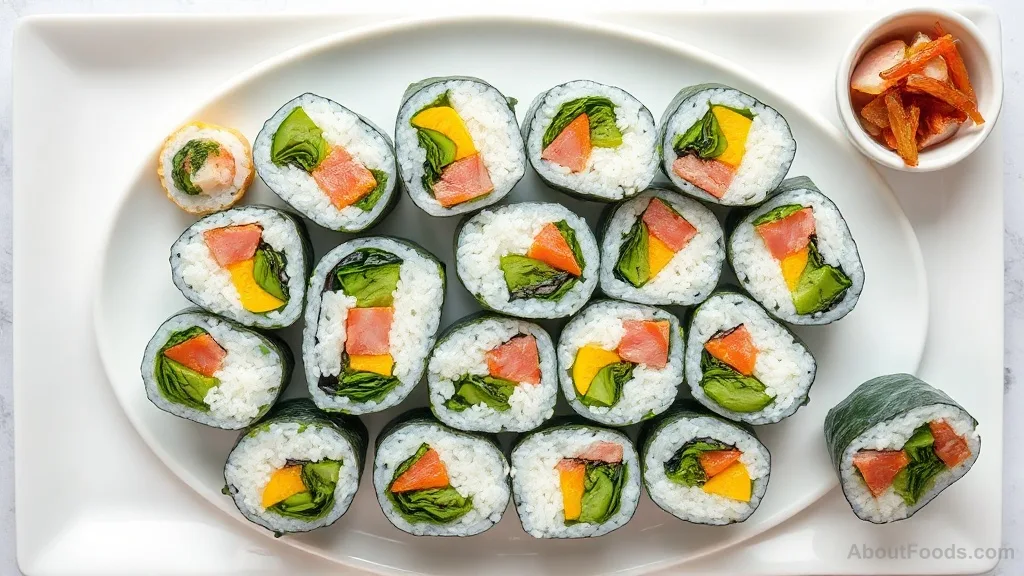
About this dish
Chamchi gimbap is a beloved Korean seaweed rice roll filled with seasoned tuna, crisp vegetables, and a hint of sesame. This version balances the rich, savory tuna with crunchy pickled radish, carrot, and spinach, all wrapped in glossy rice and toasted nori.
It's a portable, satisfying meal that's perfect for picnics, lunchboxes, or a light dinner. With a few simple techniques, you can make restaurant-quality gimbap at home—and once you master the roll, the possibilities are endless.
Ingredients
UK and US measurements are both included for every recipe.
sushi rice
grain3 cups (720 ml) cooked
Imperial measurement: 3 cups cooked
water
liquid1/4 cup (60 ml)
Imperial measurement: 1/4 cup
rice vinegar
seasoning2 tablespoons
sugar
seasoning1 tablespoon
salt
seasoning1/2 teaspoon
canned tuna, drained
protein1 can (5 oz / 142 g)
Imperial measurement: 1 can (5 oz)
mayonnaise
fat2 tablespoons
gochujang
seasoning1 teaspoon
sesame oil
fat1 teaspoon
soy sauce
seasoning1 teaspoon
blanched spinach, squeezed dry
vegetable1 cup (packed)
Imperial measurement: 1 cup packed
garlic, minced
spice1 clove
sesame oil (for spinach)
fat1 teaspoon
carrot, julienned
vegetable1 small (about 3 oz / 85 g)
Imperial measurement: 1 small
salt (for carrot)
seasoning1/4 teaspoon
vegetable oil (for frying)
fat1 tablespoon
eggs
protein2 large
salt (for egg)
seasoning1/4 teaspoon
pickled radish, julienned
vegetable4 ounces (115 g)
Imperial measurement: 4 oz
nori sheets
other4 sheets
sesame oil (for brushing)
fat1 tablespoon
sesame seeds, toasted
spice1 tablespoon
Method
Season the rice
PT0MIn a small bowl, mix the water, rice vinegar, sugar, and salt until the sugar and salt dissolve. Fold this mixture into the freshly cooked rice using a rice paddle or spatula, using a cutting motion to avoid mashing the grains. Spread the rice out on a large plate or in a wide bowl and let it cool to room temperature, uncovered. The rice should be cool enough to handle but still slightly warm.
Prepare the tuna filling
PT5MDrain the canned tuna well, then flake it into a bowl. Add the mayonnaise, gochujang (if using), sesame oil, and soy sauce. Mix until the tuna is evenly coated. Adjust the seasoning to your taste—add a little more gochujang for extra kick or a pinch of salt if needed. Set aside.
Season the spinach
PT5MBlanch the spinach in boiling water for 30 seconds, then immediately transfer to ice water to stop cooking. Squeeze out excess water and coarsely chop. In a small bowl, mix the spinach with the minced garlic, 1 teaspoon sesame oil, and a pinch of salt (if needed). Toss well and set aside.
Cook the carrot
PT3MHeat 1 tablespoon of vegetable oil in a skillet over medium heat. Add the julienned carrot and sprinkle with salt. Stir-fry for 2–3 minutes until the carrot is slightly softened but still crisp. Transfer to a plate to cool.
Make the egg strips
PT5MIn a small bowl, beat the eggs with a pinch of salt. Heat a lightly oiled nonstick skillet over medium-low heat. Pour in the egg and swirl to create a thin, even layer. Cook until just set, about 2 minutes, then flip carefully and cook for 30 seconds. Slide onto a cutting board and slice into thin strips (about 1/4 inch wide).
Assemble and roll
PT15MPlace a nori sheet on a bamboo mat with the shiny side facing down. Spread about 3/4 cup of rice evenly over the nori, leaving a 1-inch margin at the top edge. Lay a row of tuna filling, then a row of spinach, a row of carrot, a row of egg, and a row of pickled radish across the middle of the rice. Lift the mat and roll the seaweed over the filling, tucking it in firmly with your fingers. Continue rolling to the end, then press gently to seal the roll. Repeat with the remaining ingredients to make 4 rolls.
Slice and finish
PT5MBrush each roll lightly with sesame oil and sprinkle with toasted sesame seeds. Using a sharp knife, cut each roll into 1/2-inch thick slices. For clean cuts, wipe the knife with a damp cloth between slices.
Equipment
- bamboo mat
- rice cooker
- nonstick skillet
- sharp knife
- cutting board
- mixing bowls
Nutrition facts
Tips
- Use short-grain rice (sushi rice) for the best texture, long-grain rice will not stick together well.
- Cool the seasoned rice completely before rolling to prevent the nori from becoming soggy.
- Wet your hands lightly with water or sesame oil before touching the rice to prevent sticking.
- Tightly pack the filling and press firmly when rolling to keep the gimbap intact when slicing.
Serving suggestions
- Serve tuna gimbap as a main dish with a side of pickled radish and maybe a bowl of Korean soup like miyeokguk (seaweed soup). It pairs beautifully with a little soy sauce mixed with a drop of sesame oil for dipping. Gimbap is also perfect for packed lunches, picnics, or as a snack.
Rate this recipe
No ratings yet. Be the first to rate it.

Recipe by
Jieun Lee
Specialises in Korean cuisineJieun makes japchae with glass noodles and sesame oil. She stirs with her eyes closed.
Describe yourself in three words: Zen, glossy, sesame queen.