Main Dishes
Kimchi Bibimbap
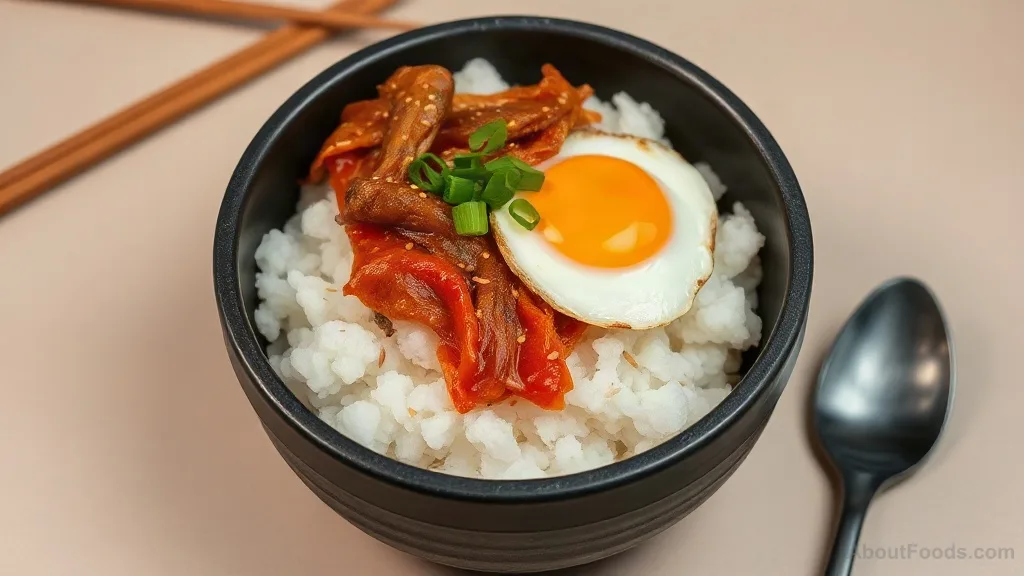
About this dish
Kimchi bibimbap is a bold, deeply savory one-bowl rice dish that sits at the heart of Korean home cooking. While traditional bibimbap often highlights seasoned vegetables and gochujang, this version leans into well-fermented kimchi, letting its tangy heat season the rice, the meat, and the egg all at once.
The dish comes together quickly once the ingredients are prepped, making it a practical weeknight meal that still feels like a proper Korean table spread. Finish each bowl with a drizzle of toasted sesame oil and a scatter of sesame seeds for the glossy, nutty aroma that defines this recipe.
Ingredients
UK and US measurements are both included for every recipe.
Cooked short-grain white rice
grain400 g
Imperial measurement: 2 cups
Well-fermented napa cabbage kimchi, chopped
vegetable200 g
Imperial measurement: 1 cup
Thinly sliced beef ribeye or sirloin
protein150 g
Imperial measurement: 5.3 oz
Soy sauce
seasoning15 ml
Imperial measurement: 1 tbsp
Toasted sesame oil
fat15 ml
Imperial measurement: 1 tbsp
Gochujang
seasoning15 g
Imperial measurement: 1 tbsp
Garlic, minced
vegetable6 g
Imperial measurement: 2 cloves
Granulated sugar
other4 g
Imperial measurement: 1 tsp
Large eggs
protein2
Neutral oil, such as grapeseed or vegetable oil
fat15 ml
Imperial measurement: 1 tbsp
Scallions, thinly sliced
vegetable20 g
Imperial measurement: 2 stalks
Toasted sesame seeds
other6 g
Imperial measurement: 2 tsp
Sea salt
seasoning2 g
Imperial measurement: 1/4 tsp
Freshly ground black pepper
spice1 g
Imperial measurement: 1/4 tsp
Method
Marinate the beef
10 minutesIn a small bowl, combine the sliced beef, soy sauce, half of the sesame oil, minced garlic, sugar, and a pinch of black pepper. Toss gently until each slice is coated, then set aside for 10 minutes while you prepare the other ingredients.
Sear the kimchi
5 minutesHeat a wide skillet over medium-high heat with half of the neutral oil. Add the chopped kimchi and cook, stirring occasionally, until the edges begin to caramelize and the juices thicken slightly, about 4 to 5 minutes. Transfer the kimchi to a plate and wipe the skillet if needed.
Cook the beef
4 minutesAdd the remaining neutral oil to the same skillet over medium-high heat. Add the marinated beef in a single layer and cook without stirring for 1 minute, then stir-fry until just cooked through and lightly browned, about 2 to 3 minutes. Remove from the skillet and keep warm.
Fry the eggs
3 minutesLower the heat to medium and add the eggs to the skillet. Fry until the whites are set but the yolks remain soft and runny, about 3 minutes. If you prefer firmer yolks, cook 1 minute longer. Season lightly with sea salt.
Warm the rice and assemble
2 minutesDivide the warm cooked rice between two bowls. Arrange the seared kimchi and beef over the rice, then top each bowl with a fried egg. Add a spoonful of gochujang to each bowl.
Finish and serve
1 minuteDrizzle the remaining sesame oil over the bowls, then scatter with sliced scallions and toasted sesame seeds. Serve immediately, mixing everything together at the table so the gochujang and egg yolk coat the rice.
Equipment
- Wide skillet or cast-iron pan
- Small mixing bowl
- Measuring spoons
- Cutting board and knife
- Serving bowls
Nutrition facts
Tips
- Use kimchi that has fermented for at least two weeks for the deepest flavor, fresh kimchi will taste milder and less complex.
- For a crisp rice crust, warm the assembled bibimbap in a lightly oiled stone bowl over medium heat for 2 to 3 minutes before serving.
- If you want extra vegetables, add blanched spinach or sautéed zucchini, but keep them lightly seasoned so the kimchi remains the star.
- To make the dish ahead, store the cooked beef, kimchi, and rice separately and fry the eggs just before serving.
Serving suggestions
- Serve with a simple bowl of clear radish soup or a light doenjang broth on the side.
- Pair with a small dish of pickled radish or cucumber for a fresh contrast.
- Offer extra gochujang and sesame oil at the table so everyone can adjust their bowl.
Rate this recipe
No ratings yet. Be the first to rate it.

Recipe by
Jieun Lee
Specialises in Korean cuisineJieun makes japchae with glass noodles and sesame oil. She stirs with her eyes closed.
Describe yourself in three words: Zen, glossy, sesame queen.