Mezze
Kibbeh Raas: Lebanese Torpedo Kibbeh with Meat and Pine Nut Filling
Original name: Kibbeh Raas with Meat and Pine Nut Filling
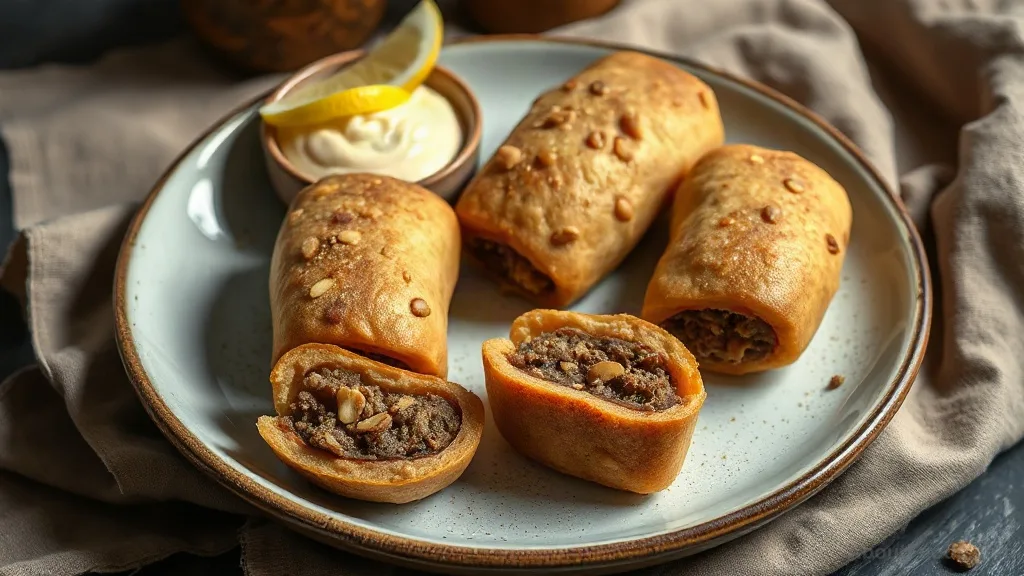
About this dish
Kibbeh raas is the elegant torpedo-shaped cousin of the more common kibbeh ball, with a delicate bulgur shell wrapped around a warmly spiced filling of lamb and toasted pine nuts. It's a celebratory dish in Lebanese kitchens, often made in big batches for iftar, Easter, or Sunday gatherings, and each one is a little hand-shaped parcel of textural contrast: crisp outside, juicy centre.
The spices here stay gentle but insistent — allspice, cinnamon, and a whisper of nutmeg — and the final touch is a squeeze of lemon and a swoosh of tahini-lemon sauce on the side.
Ingredients
UK and US measurements are both included for every recipe.
Fine bulgur wheat
grain300 g
Imperial measurement: 1 2/3 cups
Ground lamb or beef for shell
protein500 g
Imperial measurement: 1 lb 2 oz
Onion for shell
vegetable1 large (about 200 g)
Imperial measurement: 1 large
Ground lamb or beef for filling
protein400 g
Imperial measurement: 14 oz
Onion for filling
vegetable1 medium (about 150 g)
Imperial measurement: 1 medium
Pine nuts
other60 g
Imperial measurement: 1/2 cup
Ground allspice
spice1 1/2 tsp
Ground cinnamon
spice1/2 tsp
Fresh nutmeg
spice1/8 tsp
Fine sea salt
seasoning1 1/2 tsp
Black pepper
seasoning1/2 tsp
Ice water
liquid120–160 ml
Imperial measurement: 1/2–2/3 cup
Olive oil or ghee
fat1 tbsp
Neutral oil for frying
fat1.5 L
Imperial measurement: 6 cups
Tahini
other120 g
Imperial measurement: 1/2 cup
Lemon juice
liquid3 tbsp
Garlic
vegetable1 small
Ice water for sauce
liquid80–100 ml
Imperial measurement: 1/3–1/2 cup
Method
Rinse and soak the bulgur
10 minutesPut the fine bulgur in a bowl, cover with cold water by 2 cm (1 inch), and swish with your hand. Drain immediately through a fine sieve, pressing gently. Leave to drain for 5 minutes — the bulgur should be damp and pliable but not waterlogged. If it feels stiff, sprinkle with 1 tablespoon water and rub it in.
Make the shell paste
10 minutesIn a food processor, pulse the onion until finely chopped, then add the 500 g (1 lb 2 oz) ground lamb or beef and the drained bulgur. Add 1 teaspoon salt. Process in short bursts, scraping down the sides, until the mixture forms a smooth, slightly sticky paste that holds together when pinched. With the motor running, add ice water a tablespoon at a time until the paste is soft but not wet — usually 120–160 ml (1/2–2/3 cup). Transfer to a bowl, cover, and refrigerate while you make the filling.
Toast the pine nuts
4 minutesIn a dry skillet over medium-low heat, toast the pine nuts, tossing often, until golden and fragrant, about 2–3 minutes. Watch closely — they go from pale to burnt in seconds. Tip onto a plate to cool.
Cook the filling
15 minutesHeat the olive oil or ghee in the same skillet over medium heat. Add the finely diced onion and cook until soft and translucent, about 5 minutes. Add the 400 g (14 oz) ground lamb or beef, breaking it up with a spoon. Cook until no longer pink, about 6–8 minutes. Stir in the allspice, cinnamon, nutmeg, remaining 1/2 teaspoon salt, and the black pepper. Cook 1 minute more, then fold in the toasted pine nuts. Taste and adjust salt. Transfer to a bowl and let cool completely — warm filling will tear the delicate shells.
Shape the kibbeh
30 minutesHave a small bowl of ice water beside you to wet your hands. Take a walnut-sized ball of the chilled shell paste (about 40 g / 1 1/2 oz). Hold it in one hand and poke a hole in the centre with the index finger of the other, rotating and pinching the walls upward to form a thin, even hollow torpedo about 7 cm (3 inches) long. Work quickly and keep the paste cold; dip your fingers in ice water as needed. Fill with 1 heaped teaspoon of cooled filling, then pinch the top closed and taper the ends into a neat torpedo. Repeat with the remaining paste and filling — you should get 18–20 kibbeh.
Chill again
20 minutesArrange the shaped kibbeh on a tray lined with parchment. Refrigerate for at least 20 minutes, or up to 2 hours. This firms them so they hold their shape in the oil.
Heat the frying oil
8 minutesPour the neutral oil into a deep, heavy pot to a depth of about 8 cm (3 inches) and heat over medium-high until it reaches 175°C (350°F) on a deep-fry thermometer. If you don't have a thermometer, drop in a small piece of shell paste: it should sizzle and rise steadily without browning instantly.
Fry in batches
20 minutesCarefully lower 4–5 kibbeh into the hot oil using a slotted spoon. Do not crowd the pot. Fry, turning once or twice, until deep golden brown and crisp all over, about 4–5 minutes. Lift out and drain on a wire rack set over a tray (paper towels work too but make the base soggy). Keep finished kibbeh warm in a low oven (120°C / 250°F) while you fry the rest.
Make the tahini sauce
5 minutesWhile the last batch fries, whisk the tahini, lemon juice, and grated garlic in a bowl. It will seize and look lumpy — that's normal. Slowly drizzle in the ice water, whisking constantly, until the sauce turns pale, glossy, and pourable, like heavy cream. Season with a pinch of salt.
Serve
5 minutesPile the hot kibbeh raas on a platter, scatter with extra toasted pine nuts if you like, and serve immediately with the tahini sauce and lemon wedges. They're best eaten the day they're made.
Equipment
- Food processor
- Fine sieve
- Mixing bowls
- Large skillet
- Deep heavy pot for frying
- Deep-fry thermometer
- Slotted spoon
- Wire rack and tray
- Parchment paper
Nutrition facts
Tips
- Keep everything cold: the shell paste, the filling, and your hands. Warm kibbeh paste becomes greasy and tears as you shape it.
- If the shell cracks while you're shaping, wet your fingers and pinch the tear closed, then smooth it over with a little more paste.
- To check the seasoning before frying, cook a small spoonful of the filling and a tiny patty of the shell paste in a pan and taste both.
- You can shape the kibbeh a day ahead and refrigerate them covered, fry them straight from the fridge, adding a minute to the frying time.
- If deep frying feels daunting, shallow-fry in 2 cm (3/4 inch) of oil, turning carefully, until browned on all sides and cooked through.
Serving suggestions
- Serve as part of a mezze spread with hummus, baba ghanoush, tabbouleh, and warm pita.
- Pair with a simple fattoush or Lebanese salata for brightness against the rich filling.
- Offer tahini sauce and lemon wedges on the side, plus pickled turnips for crunch.
- For a main course, add vermicelli rice or a lentil pilaf and steamed green beans.
Rate this recipe
No ratings yet. Be the first to rate it.

Recipe by
Sami Haddad
Specialises in Lebanese cuisineSami makes hummus with so much tahini it's basically a dessert. He is a chickpea champion.
Describe yourself in three words: Creamy, tahini-heavy, chickpea lover.