Main Course
Gheymeh with Tahdig
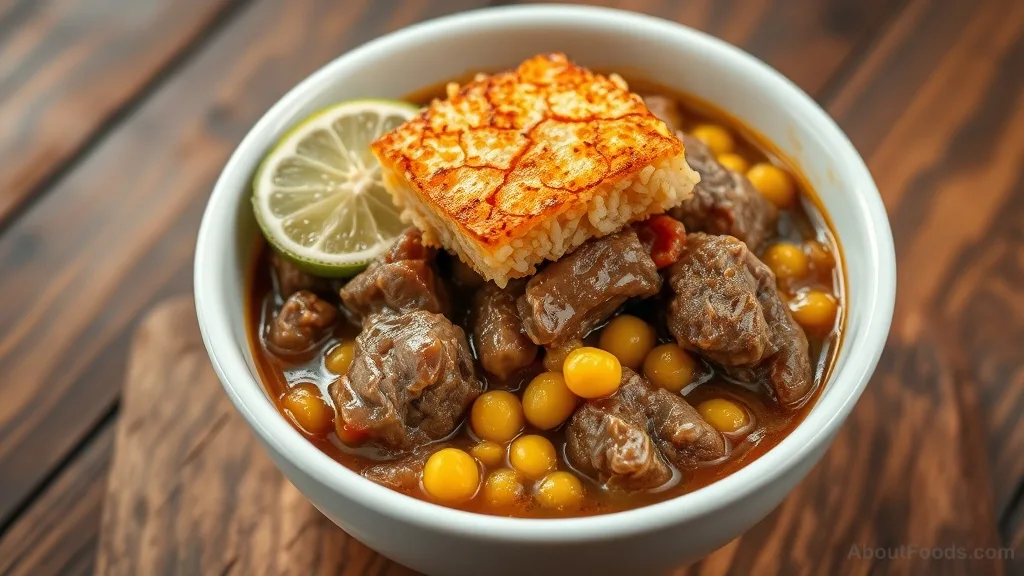
About this dish
A stoic Persian dish of slow-braised lamb, split peas, and dried lime in a saffron-tomato sauce, crowned with a crisp tahdig—the golden, caramelized rice crust that defines Persian hospitality. The quiet intensity of the cooking process mirrors the northern landscapes I know: patience yields depth.
Ingredients
UK and US measurements are both included for every recipe.
Lamb shoulder
protein500 g
Imperial measurement: 1 lb 2 oz
Yellow split peas
grain1/2 cup (100 g)
Imperial measurement: 1/2 cup
Onion
vegetable1
Garlic
vegetable4
Tomato paste
other3 tbsp (45 ml)
Imperial measurement: 3 tbsp
Dried limes
other4
Saffron
spice1/2 tsp (0.5 g)
Imperial measurement: 1/2 tsp
Turmeric
spice1 tsp
Cinnamon stick
spice1
Salt
seasoningto taste
Black pepper
spice1/2 tsp
Oil or ghee
fat3 tbsp (45 ml)
Imperial measurement: 3 tbsp
Basmati rice
grain2 cups (400 g)
Imperial measurement: 2 cups
Butter or ghee for tahdig
fat3 tbsp (45 g)
Imperial measurement: 3 tbsp
Yogurt (optional)
dairy2 tbsp (30 ml)
Imperial measurement: 2 tbsp
Water
liquid6 cups (1.4 L) approx.
Imperial measurement: 6 cups
Method
Prepare the lamb and split peas
PT1H5MRinse the yellow split peas and soak in cold water for 1 hour. Trim lamb chunks of excess fat, season with salt and pepper.
Braise the lamb
PT15MIn a heavy pot, heat 2 tbsp oil over medium-high heat. Brown lamb in batches, about 5 minutes per batch, then set aside. Reduce heat, add onion and garlic, cook until softened, about 5 minutes. Stir in turmeric, cinnamon, and tomato paste; cook 2 minutes.
Simmer the stew
PT2HReturn lamb to pot. Add pierced dried limes, soaked split peas (drained), and enough water to cover by 2 inches (about 4 cups). Bring to a boil, then reduce heat to low, cover, and simmer gently for 2 hours until lamb is tender and peas are soft. Stir occasionally, adding water if needed.
Prepare the saffron
PT10MDissolve ground saffron in 2 tbsp of hot water. Set aside to steep for at least 10 minutes.
Cook the rice for tahdig
PT35MRinse basmati rice in cold water until water runs clear, then soak for 30 minutes. Bring a large pot of salted water to a boil. Drain rice, add to boiling water, and cook for exactly 4 minutes until al dente. Drain and rinse with lukewarm water.
Create the tahdig crust
PT30MIn a nonstick skillet or pot, melt butter (or butter-yogurt mixture) over medium heat. Spread a layer of partially cooked rice evenly over the bottom, about 1/2 inch thick. Spoon remaining rice on top but do not compress. Drizzle with 2 tbsp water and half the saffron water. Cover with a tight lid and cook on low heat for 30 minutes.
Finish and serve
PT5MIn the last 5 minutes, stir remaining saffron water into the stew. Check seasoning; dried limes should impart a sour note—remove if desired. To serve, invert the rice pot onto a platter so the golden crust faces up. Fluff the rice. Ladle gheymeh into a bowl and serve alongside or on top of the tahdig.
Equipment
- Heavy-bottomed pot
- Nonstick skillet or pot for tahdig
- Colander
- Cutting board
- Knife
- Measuring cups and spoons
Nutrition facts
Tips
- Pierce each dried lime several times with a knife before adding to the stew, this releases their tart essence gradually without making the stew bitter.
- For a reliably crisp tahdig, do not stir the rice once it forms a crust, resist the urge to peek until the 30 minutes are nearly up.
- The stew improves if made a day ahead—reheat gently and adjust salt before serving. The tahdig is best made fresh.
- If dried limes are hard to find, substitute the zest and juice of 1 fresh lime plus 1/2 teaspoon of sumac, but the flavor will be less deep.
Serving suggestions
- Serve with fresh herbs like mint and parsley, a side of yogurt, and pickled vegetables (torshi).
Rate this recipe
No ratings yet. Be the first to rate it.

Recipe by
Anders Lindberg
Specialises in Scandinavian cuisineAnders is a forager who puts lingonberries on everything, including pizza. His neighbors have filed a complaint.
Describe yourself in three words: Stoic, nature-obsessed, quietly intense.