Dessert
Paskha with Dried Apricots and Prunes
About this dish
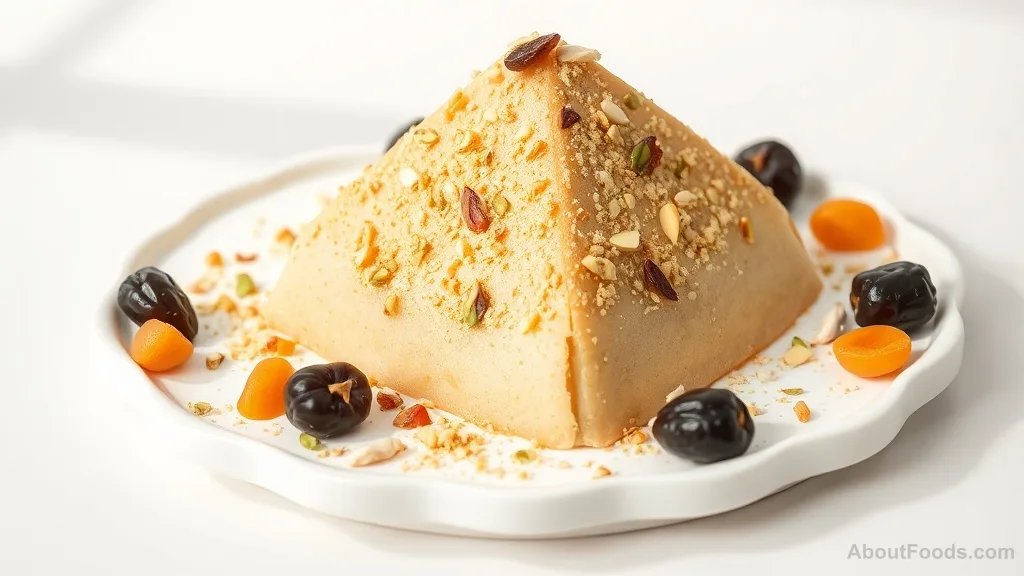
Paskha is a traditional Russian Easter dessert, a rich and creamy cheese confection that is both indulgent and symbolic. This version incorporates dried apricots and prunes, adding natural sweetness and a chewy texture that balances the velvety farmer's cheese.
Molded into a pyramid shape to represent the Church, it's a centerpiece for the Easter table. The recipe requires patience—the cheese must drain for at least 12 hours—but the result is a slice of heaven.
Ingredients
UK and US measurements are both included for every recipe.
Farmer's cheese (tvorog)
dairy1 kg
Imperial measurement: 2.2 lbs
Unsalted butter, softened
dairy200 g
Imperial measurement: 1 cup (2 sticks)
Granulated sugar
other150 g
Imperial measurement: 3/4 cup
Egg yolks
dairy4 large
Heavy cream
dairy240 ml
Imperial measurement: 1 cup
Vanilla extract
seasoning5 ml
Imperial measurement: 1 teaspoon
Dried apricots, finely chopped
fruit100 g
Imperial measurement: 2/3 cup
Prunes, finely chopped
fruit100 g
Imperial measurement: 2/3 cup
Chopped pistachios (optional, for garnish)
other30 g
Imperial measurement: 1/4 cup
Method
Prepare the cheese
PT12HPlace the farmer's cheese in a cheesecloth-lined sieve set over a bowl. Gather the corners of the cheesecloth and twist to squeeze out excess liquid. Let it drain in the refrigerator for at least 12 hours or overnight. This step is crucial for a dense, creamy texture.
Cream butter and sugar
PT3MIn a large mixing bowl, beat the softened butter and granulated sugar together until light and fluffy, about 3 minutes.
Add egg yolks and cream
PT2MAdd the egg yolks one at a time, beating well after each addition. Then, pour in the heavy cream and vanilla extract, and mix until combined.
Combine with cheese
PT5MPass the drained farmer's cheese through a sieve or food mill to remove any lumps. Add it to the butter mixture and stir until smooth and well incorporated.
Fold in dried fruit
PT2MGently fold the chopped dried apricots and prunes into the cheese mixture until evenly distributed.
Mold the paskha
PT5MLine a paskha mold (or a clean flowerpot with drainage holes) with damp cheesecloth, leaving overhang. Spoon the cheese mixture into the mold, pressing firmly to eliminate air pockets. Fold the overhanging cheesecloth over the top.
Weight and chill
PT12HPlace a small plate or weight on top of the mold to press the paskha. Set the mold on a rack over a tray to catch any liquid. Refrigerate for at least 12 hours, or up to 24 hours, for the flavors to meld and the texture to set.
Unmold and serve
PT5MUnfold the cheesecloth, invert the mold onto a serving platter, and gently lift off the mold. Carefully peel away the cheesecloth. Garnish with chopped pistachios if desired. Serve chilled.
Equipment
- cheesecloth
- sieve
- large mixing bowl
- electric mixer
- paskha mold (or clean 4-inch flowerpot with drainage holes)
- small plate or weight
Nutrition facts
Tips
- For the creamiest paskha, use full-fat farmer's cheese (tvorog). Low-fat versions result in a grainy texture.
- Draining the cheese is essential—do not skip it.
- If.
- If your cheese is very wet, start draining a day ahead.
- If you don't have a paskha mold, a clean terracotta flowerpot works perfectly, just line it with cheesecloth and ensure the drainage hole is clear.
- Paskha can be made up to 3 days in advance and stored in the refrigerator. It also freezes well for up to 1 month—wrap tightly in plastic and thaw overnight in the fridge.
Serving suggestions
- Serve chilled, sliced like a cake, with fresh berries or a drizzle of honey. Traditionally accompanied by kulich (Russian Easter bread) and a glass of sweet dessert wine.
Rate this recipe
No ratings yet. Be the first to rate it.

Recipe by
Anya Ivanov
Specialises in Russian cuisineAnya makes pelmeni in batches of 500. She says freezing them is the only way to survive winter.
Describe yourself in three words: Stoic, efficient, freezer queen.