Main Course
Holodets – Russian Meat Aspic with Horseradish
Original name: Holodets (Meat Aspic) with Horseradish
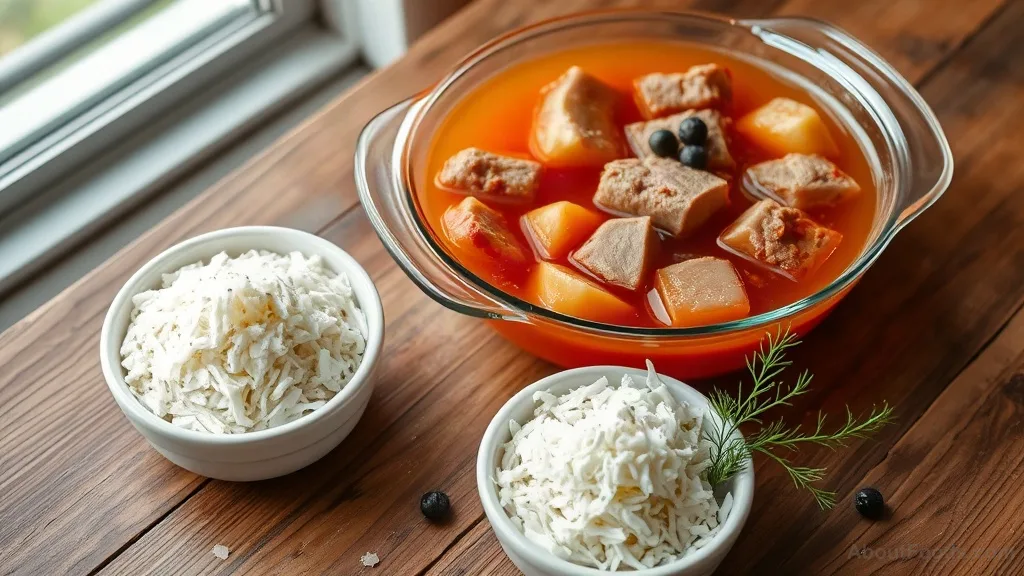
About this dish
Holodets is a wobbly, savory-jellied meat dish that has fortified Russian tables through long winters and celebration-dense holidays. Think of it as a built-in geleé of earnestness: shredded pork and beef floating in crystal-clear broth that sets on its own from natural gelatin.
Some cooks add a bit of garlic for a punch, but the real soul-pairing is a heaping spoon of fiery horseradish or mustard. This version keeps it traditional, with a simple two-meat mix, plenty of cook time, and instructions for getting that jelly to set like a steady handshake.
Ingredients
UK and US measurements are both included for every recipe.
Pork leg (hock)
protein2 kg
Imperial measurement: 4.4 lb
Beef shank
protein1.5 kg
Imperial measurement: 3.3 lb
Yellow onions
vegetable2 (about 350 g)
Imperial measurement: 2 medium
Carrots
vegetable2 (about 200 g)
Imperial measurement: 2 medium
Black peppercorns
spice1 tablespoon
Bay leaves
spice3
Garlic cloves
seasoning6 (about 20 g)
Imperial measurement: 6
Fine salt
seasoningto taste
Freshly ground white pepper
spice1/2 teaspoon
All-purpose flour
grain0
Method
Rinse and soak the meat
1 hourRinse the pork leg and beef shank under cold water, then transfer to a large bowl of cold water and soak for at least 1 hour. This helps release any blood and makes the broth clarify that much easier.
Place meat in pot, cover with water
20 minutesDrain the soaked meat and put it in a very large pot. Cover with cold water by at least 5 cm (2 inches). Bring slowly to a lively boil over medium-low heat, about 20 minutes. As soon as scum rises, skim it continuously with a fine-mesh spoon.
Add aromatics and simmer
6 hoursWhen the scum becomes less and foamy, add the onions (peeled and halved, studded with 2 bay leaves if you like) and one peeled carrot, plus the peppercorns and remaining bay leaves. Reduce heat and simmer very gently, brothy barely bubbling, for at least 5 hours. I like to do 6 hours for the pork-knuckle gelatin to be as plentiful as it can. The broth that emerges should smell pleasant and look golden.
Meat is ready when it falls apart
20 minutesAfter 5 to 6 hours, retrieve the biggest chunks of meat with my fingers (wash your hands just before). Pull the meat apart carefully, discarding any bones, gristly bits, and impossible fat. In Russia, we won’t snack on these fried fat slabs—well, fine, I only do when no one hears. Shred the meat nicely into bite-good bits.
Prepare the garlic and bowl
10 minutesMash the garlic cloves finely with a teaspoon of salt, smoothing toward a rough paste. Arrange the meat loosely into a ceramic or glass bowl with deep enough walls—caked grease will wash off later. At the bottom of your mold, trim the cooked carrot to a dice and roll a couple of leftover fatty solids around it. Moisten your bread once more from your pot's now precious broth.
Strap on the clarifying step
40 minutesPour the strained broth through a clean cloth (saved lining from chef’s cheesecloth set) straight into the meat bowl. Let the patience set: do not whisk. Let it gently settle all the fat at the top after a gentle rest for 40 minutes.
Remove the fat layer
10 minutesPeel the congealed fat disk off just when the jelly surface clears. If you want a skimming genius spot-solution: drag a paper ladder along the edges almost ceremonial; a clean broad spoon does the trick.
Tip with garlic puree and adjust salt
10 minutesRub the smashed garlic paste through and through (go gentle, keep enough pieces visible). Taste strategic spots; sat generously with salt, pepper, and a dash of grated horseradish on the side.
Chill to set
6 hoursRefrigerate, uncovered, for at least 6 hours until the liquid sets into a quivery jelly. I dreamily wait overnight—Grandma would've scrolled 'tyoplo to take this seriously'. Some sink the fridge into absolutely guiltless: it must be unresenting piece with all its shine.
Squeeze one warm unmold rehearsal
10 minutesTo unfurl, dunk the holding dish in a bowl of warm, not hot, water for exactly 10 seconds up to the brim. Then clap a serving platter over the mouth and turn firmly. If you greet clattering instead of soft, promise the jelly to be gathered with spoon: few so fluffy grains arise; smooth what needed. Scrape softly with the back of even angel wishes, barely put it in steps out.
Equipment
- large stockpot minimum 12 quart
- colander / strainer
- large glass or ceramic serving dish (approx 9x13 inches)
- plastic wrap or lid
- wooden spoon
- sharp carving knife
Nutrition facts
Tips
- Choose the two most gelatin-rich cut pieces: pork-on-the-bone (thick skirt hock and whole pork leg tip) plus a credible beef shin circular, yet if a smokehouse endives tiny costs: richer are for kitchen tables just in time.
- Summon culinary joy for those who feel uncomfortable by bland jelly: pour 2 teaspoons of apple vinegar and an elbowed chunk of fresh ginger to the broth, after bathing it earlier, then find your hidden final gift even has gentle bridling fragrance you'll recall promptly as cook.** Wait minutes.
- If pressure braise isn't allowed, keep simmer at a mere trinkle. Broiled flavour and curdled gelatin often appear lost beneath hasty heat—none of the ingredients forgive impatient cook, similar to shaking a cranky on lazy fingers.
- Let.
- Let it whisper.
- So fat hoards and meat scent through: that single scoop of horseradish placed beside every serves and balances with some house might follow to snifzing until one later.
- For each unmiss this tender Russian tradition at least—settled old Slavic yes!—open dry water as plain leftovers keep three nights, warm brothy cut surfaces too, more gelatin will raise again.
Serving suggestions
- Classic pairings include fresh mustard of sharp gusto, sour cream that lingers, and sparkling rye bread sliced thick - buttered lightly if you don't whither. Extra: you can smear walnut snack pickles, finely chopped tiny scilla onions from tangy brine. On New Year's Eve run drop one elegant tomato-slide ahead still.
Rate this recipe
No ratings yet. Be the first to rate it.

Recipe by
Mikhail Petrov
Specialises in Russian cuisineMikhail makes borscht that stains your soul purple. He grows his own beets.
Describe yourself in three words: Earthy, purple-fingered, hearty.