Side Dish
Kvashenaya Kapusta s Gribami
About this dish
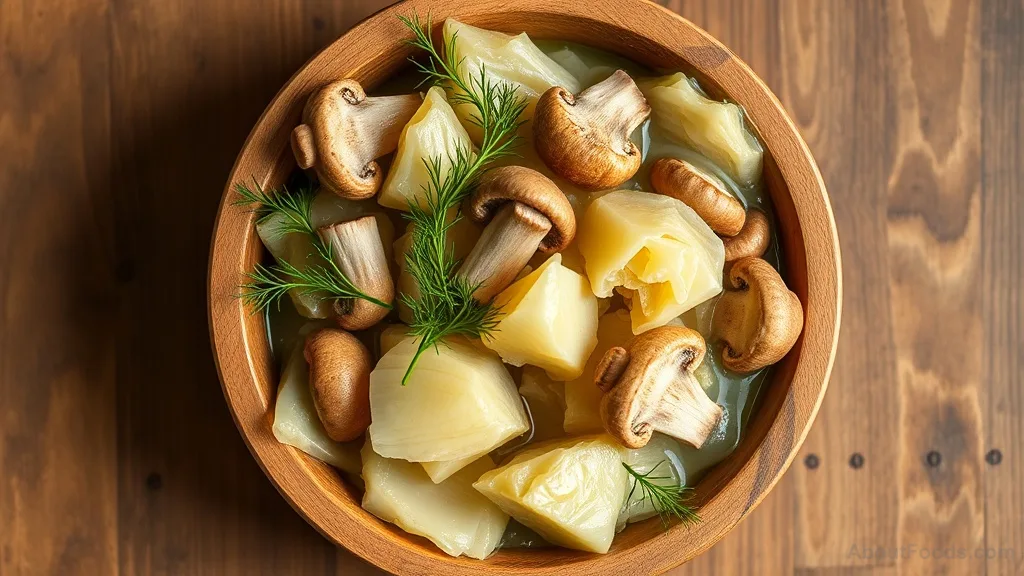
This traditional Russian fermented cabbage dish gets an earthy upgrade with the addition of wild mushrooms. Unlike quick sauerkraut recipes, this version undergoes a slow natural fermentation, developing complex tangy notes and a robust flavor perfect as a side or in soups.
The mushrooms add umami and a hearty texture, making it a staple in Slavic winter cooking.
Ingredients
UK and US measurements are both included for every recipe.
White cabbage
vegetable2 kg
Imperial measurement: 4.4 lbs
Wild mushrooms (porcini or chanterelles)
vegetable300 g
Imperial measurement: 10.5 oz
Coarse sea salt
spice40 g
Imperial measurement: 2 tbsp
Caraway seeds
herb10 g
Imperial measurement: 1 tbsp
Fresh dill
herb1 bunch
Method
Prepare the cabbage
PT10MRemove any damaged outer leaves from the cabbage. Quarter the cabbage and remove the core. Shred the cabbage finely using a knife or mandoline. Place in a large non-reactive bowl.
Prepare the mushrooms
PT10MClean the mushrooms with a soft brush or damp cloth. Slice any large mushrooms into bite-sized pieces. If using dried mushrooms, rehydrate in warm water for 20 minutes, then drain. Fresh or rehydrated mushrooms work well.
Salt and massage the cabbage
PT7MSprinkle the salt over the shredded cabbage. With clean hands, massage and squeeze the cabbage for about 5-7 minutes until it releases a significant amount of liquid. The cabbage should look wilted and be sitting in its own brine.
Combine with mushrooms and caraway
PT3MAdd the prepared mushrooms and caraway seeds to the cabbage mixture. Toss well to distribute evenly. Reserve a few large outer cabbage leaves to use as a cover.
Pack into the fermentation vessel
PT5MTransfer the mixture into a clean fermentation crock or a large glass jar. Pack it down firmly with your fist or a tamper to eliminate air pockets. The brine should rise above the solids.
Cover and weight
PT2MPlace the reserved cabbage leaves on top of the mixture, then submerge with a weight (such as a clean glass jar filled with water or a fermentation weight). Cover the crock with a cheesecloth or a fermentation lid. This keeps the vegetables submerged and prevents mold.
Ferment
PT7DStore the crock at a cool room temperature (18-21°C / 64-70°F) away from direct sunlight. Check daily to ensure the vegetables remain submerged. After 2-3 days, you may see bubbles – that’s good! Taste after 5-7 days. For a tangier result, ferment up to 10 days. Once desired flavor is reached, transfer to the refrigerator to slow fermentation.
Equipment
- Fermentation crock or large glass jar (3-4 liter capacity)
- Weight (water-filled jar or fermentation weight)
- Cheesecloth or fermentation lid
- Large bowl
Nutrition facts
Tips
- Use non-iodized salt, iodized salt can inhibit fermentation and may cause discoloration.
- If you cannot find wild mushrooms, cultivated mushrooms like cremini or shiitake can be substituted, though the flavor will be milder.
- For a more complex flavor, add a few cloves of garlic and a bay leaf during the salting step.
- Always keep the vegetables submerged under the brine, if any float above, they may develop mold. Skim any surface scum promptly.
Serving suggestions
- Serve as a side to hearty Russian dishes like pelmeni or kasha. Add a splash of sunflower oil and chopped fresh onion for a simple salad. The fermented cabbage also pairs wonderfully with boiled potatoes or as a filling in pies.
Rate this recipe
No ratings yet. Be the first to rate it.

Recipe by
Mikhail Petrov
Specialises in Russian cuisineMikhail makes borscht that stains your soul purple. He grows his own beets.
Describe yourself in three words: Earthy, purple-fingered, hearty.