Side Dish
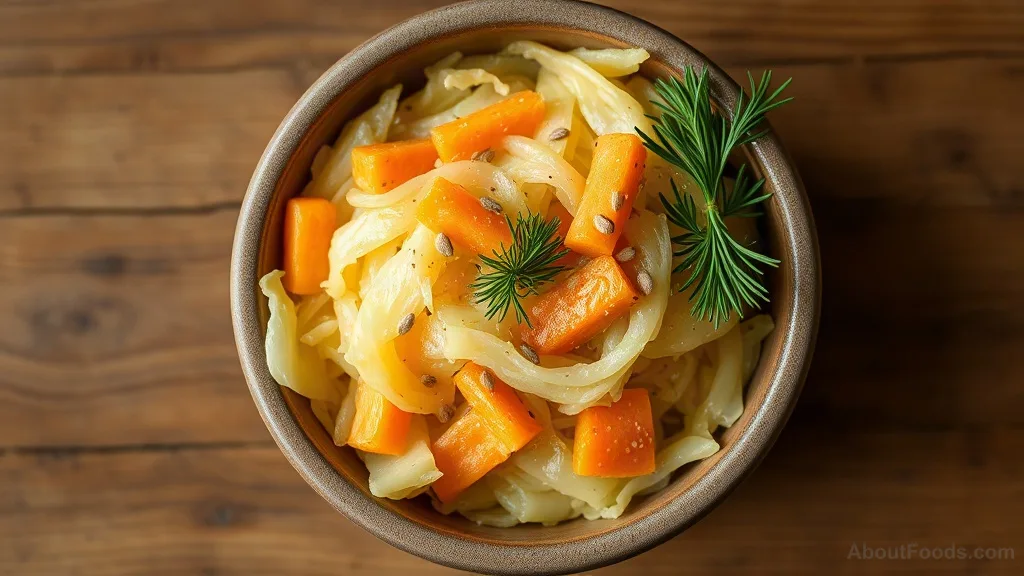
Kvashenaya Kapusta s Morkovyu i Lukom
About this dish
This Russian-style sauerkraut is a celebration of humble ingredients and patient fermentation. Cabbage, carrot, and onion are salted, weighted, and left to ferment until gloriously sour and crisp.
A genuine tonic for the gut and a must-have for winter meals, especially alongside hearty stews or simply with dark bread and a shot of vodka.
Ingredients
UK and US measurements are both included for every recipe.
White cabbage
vegetable2 kg
Imperial measurement: 4.4 lbs
Carrots
vegetable300 g
Imperial measurement: 10.6 oz (about 2 medium)
Onions
vegetable1 large onion (about 200 g)
Imperial measurement: 1 large (7 oz)
Salt
seasoning2% of cabbage weight (about 40 g)
Imperial measurement: 2% of cabbage weight (about 1.4 oz)
Caraway seeds
herb1 teaspoon
Black peppercorns
spice1/2 teaspoon
Bay leaves
herb2 leaves
Method
Prepare vegetables
PT10MShred the cabbage finely, either with a knife or a mandoline. Grate the carrots on the large holes of a box grater. Slice the onion into thin half-moons.
Massage with salt
PT5MIn a large mixing bowl, combine cabbage, carrots, and onion. Sprinkle the salt over the top and massage with your hands for several minutes. The cabbage will begin releasing liquid and shrinking in volume.
Season and pack
PT10MAdd caraway seeds, peppercorns, and bay leaves if using. Fluff together. Begin packing the mixture tightly into a clean 3-liter jar or a ceramic crock. Press down firmly with your fist or a tamper to remove air pockets and ensure the brine covers the vegetables.
Weigh down the vegetables
PT5MIf the natural brine is not enough to completely submerge the vegetables, make a bit of extra brine (1 teaspoon salt dissolved in 1 cup water) and pour it in. Place a clean piece of plastic wrap or a cabbage leaf over the surface, then top with a small glass jar filled with water (as a weight) or use a pickling weight.
Ferment
PT72HLeave the jar at cool room temperature (about 68-72°F / 20-22°C) for 3 to 5 days. Each day, flip the weight or poke the mixture with a spoon to release accumulated gases. Skim off any foam if formed. Fermentation is complete when the cabbage has a pleasant tart-sour flavor and no more bubbles rise.
Store
PT1MPlace the lid on the jar and transfer to the refrigerator. The sauerkraut will keep for several months if kept submerged below the liquid.
Equipment
- Large mixing bowl
- Chef's knife or mandoline
- Box grater
- 3-liter glass jar or ceramic crock
- Clean glass jar for weight or pickling weights
Nutrition facts
Tips
- Use organic cabbage where possible, the bacteria on the leaves are what you want.
- Never rinse the jar with soap and dry it thoroughly before use to avoid contaminating the fermentation.
- Weigh down the cabbage firmly if you want crispy, not mushy sauerkraut. A bag of brine works best as a weight.
- Taste after 3 days: some prefer a milder kraut, others want it distinctly sour.
Serving suggestions
- Serve as a cold side dish with buckwheat or barley pilaf, with a rich pomegranate-seed dash or sprinkle of fresh dill. In winter, enjoy 2-3 tablespoons alongside a steaming bowl of vegetable stew.
Rate this recipe
No ratings yet. Be the first to rate it.

Recipe by
Mikhail Petrov
Specialises in Russian cuisineMikhail makes borscht that stains your soul purple. He grows his own beets.
Describe yourself in three words: Earthy, purple-fingered, hearty.