Myth Busting
The Spicy Truth About Baking Soda vs. Baking Powder: Why Swapping Them Can Ruin Your Injera
Many home cooks think baking soda and baking powder are interchangeable, but this myth can lead to flat pancakes, bitter cookies, and dense cakes. Understanding their chemical differences—one needs acid, the other brings its own—is crucial for proper leavening. Let's bust this kitchen myth with science you can actually use.
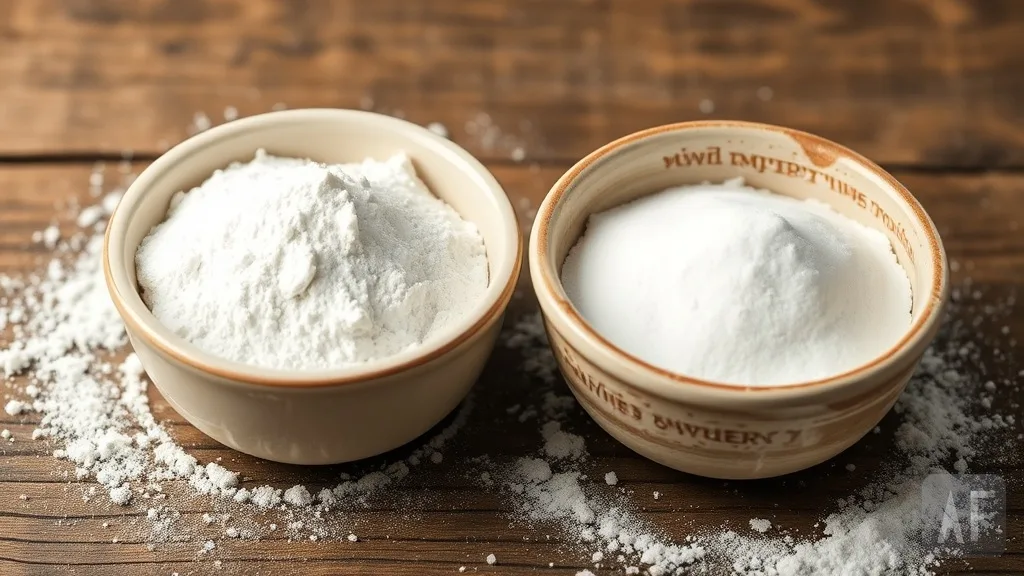

Introduction: A Tale of Two White Powders
In my grandmother's kitchen in Addis Ababa, we didn't have boxes labeled 'baking powder' or 'baking soda.' Our injera rose through days of careful fermentation, a living process that taught me early: leavening isn't magic—it's chemistry. Now, in modern kitchens worldwide, I see cooks reaching for those nearly identical white boxes and making a dangerous assumption: 'They're basically the same thing.' Let me be as clear as berbere on your tongue: they are not. Swapping baking soda for baking powder (or vice versa) is like substituting gasoline for olive oil in your sauté—both are liquids, but only one will give you the result you want. Today, we're going to dig into the spicy truth about these leavening agents, bust the myth that they're interchangeable, and give you the knowledge to bake with confidence.
The Chemical Reality: What Are We Actually Working With?
Let's start with the basics, because you can't fix what you don't understand. Baking soda is pure sodium bicarbonate (NaHCO₃). It's a base, which means it needs an acid to react with. When it meets an acid (like yogurt, buttermilk, lemon juice, vinegar, or even honey), it produces carbon dioxide gas. Those tiny bubbles get trapped in your batter or dough, making it rise. Baking powder, on the other hand, is baking soda plus one or two acids already mixed in. Single-acting baking powder contains one acid that reacts when wet. Double-acting (what you usually buy) contains two acids: one that reacts when wet, and another that reacts when heated. This means baking powder brings its own party—it doesn't need additional acid in your recipe to work.
| Aspect | Baking Soda | Baking Powder |
|---|---|---|
| Main ingredient | 100% sodium bicarbonate | Baking soda + acid(s) + cornstarch |
| Acid needed | Yes (from recipe ingredients) | No (contains its own acid) |
| When it reacts | Immediately when mixed with acid and liquid | Partly when wet, partly when heated (double-acting) |
| Strength | About 3-4x stronger than baking powder | Weaker, more controlled reaction |
| Common forms | Pure powder | Single-acting or double-acting |
Why the Swap Myth Persists (And Why It's Wrong)
I get it—they look identical, sit next to each other on the shelf, and both make things rise. The confusion is understandable. But here's where the myth falls apart: if you substitute baking soda for baking powder, you're adding a strong base without the necessary acid to activate it. Result? Your baked goods won't rise properly, and you'll likely get a bitter, soapy taste from unreacted soda. If you substitute baking powder for baking soda, you're not adding enough leavening power (remember, baking soda is 3-4x stronger), plus you're adding extra acid that might throw off your recipe's flavor balance. Either way, you're gambling with your pancakes, cookies, and cakes.
- Flat, dense baked goods (insufficient rise)
- Bitter or metallic taste (unreacted baking soda)
- Overly acidic flavor (from excess acid in baking powder)
- Yellow or off-color in pale batters (chemical reactions)
- Too much spread in cookies (improper pH affecting gluten)
When You Might Actually Substitute (And How to Do It Right)
Now, I'm not saying substitution is impossible—I'm saying blind swapping is disastrous. There are specific circumstances where you can substitute one for the other, but you must adjust the recipe. Think of it like adjusting spices: you wouldn't swap berbere for paprika without changing quantities. Here's your cheat sheet for those 'I'm out of...' emergencies.
Practical Kitchen Wisdom: Reading Recipes Like a Scientist
Let's move from theory to practice. When you look at a recipe, how can you tell whether it needs baking soda or baking powder? Look for these clues. Recipes with buttermilk, yogurt, sour cream, molasses, brown sugar, honey, lemon juice, or vinegar typically use baking soda—the acid in these ingredients activates it. Recipes with milk, water, or non-acidic liquids typically use baking powder—it brings its own acid. Some recipes use both: the baking soda reacts with the immediate acids for initial rise, and the baking powder gives additional lift during baking. This is common in chocolate cakes (cocoa is acidic) or banana bread.
Storage & Freshness: Because Old Powder Won't Rise to the Occasion
Here's another truth: these ingredients don't last forever. Baking soda can absorb odors and lose potency over time (though it lasts longer than baking powder). Baking powder, because it contains moisture-sensitive acids, can become inactive. To test baking powder: mix 1 teaspoon with ⅓ cup hot water—it should bubble vigorously. To test baking soda: mix ¼ teaspoon with 2 teaspoons vinegar—it should fizz immediately. Store both in airtight containers in a cool, dry place. And please, don't keep them for years because 'they're just powders'—your future cakes will thank you.
- Keep containers tightly sealed to prevent moisture absorption
- Store in a cool, dry cupboard away from the stove or oven
- Write purchase dates on containers with a marker
- Replace baking powder every 6-12 months for best results
- Use baking soda from the box for baking, not the open box from your fridge
Conclusion: Embrace the Difference, Elevate Your Baking
So, can you swap baking soda and baking powder? The answer is: not directly, not blindly, and not if you want consistent results. Understanding their differences isn't just kitchen pedantry—it's the difference between flat, bitter disappointments and light, perfectly risen joys. Remember, baking soda needs an acid partner; baking powder brings its own. One is stronger; the other more controlled. Like the balance of spices in doro wat, the balance of leaveners in baking is precise and purposeful. Keep both in your pantry, use them as recipes intend, and you'll bake with the confidence of someone who knows exactly what's happening inside that oven.
FAQ: Your Burning Questions Answered
What happens if I accidentally use baking powder instead of baking soda?
Your baked goods will likely be under-leavened (not enough rise) because baking powder is weaker. They might also have a slight acidic taste from the extra acid in the baking powder. In some cases, they might not brown properly due to pH changes.
Can I use both baking soda and baking powder in a recipe?
Absolutely! Many recipes do this intentionally. The baking soda reacts with immediate acids for quick rise, while the baking powder provides additional lift during baking. This is common in recipes with acidic ingredients that also need extra lift, like banana bread or chocolate cake.
Why do some recipes call for baking soda even when there's no obvious acid?
Sometimes the acid isn't obvious. Brown sugar contains molasses (acidic), honey is acidic, cocoa powder is acidic, and even the natural acidity of flour or eggs can provide enough acid in some cases. Trust the recipe unless you understand the chemistry behind it.
How does altitude affect baking soda and baking powder?
At high altitudes, air pressure is lower so gases expand more easily. You typically need to reduce leavening agents by 15-25% to prevent over-rising and collapsing. This applies to both baking soda and powder, but adjustments vary by recipe.
Is there a difference between brands of baking powder?
Most commercial baking powders are double-acting and fairly consistent. However, some 'aluminum-free' brands use different acid combinations that might react slightly differently. For most home baking, any fresh double-acting baking powder will work fine.
Can baking soda or baking powder go bad?
Baking powder loses potency faster—replace every 6-12 months. Baking soda lasts longer but can absorb odors. Test them: baking powder should bubble in hot water; baking soda should fizz with vinegar. When in doubt, replace them—they're inexpensive compared to ruined baked goods.
Rate this article
4.3 out of 5 from 11 ratings

Written by
Dawit Tesfaye
Specialises in Ethiopian cuisineDawit makes doro wat with berbere and a hard-boiled egg. He uses clarified butter spiced with rosemary.
Describe yourself in three words: Spicy, buttery, egg-topped.