Myth Busting
Does Adding Salt to Water Make It Boil Faster? A Quick Physics Lesson
Many cooks believe adding salt to water makes it boil faster, but the physics tells a different story. This article explains why salt actually raises the boiling point and slows the process slightly, and what that means for your cooking.
The Persistent Myth of Faster Boiling
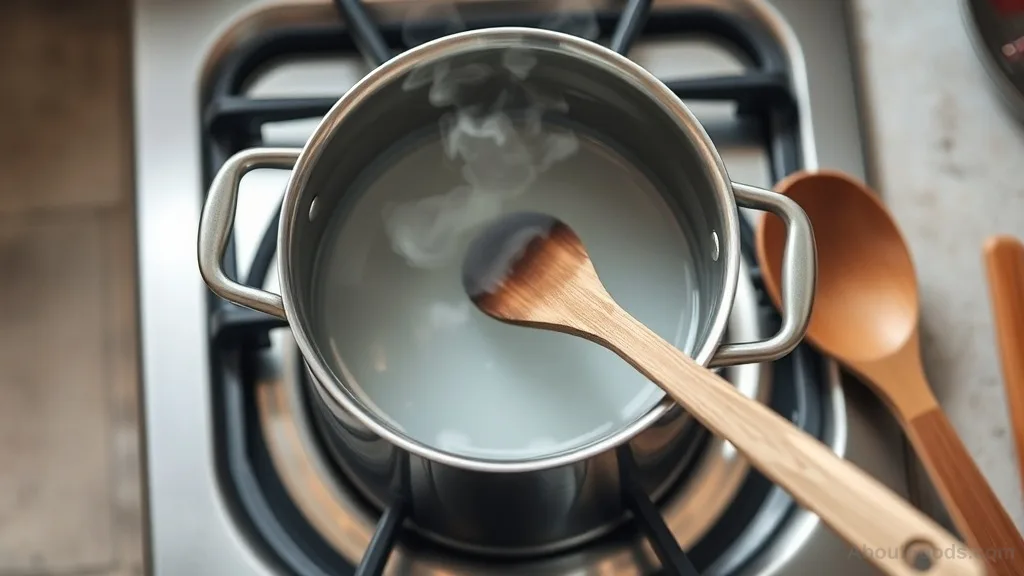
In kitchens from Moscow to Minneapolis, you will hear the same advice: add salt to your water to make it boil faster. It is one of those cooking truths passed down through generations, whispered between grandmothers and repeated by chefs on television. As someone who has spent more time with frozen vegetables than most, I appreciate efficiency. But in science, we do not trust whispers—we trust measurements. Let us examine this claim with the cold, clear eye of physics.
The idea seems logical. Salt is solid, it dissolves, perhaps it changes the water's properties in a way that heats it quicker. Many home cooks swear by it, adding a pinch as soon as the pot hits the stove. But if you have ever timed it, you might notice something: the difference, if any, is not what you expect. This article will dissect why the myth persists, what actually happens when salt meets water, and how you should use this knowledge in your cooking. No speculation, just facts—efficiently delivered.
The Physics of Boiling: What Happens at 100°C?
To understand salt's effect, we must first understand boiling. Water boils when its vapor pressure equals the atmospheric pressure pressing down on it. At sea level, this happens at 100°C (212°F). When you heat water, you are adding energy that increases the motion of water molecules until they escape as steam. The boiling point is a fixed property for pure water under given conditions—but it is not fixed for solutions.
- Pure water at sea level: boils at 100°C (212°F)
- At higher altitudes: boiling point drops (e.g., 95°C in Denver)
- In a pressure cooker: boiling point rises above 100°C
This is where salt enters the equation. When you dissolve salt in water, you create a solution—not pure water anymore. Solutions have different physical properties, governed by what chemists call colligative properties. These depend on the number of dissolved particles, not their identity. Salt (sodium chloride) dissociates into sodium and chloride ions, effectively doubling the particle count compared to a non-ionic solute. More particles mean changes to boiling and freezing points.
Salt's Actual Effect: Raising the Boiling Point
Contrary to the myth, salt raises the boiling point of water, a phenomenon known as boiling point elevation. This is a fundamental colligative property: adding a solute makes it harder for water molecules to escape into the vapor phase, so you need more heat (a higher temperature) to achieve boiling. The amount of increase depends on concentration—how much salt you add.
| Salt Added (per liter of water) | Approximate Boiling Point Increase | Practical Implication |
|---|---|---|
| 10 grams (about 2 teaspoons) | 0.5°C (0.9°F) | Negligible in most cooking |
| 30 grams (about 2 tablespoons) | 1.5°C (2.7°F) | Noticeable in precise applications |
| 60 grams (very salty water) | 3°C (5.4°F) | Significant for candy-making or canning |
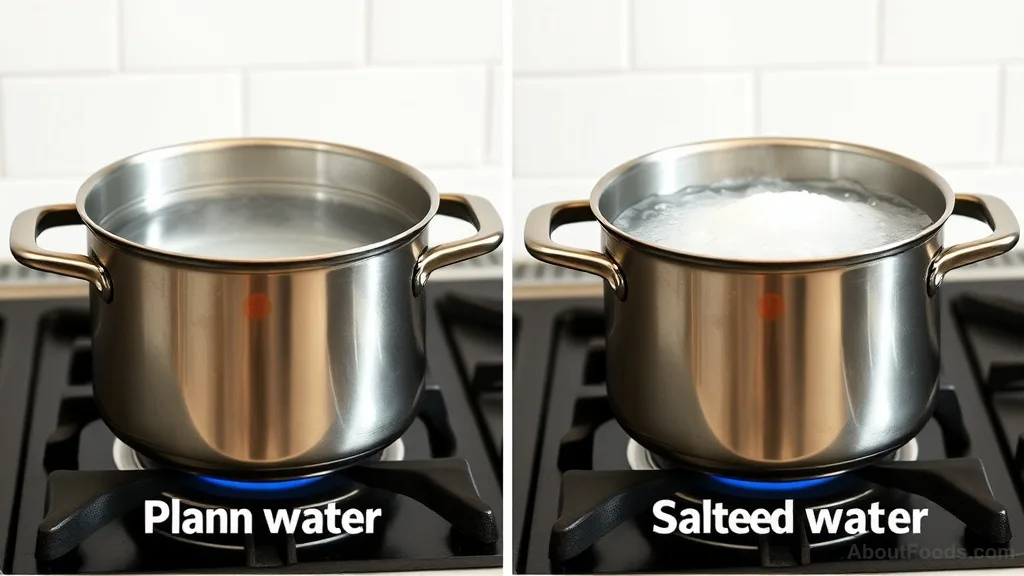
For typical cooking—like salting pasta water—you might add 10-20 grams of salt per liter. This raises the boiling point by about 0.5-1°C. That tiny increase means the water must reach a slightly higher temperature to boil, which technically requires more time and energy, not less. So, if anything, salted water boils slower, not faster. The difference is minuscule in practice, but the direction is clear: the myth has it backwards.
Why the Myth Persists: Perception vs. Reality
If salt slows boiling slightly, why do so many believe the opposite? Human perception is not always aligned with physics. Several factors create this illusion:.
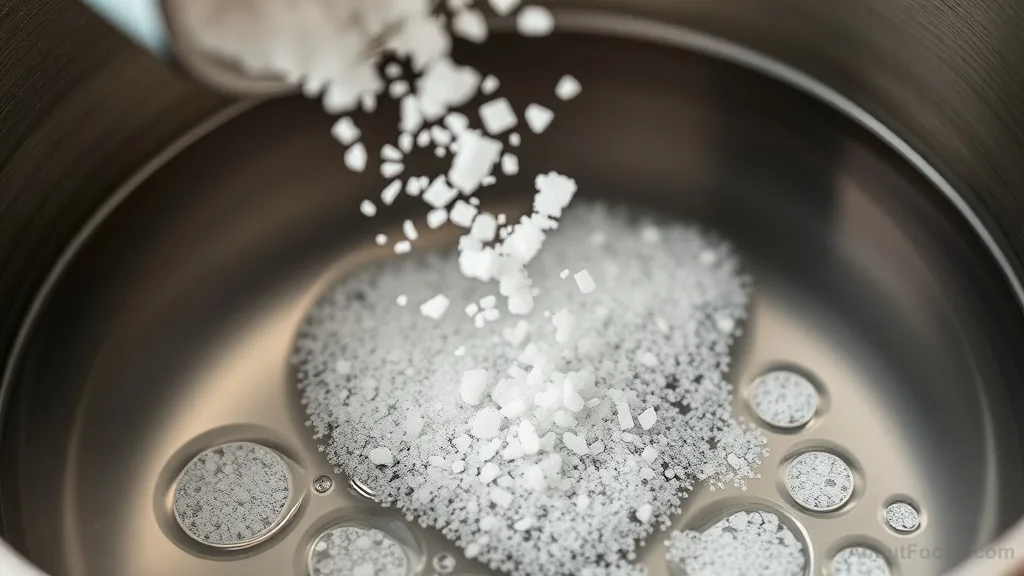
- Nucleation sites: Salt crystals provide surfaces for bubbles to form, making boiling appear more vigorous once it starts. This does not speed heating, but can look like it does.
- Timing errors: Without precise thermometers, people often judge by sight. Adding salt might coincide with water nearing boiling, creating a false correlation.
- Psychological reinforcement: The myth is comforting—it feels like a kitchen hack that saves time. Once believed, we notice confirmations and ignore contradictions.
As a freezer queen, I value truths that withstand cold scrutiny. In my kitchen, I have tested this with a thermometer and timer. Salted water consistently reached boiling a few seconds later than unsalted, all else equal. The difference was trivial—perhaps 1-2 seconds per liter—but it was there. In the grand scheme of cooking, this does not matter. What matters is understanding why we do things, not just repeating them.
Practical Implications for Home Cooks
Now that we have dismantled the myth, let us talk application. Should you salt your water? Absolutely—but for the right reasons. Salt in cooking water seasons food from within, enhancing flavor in ways surface salting cannot match. It also slightly raises the boiling point, which can be useful in specific scenarios.
A common mistake is adding salt too early in hopes of faster boiling. This is pointless—add it whenever convenient. Another error is using massive amounts of salt expecting dramatic time savings. You would need impractically salty water to see any meaningful change, and it would ruin the food's taste. Instead, salt for flavor, ignore the clock, and focus on proper technique.
Broader Kitchen Science: Other Boiling Point Myths
The salt myth is part of a family of kitchen misconceptions about boiling. Let us briefly address two others, so you can cook with clearer understanding.
In my experience, efficient cooking comes from knowing these details, not from magical thinking. Like keeping a well-organized freezer, it is about control and predictability. Embrace the science, and your kitchen will run more smoothly—even if the water takes an extra second to boil.
FAQ: Quick Answers on Salt and Boiling
How much does salt actually slow down boiling?
For typical cooking amounts (e.g., 1-2 tablespoons per gallon), the delay is about 1-2 seconds per liter of water. This is practically unnoticeable and irrelevant for home cooking.
Should I add salt before or after water boils?
It does not matter for boiling speed. Add it whenever convenient—before heating ensures it dissolves evenly, but after boiling works too if you forget.
Does the type of salt matter?
No. Table salt, sea salt, or kosher salt all dissociate into ions similarly. Use whatever you have, but measure by weight for consistency if precision matters.
Can I use this knowledge to save energy?
Not really. The energy saved by not adding salt is microscopic. For real efficiency, use a lid, match pot size to burner, and start with hot tap water.
Why do chefs still say to salt water for faster boiling?
Tradition and misinformation. Many chefs salt for flavor and repeat the speed myth out of habit. Trust the physics, not the folklore.
Rate this article
4 out of 5 from 9 ratings

Written by
Anya Ivanov
Specialises in Russian cuisineAnya makes pelmeni in batches of 500. She says freezing them is the only way to survive winter.
Describe yourself in three words: Stoic, efficient, freezer queen.