Myth Busting
The Sweet Truth: Does Sugar Actually Reduce Tomato Sauce Acidity, or Just Hide It?
Many cooks add sugar to tomato sauce to cut acidity, but does it chemically change the sauce or simply mask the sour taste? We explore the science behind pH, taste perception, and better alternatives for balanced flavor.
The Sweet Truth: Does Sugar Actually Reduce Tomato Sauce Acidity, or Just Hide It?
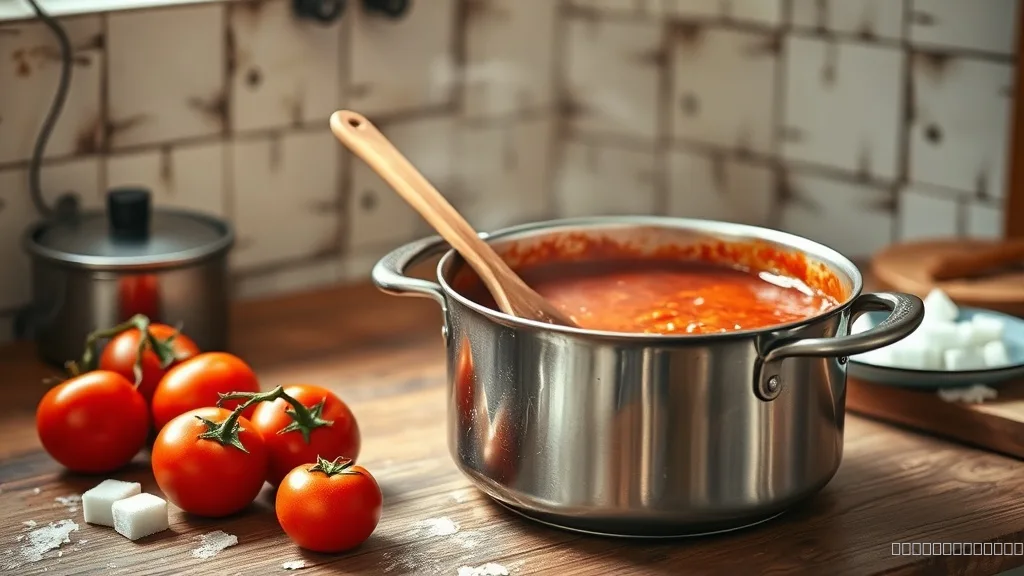
In my grandmother's kitchen in Sichuan, tomatoes were always treated with reverence—their bright acidity a counterpoint to rich, slow-cooked meats. She never added sugar to her tomato-based sauces. Yet, in Western kitchens, I've watched countless cooks sprinkle spoonfuls of sugar into simmering tomato sauce, believing they're 'cutting the acidity.' This practice always made me pause, like watching someone add too much salt to a delicate broth. As a food scientist with roots in both Chinese culinary tradition and modern kitchen science, I want to explore this question slowly and carefully: Does sugar actually reduce the acidity of tomato sauce, or does it merely mask the sour taste? The answer, like many things in cooking, lives in the space between chemistry and perception.
The Myth We've All Heard: Sugar as Acidity Reducer
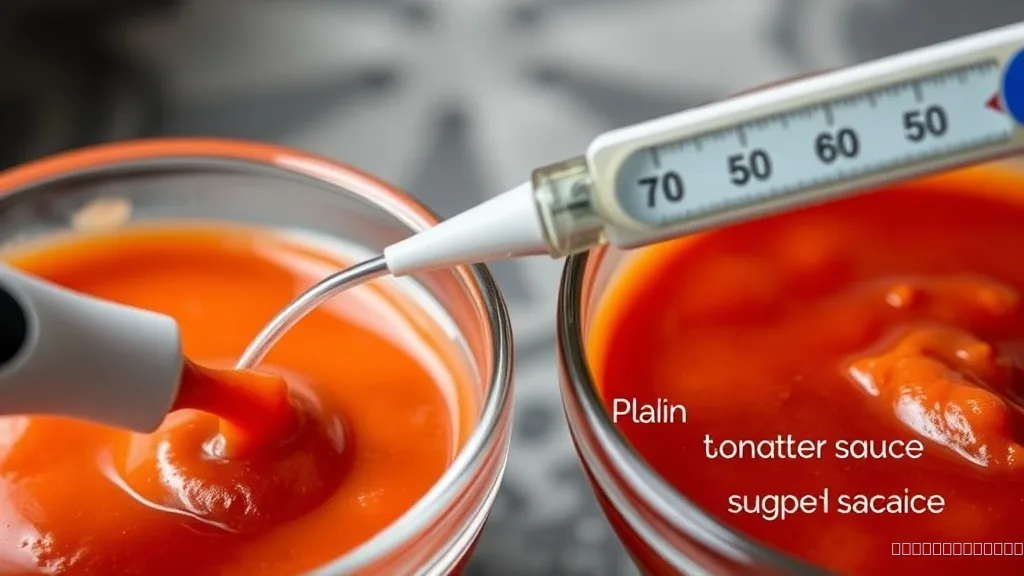
The belief is widespread: add a teaspoon (or more) of sugar to your tomato sauce, and it will 'balance' or 'reduce' the acidity. You'll find this advice in cookbooks, cooking shows, and family recipes passed down through generations. The logic seems sound—sweetness opposes sourness, so adding sugar should counteract the tartness of tomatoes. But this confuses two different concepts: chemical acidity (measured by pH) and perceived sourness (a taste sensation). In food science, these are related but distinct. Acidity refers to the concentration of hydrogen ions in a solution—what we measure with pH strips or meters. Sourness is how our taste buds interpret certain acids. Sugar can influence the latter without changing the former.
- Common belief: Sugar chemically neutralizes tomato acids
- Reality check: Sugar doesn't alter pH significantly
- Where the confusion lies: Equating taste perception with chemical change
The Chemistry of Tomato Acidity: What's Really in Your Sauce
Tomatoes naturally contain several organic acids—primarily citric acid and malic acid—that give them their characteristic tartness. These acids dissociate in water, releasing hydrogen ions that lower the pH. Most tomato varieties have a pH between 4.3 and 4.9, placing them firmly in the acidic range (neutral is 7.0). When you cook tomatoes, some volatile acids may evaporate, and the concentration changes as water cooks off, but the fundamental acidic compounds remain. Sugar (sucrose) is a neutral molecule—it doesn't react with these acids to form new compounds. Adding sugar to tomato sauce is like adding sand to vinegar: they coexist without chemical interaction. The pH stays essentially the same.
How Our Taste Buds Deceive Us: The Masking Effect
Here's where the magic—or rather, the illusion—happens. Our taste perception is complex and interactive. Sweetness can suppress our perception of sourness through what sensory scientists call 'taste masking' or 'taste interaction.' When sugar molecules bind to sweet receptors on our tongue, they send signals to our brain that can partially override the signals from sour receptors. It's not that the acidity disappears; it's that our attention is diverted. Think of it like a loud conversation in a noisy room—you can still hear the background noise, but you're focusing on the conversation. This masking effect is why a sweetened tomato sauce might taste less acidic to you, even though its chemical acidity is identical to an unsweetened version.
- Taste interaction: Sweet signals compete with sour signals in neural processing
- Threshold effect: Sugar raises the threshold at which we perceive sourness
- Individual variation: Some people are more sensitive to this masking than others
What Actually Reduces Acidity: Science-Based Methods
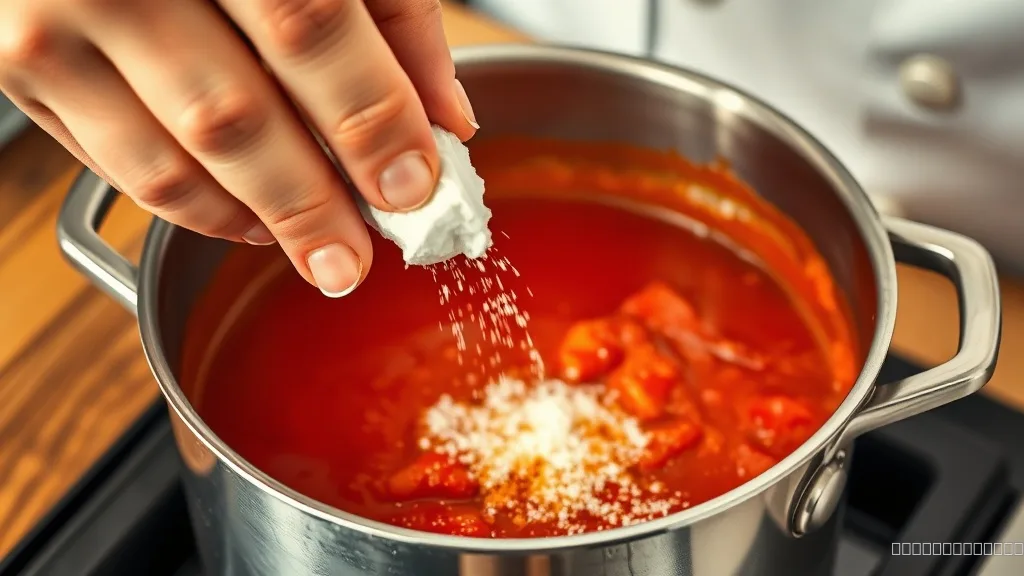
If you want to genuinely lower the acidity of your tomato sauce (changing the pH, not just the taste), you need methods that chemically neutralize acids. The most effective kitchen-friendly approach is adding a small amount of baking soda (sodium bicarbonate). Baking soda is alkaline (high pH) and reacts with acids to form carbon dioxide gas (those fizzing bubbles you see) and water, along with neutral salts. This reaction actually consumes hydrogen ions, raising the pH. Other methods include adding dairy (like cream or butter), which contains proteins that buffer acids, or incorporating naturally sweet vegetables like carrots or onions that contribute sweetness without being pure sugar. Cooking tomatoes longer can also help—not by reducing acidity, but by concentrating flavors and allowing some volatile acids to evaporate.
Practical Takeaways for Home Cooks
Understanding this science doesn't mean you should never add sugar to tomato sauce. Rather, it empowers you to make informed choices. If your goal is to mask sourness because you prefer a sweeter profile, sugar works perfectly—it's a legitimate culinary technique. But if you're trying to reduce chemical acidity (for dietary reasons or to prevent heartburn), sugar won't help. Instead, reach for baking soda or consider balancing with fat. My grandmother's approach—using time and complementary ingredients—often yields the most nuanced results. She would slowly cook tomatoes with a splash of oil and perhaps a pinch of salt, allowing their natural sweetness to emerge without added sugar. This patience, this willingness to let ingredients speak for themselves, is what I miss most about her kitchen.
Common Mistakes and How to Avoid Them
Many cooks stumble not because their technique is wrong, but because they misunderstand what they're trying to achieve. The biggest mistake is adding sugar early in cooking, then tasting and adding more, ending up with a cloyingly sweet sauce that still has underlying acidity. Instead, taste your sauce near the end of cooking, then adjust sweetness if needed. Another error is using baking soda too aggressively—it's powerful, and excess can leave a metallic or soapy aftertaste. Start with a tiny amount, let it react completely, then taste before adding more. Finally, don't overlook tomato selection: riper tomatoes naturally have higher sugar content and lower perceived acidity. Choosing plum or San Marzano varieties, which are bred for sauce-making, often reduces the need for any additives.
- Adding sugar too early: Adjust sweetness at the end, not the beginning
- Overusing baking soda: Start with 1/4 tsp per cup, taste, then add more if needed
- Ignoring tomato variety: Choose ripe, sauce-specific tomatoes for better balance
- Forgetting salt: Salt enhances overall flavor and can reduce perceived acidity
Frequently Asked Questions
Does brown sugar work better than white sugar for reducing acidity?
No—both are primarily sucrose and don't chemically reduce acidity. Brown sugar contains molasses, which adds caramel notes but doesn't change pH. The choice is about flavor preference, not acidity reduction.
Can I use honey or maple syrup instead of sugar?
Yes, but similarly, they mask rather than reduce acidity. They contribute distinct flavors (floral for honey, woody for maple) that may complement your sauce. Remember they're still sugars and don't alter pH.
Why do some people get heartburn from tomato sauce even with added sugar?
Because sugar doesn't reduce chemical acidity. Heartburn is often triggered by low pH (high acidity). If acidity is the issue, sugar won't help—try baking soda or dairy instead.
How much sugar is typically added to tomato sauce?
Recipes vary widely, from 1 teaspoon to 2 tablespoons per 4 cups of sauce. Start with less—you can always add more. Remember, you're balancing taste, not chemistry.
Are there health concerns with adding sugar to tomato sauce?
Added sugar contributes empty calories. If you're managing sugar intake, consider natural sweetness from vegetables or simply embrace the tomato's natural tartness—many traditional cuisines do.
Rate this article
4.9 out of 5 from 17 ratings

Written by
Mei Zhang
Specialises in Chinese cuisineMei Zhang is a dumpling artist who puts a pleat in each one to represent a year of her life. She is 32.
Describe yourself in three words: Nostalgic, artistic, slow but perfect.