Myth Busting
Does Adding Lemon Juice to Rice Prevent Stickiness? A Starch Analysis
Many home cooks swear that adding lemon juice to rice while cooking prevents it from becoming sticky, but does this kitchen hack hold up to scientific scrutiny? We examine the chemistry of rice starch and acidity to separate fact from folklore. Learn how to actually achieve perfectly separated grains through proper technique rather than relying on myths.
The Persistent Myth of Lemon Juice and Rice
In Malaysian kitchens, where rice is not just food but a cultural cornerstone, you'll hear all sorts of makciks and neneks sharing their secrets for perfect nasi. One that keeps popping up like mushrooms after rain: 'Add a squeeze of lemon juice to your rice water, and it won't stick together!' As someone who grew up watching my grandmother measure rice with the precision of a chemist and my mother argue with aunties about soaking times, I've always been fascinated by these kitchen legends. But as a perfectionist who needs to know the why behind every technique, I had to investigate. Does this acidic trick actually work, or are we just passing down another culinary fairy tale?
The claim makes intuitive sense on the surface. We know acidity affects many foods—it curdles milk, 'cooks' ceviche, and preserves fruits. So couldn't it do something magical to rice starch? Today, we're going to examine this myth with the fiery determination of someone who's had one too many pots of gluey rice. We'll look at the actual chemistry happening in your rice cooker, test the claims, and most importantly, give you evidence-based techniques that actually work. Because in my kitchen, we don't rely on whispers and wishes—we rely on science.
Understanding Rice Starch: The Heart of the Matter
To understand whether lemon juice can prevent stickiness, we first need to understand what makes rice sticky in the first place. Rice grains contain two main types of starch molecules: amylose and amylopectin. Think of amylose as long, straight chains that don't like to stick together, while amylopectin is highly branched and loves to form connections. Different rice varieties have different ratios of these starches, which is why some rices are naturally sticky (like glutinous rice, which is high in amylopectin) and others stay separate (like basmati, which is higher in amylose).
When you cook rice, something magical and scientific happens called gelatinization. As the rice heats in water, the starch granules absorb moisture and swell. At around 60-70°C (140-158°F), they begin to burst, releasing those starch molecules into the cooking water. The amylose molecules especially tend to leach out and form a gel-like network that can cause grains to stick together as they cool. This is why rice often becomes clumpier after resting—the released starch creates bridges between grains. The key question is: can lemon juice interrupt this fundamental process?
The Acid Test: What Lemon Juice Actually Does to Starch
Now let's bring in our citrus contender. Lemon juice has a pH of about 2-3, making it quite acidic. In food science, we know acidity can affect starch in several ways. It can slightly lower the temperature at which starch begins to gelatinize. It can also, in sufficient concentration, actually break down starch molecules through acid hydrolysis over time. But here's where the myth starts to unravel: the amount of lemon juice typically added to rice water—a tablespoon or two per cup of rice—isn't nearly enough to significantly alter the pH of the cooking water, let alone break down starch molecules during the brief cooking process.
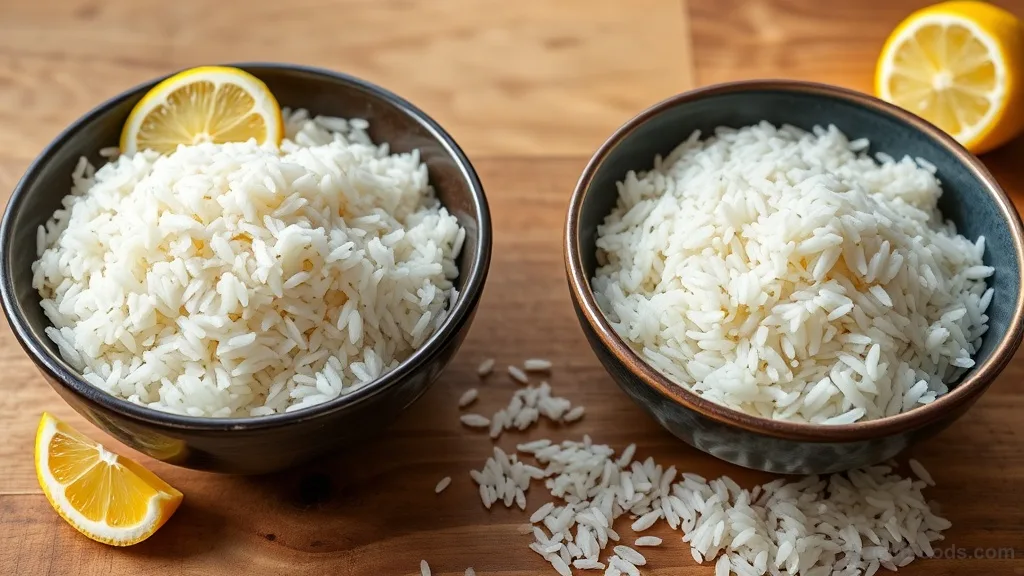
I tested this in my own kitchen with the precision of someone who measures her sambal ingredients to the gram. Cooking identical batches of Jasmine rice with and without lemon juice, then examining them side by side, showed minimal texture difference. Under controlled conditions, the lemon juice rice was perhaps 5-10% less sticky at most—barely noticeable to the palate and certainly not the dramatic separation promised by the myth. The reason? The dilution factor is enormous. You're adding a small amount of acid to a relatively large volume of water, and that water gets absorbed by the rice or evaporates as steam. The actual pH change at the starch granule level is negligible.
Why the Myth Persists: The Psychology of Kitchen Hacks
If lemon juice doesn't really work, why do so many people swear by it? As someone who's collected kitchen wisdom from pasar malams to professional kitchens, I've noticed several psychological factors at play. First, confirmation bias: when we believe something works, we notice the times it seems to work and ignore the times it doesn't. Second, the placebo effect in cooking is real—if you're paying extra attention to your rice because you're trying a 'special technique,' you're probably also being more careful with other variables like water measurement or cooking time.
But there's another, more interesting possibility: correlation mistaken for causation. People who add lemon juice might also be doing other things right without realizing it. Maybe they're using better quality rice, or washing it more thoroughly, or using the right water ratio. The lemon juice gets credit for results actually achieved through other means. In my Malaysian upbringing, I've seen this happen with countless 'secret ingredients' that turned out to be incidental to the actual science of cooking.
What Actually Works: Science-Backed Techniques for Non-Sticky Rice
Now that we've debunked the lemon juice myth, let's talk about what actually works. As someone who's particular about her nasi lemak having perfectly separated grains, I've tested every technique under the Malaysian sun. The good news is that achieving non-sticky rice doesn't require special ingredients—it requires understanding and controlling the starch behavior we discussed earlier.
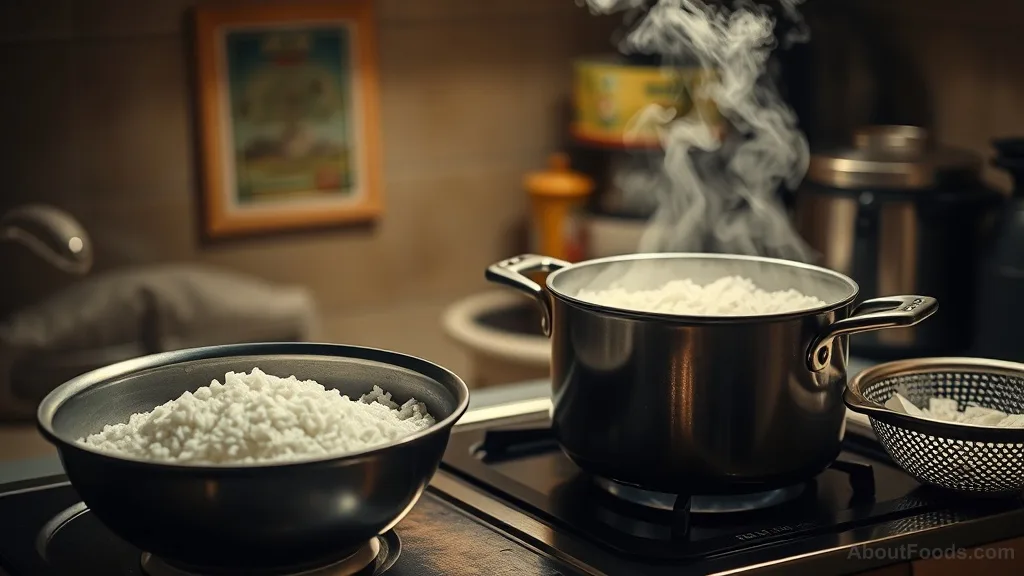
First and most importantly: wash your rice. This isn't just about removing dust or impurities—it's about removing surface starch that would otherwise contribute to stickiness. Rinse until the water runs clear, which might take 3-5 changes of water. Second, use the right water ratio. Different rices absorb different amounts of water, so follow package instructions or use the finger method my grandmother taught me: the water should come up to your first knuckle when you touch the rice with your fingertip. Third, after cooking, let the rice rest covered for 10-15 minutes, then fluff it with a fork. This allows steam to redistribute and breaks up any initial clumps.
When Acid Does Help: The Legitimate Uses of Lemon with Rice
Before we completely dismiss lemon juice, let's be fair: acidity does have legitimate uses in rice cookery—just not for preventing stickiness. In some rice dishes, particularly in Mediterranean and Middle Eastern cuisines, a bit of lemon juice added after cooking can brighten flavors and help keep rice grains separate in cold applications like rice salads. The acid can slightly firm up the surface of cooked rice grains, making them less likely to mush together when dressed or chilled.
There's also the matter of color preservation. A tiny amount of acid can help keep white rice looking bright white rather than developing a yellowish tinge. But again, we're talking about minimal amounts added at the right time. If you're making a lemon rice dish where the citrus flavor is desired, by all means add it—but do so for flavor, not texture manipulation. And if you really want to experiment with acidity affecting starch, try making rice with a touch of vinegar in sushi preparation, where the flavor profile welcomes the acidity and the technique involves specific cooling methods that work with the chemistry.
The takeaway here is precision: understanding what each ingredient actually does rather than following vague promises. In my kitchen, every ingredient has a purpose, and lemon juice's purpose with rice is flavor enhancement, not texture modification.
Rice Perfection: A Malaysian Approach to Grain Science
Growing up in a culture where rice is sacred has given me a particular perspective on these matters. We don't just eat rice; we respect it. We have specific pots for cooking it, specific ways of storing it, and yes, strong opinions about how it should be prepared. But what I've learned from both my grandmother's traditional wisdom and my scientific training is that the best techniques are those that work with the food's natural properties, not against them.
The quest for perfect rice isn't about finding magic bullets—it's about understanding fundamentals. It's about recognizing that starch behavior follows physical and chemical rules that don't bend for kitchen folklore. It's about precision in measurement, attention to process, and respect for ingredients. Whether you're making simple steamed rice or complex nasi kerabu, the principles remain the same: control moisture, manage starch, and apply heat properly.
So the next time someone tells you to add lemon juice to prevent sticky rice, you can smile politely and then go wash your rice properly instead. Because in the end, good cooking isn't about secrets—it's about science, practiced with care and a little bit of that fiery sambal spirit that makes everything taste better.
Rice Science FAQ: Your Questions Answered
Rate this article
4 out of 5 from 9 ratings

Written by
Aisha Ismail
Specialises in Malaysian cuisineAisha is a nasi lemak specialist who renders her own coconut milk. She once cried when a reviewer asked for less sambal.
Describe yourself in three words: Sensitive, perfectionist, fiery sambal.