Myth Busting
The 'Clean' Cutting Board Myth: Why Your Abuelita's Wooden Board Was Right All Along
For decades, we've been told plastic cutting boards are safer than wood because they're easier to clean. New research reveals this is pure nonsense - properly maintained wooden boards are naturally antimicrobial and harbor fewer bacteria than plastic. Let's bury this myth with science and common sense.
The Great Cutting Board Lie We've All Been Fed
Listen, hermanos y hermanas - I need to wake up some ancestors here. For 30 years, every health inspector, cooking show host, and kitchenware salesman has been telling us the same story: 'Plastic cutting boards are safer. They're non-porous. They're easier to clean. Wood harbors bacteria.' And we believed them! We threw away our abuelitas' beautiful wooden boards and replaced them with cheap plastic that warps, stains, and smells like defeat. But here's the spicy truth: the science says exactly the opposite. A 1993 UC Davis study already proved it, and more recent research keeps confirming it - properly maintained wooden cutting boards are actually safer than plastic. Let's cut through the nonsense.
The Study That Changed Everything (But Everyone Ignored)
Back in 1993, food safety researcher Dean O. Cliver at UC Davis decided to test this plastic superiority myth. He inoculated wooden and plastic cutting boards with bacteria like Salmonella, Listeria, and E. coli. The results? After three minutes, 99.9% of bacteria placed on wooden boards were unrecoverable. On plastic? The bacteria thrived. Even more shocking: when Cliver contaminated boards with raw chicken juices (the real kitchen scenario), then cleaned them normally, the wooden boards showed almost no remaining bacteria while plastic boards still harbored pathogens. Why did this study get buried? Follow the money, my friends - plastic is cheaper to manufacture and sells better with scary 'germ' marketing.
| Bacteria Type | Recovery from Wood (after cleaning) | Recovery from Plastic (after cleaning) | Key Finding |
|---|---|---|---|
| Bacteria Type | Recovery from Wood (after cleaning) | Recovery from Plastic (after cleaning) | Key Finding |
| Salmonella | 0.6% | 7.5% | Wood reduced bacteria 12x better |
| Listeria | Less than 0.1% | 4.2% | Plastic retained 40x more bacteria |
| E. coli | 0.9% | 6.8% | Wood surfaces naturally antimicrobial |
How Wood Works Its Magic: The Science of Natural Antibacterial Action
Wood isn't just sitting there looking pretty - it's actively fighting bacteria through several mechanisms. First, wood is hygroscopic, meaning it absorbs moisture. When bacteria get trapped in those tiny pores, they dehydrate and die. Second, many hardwoods contain antimicrobial compounds called extractives - tannins, phenols, and other chemicals that naturally inhibit bacterial growth. Maple, walnut, and cherry (common cutting board woods) are particularly effective. Third, wood's capillary action pulls bacteria deep into the board where they can't survive. Plastic, meanwhile, develops deep knife grooves where bacteria hide and multiply, protected from cleaning and disinfectants.
- Moisture absorption: Wood draws water and bacteria into its fibers, causing dehydration
- Antimicrobial compounds: Natural chemicals in hardwoods inhibit bacterial growth
- Capillary action: Pulls contaminants away from the surface
- Surface drying: Wood dries faster than plastic, creating less hospitable environment for bacteria
The Plastic Problem: Why 'Non-Porous' Is a Marketing Trick
Here's where the plastic industry played us. They said 'non-porous' means 'cleaner.' But in a real kitchen, plastic cutting boards develop deep grooves from knife cuts. These grooves become perfect little bacteria hotels - protected from soap, water, and even bleach. Studies show bacteria can survive in plastic knife scars for days. Meanwhile, when wood gets cut, the fibers compress and partially close, creating a less hospitable environment. And let's talk about cleaning: plastic boards need harsh chemicals (bleach solutions) to be properly sanitized, while wood responds better to gentler, more natural cleaning methods.
Practical Wisdom: How to Actually Keep Your Cutting Board Safe (Wood or Plastic)
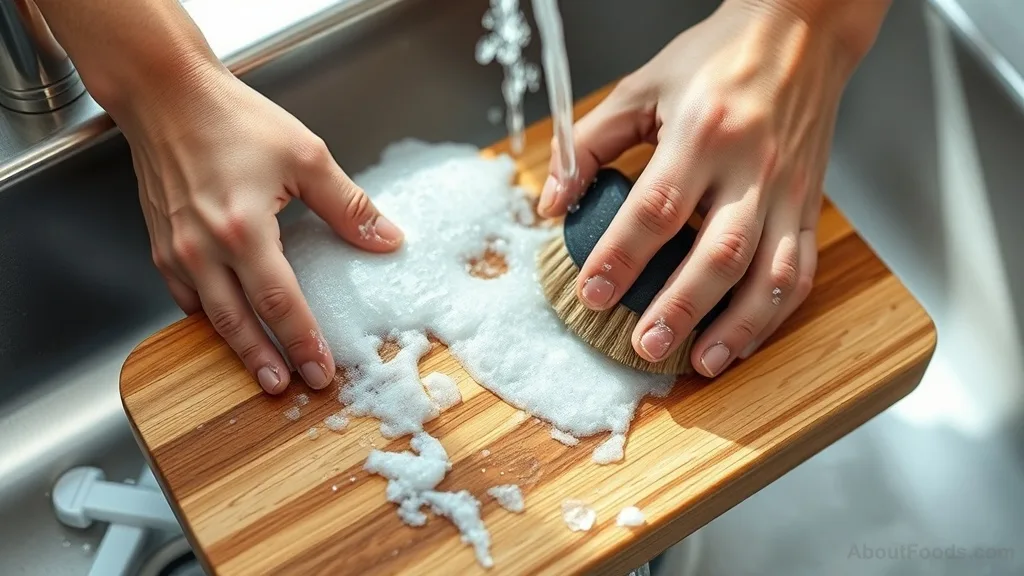
The real issue isn't wood versus plastic - it's maintenance versus neglect. Here's how to keep any cutting board truly clean and safe. First, always clean immediately after use with hot, soapy water. For wood, avoid soaking (it can warp the board). For plastic, check if it's actually dishwasher safe - many warp in high heat. Second, sanitize properly: for wood, use a vinegar solution (1 part vinegar to 4 parts water) or hydrogen peroxide. For plastic, you can use a diluted bleach solution (1 tablespoon bleach per gallon of water). Third, dry thoroughly - stand boards on edge to air dry completely. Fourth, maintain the surface: oil wooden boards monthly with food-grade mineral oil, and replace plastic boards when they develop deep grooves.
The Ancestor's Wisdom: What Traditional Kitchens Knew
My abuelita in Peru had one cutting board - a thick slab of local hardwood that served her for 40 years. She'd scrub it with lime and salt, dry it in the sun, and occasionally rub it with oil. It developed a beautiful patina and never made anyone sick. Traditional kitchens worldwide understood wood's natural properties. Japanese cooks use hinoki wood for its antimicrobial qualities. European butchers used thick end-grain maple blocks. These weren't just aesthetic choices - they were practical responses to material science that we're now rediscovering. The modern obsession with 'sterile' plastic surfaces ignores how nature already solved these problems.
Your Cutting Board Action Plan
So what should you actually do in your kitchen? First, if you have a good wooden board, keep using it and maintain it properly. Second, if you prefer plastic, that's fine too - but replace it regularly and sanitize aggressively. Third, consider using different boards for different tasks: one for raw meats, one for vegetables, one for bread. Color-coded plastic boards work for this system. Fourth, whatever material you choose, the most important factors are immediate cleaning, proper drying, and regular maintenance. The material matters less than how you treat it.
- Keep and maintain your wooden boards - they're likely safer than you thought
- Replace plastic boards at first sign of deep grooves
- Use separate boards for meats and produce regardless of material
- Clean immediately after every use - don't let juices sit
- Dry completely before storing - moisture is bacteria's best friend
Cutting Board FAQ: Your Questions Answered
Can I put my wooden cutting board in the dishwasher?
Absolutely not. The heat and water will warp and crack the wood, destroying its structural integrity. Always hand wash wooden boards.
How often should I replace my plastic cutting board?
Replace plastic boards when they develop deep knife grooves that don't come clean. For heavy users, this might be every 6-12 months. Light users might get 2-3 years.
Is bamboo as good as hardwood for cutting boards?
Bamboo is technically a grass, not wood. It's harder than many woods and has natural antimicrobial properties, but it can be tougher on knives. It's a good alternative if sustainably sourced.
What's the best oil for maintaining wooden cutting boards?
Food-grade mineral oil is ideal. Avoid vegetable oils (they can go rancid) and never use furniture oil (not food-safe). Apply monthly or when board looks dry.
Should I use bleach on my wooden cutting board?
Generally no - bleach can break down wood fibers and leave chemical residues. Use vinegar or hydrogen peroxide solutions instead for natural disinfection.
Can cutting board grooves be repaired?
For wood: light sanding can smooth minor grooves. For plastic: once grooves are deep, replacement is better than repair. Deep grooves in any material trap bacteria.
Rate this article
4.9 out of 5 from 17 ratings

Written by
Mateo Quispe
Specialises in Peruvian cuisineMateo makes ceviche with leche de tigre that will wake your ancestors. He uses rocoto peppers for heat.
Describe yourself in three words: Acidic, spicy, ancestor-waking.