Myth Busting
The Myth of the 'Clean' Plate Club: Why Your Eyes Can't Tell When Food Is Actually Done
For generations, home cooks have relied on visual cues like golden-brown crusts or clear juices to determine when food is properly cooked. This article dismantles the 'clean plate club' mentality by explaining why these visual doneness tests are unreliable and often dangerous. Learn the science behind why color, texture, and appearance can deceive you, and discover practical, evidence-based methods to ensure your food is both safe and delicious.
Introduction: The Dangerous Allure of the 'Clean Plate Club'
Growing up in an Indian household where every meal was an event, I learned early that food should delight all senses—the aroma of tempering mustard seeds, the sizzle of onions hitting hot oil, and yes, that perfect golden-brown color on a paratha that promised crispiness. But here's my nerdy, sourdough-loving confession: I've burned more than my share of bread chasing that color. We've all been taught to cook until things 'look done'—until juices run clear, until the crust is beautifully browned, until nothing pink remains. This 'clean plate club' mentality, where visual perfection equals doneness, is one of the most persistent and dangerous myths in home cooking. Let's unpack why your eyes are terrible judges of food safety and quality, and what you should trust instead.
The Science of Color: Why Browning Lies to You
That beautiful brown crust on your chicken or bread comes from the Maillard reaction—a complex chemical dance between amino acids and reducing sugars that happens around 280-330°F (138-166°C). It creates flavor, aroma, and color. But here's the crispy truth: Maillard browning depends on surface temperature, moisture, pH, and sugar content, not internal doneness. A piece of meat can develop a perfect crust while still raw inside if your pan is hot enough. Conversely, food can reach safe internal temperatures without browning if cooked gently. Think of browning as decoration—it makes food appealing but tells you nothing about what's happening at the center.
- Browning occurs at surface temperatures above 280°F (138°C), while pathogens die at internal temperatures as low as 145°F (63°C) for many meats
- Acidic ingredients (like tomatoes or vinegar) inhibit browning, so food might be fully cooked but pale
- Sugar content affects browning—bread with more sugar browns faster, but that doesn't mean it's baked through
The 'Juices Run Clear' Fallacy: A Test That Fails the Test
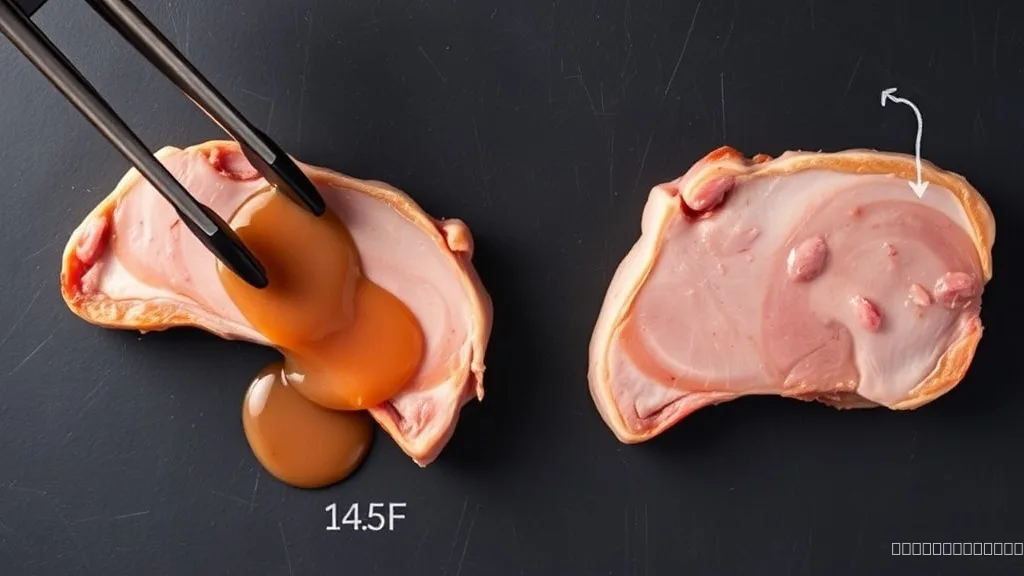
Perhaps the most ingrained visual test: pierce meat and wait for clear juices. This myth is so pervasive it feels like culinary gospel. But juice color depends on myoglobin—a protein in muscle tissue that changes color with temperature and pH. As meat cooks, myoglobin denatures, turning from red to pink to gray. However, different animals have different myoglobin concentrations. Chicken naturally has less myoglobin than beef, so its juices might appear clear at lower temperatures. More importantly, juice color varies by the animal's age, diet, and even exercise level. A well-exercised older chicken might show pink juices even at safe temperatures. Relying on this test is like judging a book by its cover—you might get lucky, but you'll often be wrong.
| Food | Common Visual Test | Why It Fails | Safe Alternative |
|---|---|---|---|
| Chicken | Juices run clear | Myoglobin levels vary; color changes at different temperatures for different birds | Cook to 165°F (74°C) internal temperature |
| Pork | No pink remains | Modern pork is leaner; slight pink at 145°F (63°C) is safe and juicier | Cook to 145°F (63°C) with 3-minute rest |
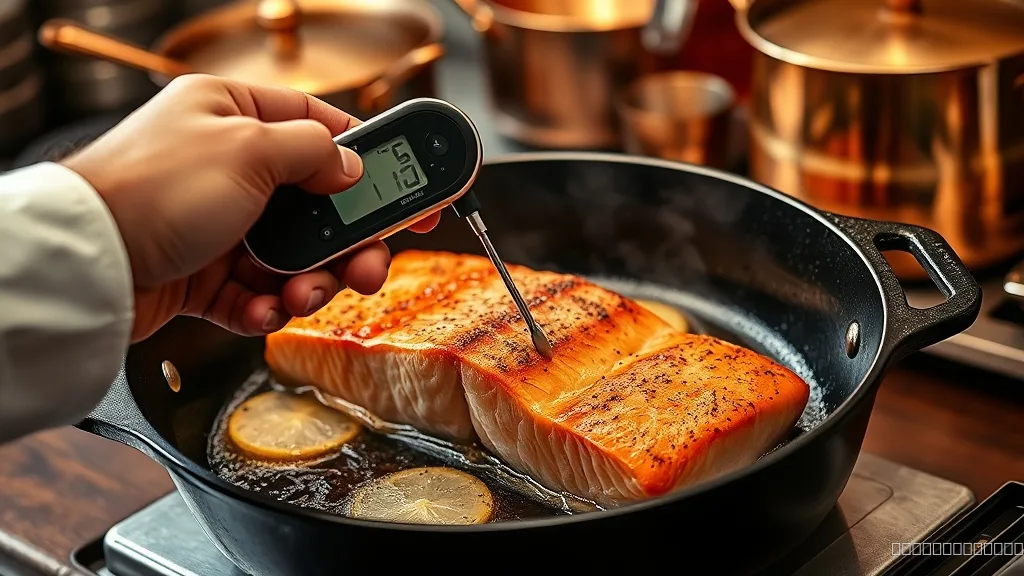
| Fish | Flakes easily with fork | Flaking depends on species and thickness; can overcook easily | Cook to 145°F (63°C) or until opaque |
| Ground Meat | Brown throughout | Browning happens quickly; might not reach safe center temperature | Cook to 160°F (71°C) for beef, 165°F (74°C) for poultry |
Texture and Feel: The Subjective Trap
Then there's the 'feel test'—poking meat to judge firmness, or pressing bread to check springiness. While experienced chefs develop this skill over decades, it's highly subjective and inconsistent for home cooks. Meat firms up as proteins denature and moisture evaporates, but different cuts have different connective tissue and fat content, changing how they feel. A tenderloin will feel firmer at lower temperatures than a shoulder. Bread springiness depends on gluten development and oven spring, not necessarily internal temperature. Your finger might tell you something, but it won't tell you the temperature—and temperature is what kills pathogens and determines doneness.
The Thermometer Revolution: Objective Data Beats Guesswork
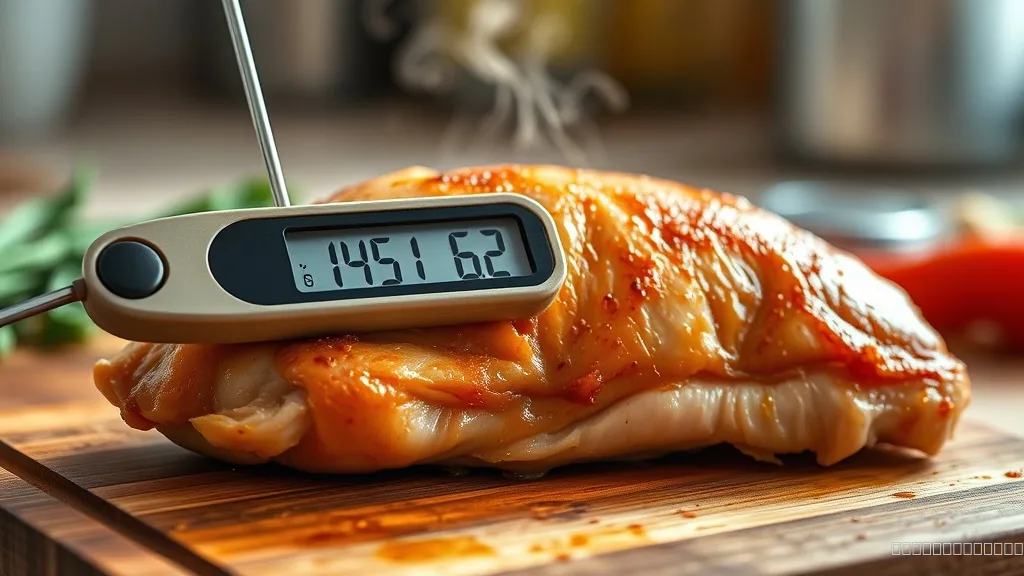
Here's where my inner science nerd gets excited: thermometers don't lie. They measure the actual temperature where pathogens die and proteins denature. An instant-read digital thermometer is the most important tool in your kitchen—more reliable than any visual cue. For meats, poultry, and fish, internal temperature is the only accurate measure of safety. For baked goods, internal temperature ensures proper starch gelatinization and protein coagulation without overbaking. Think of it this way: you wouldn't judge a fever by looking at someone's face; you'd use a thermometer. Why treat your food differently?
Practical Kitchen Strategies: Moving Beyond Myths
Breaking the visual doneness habit takes practice, but these strategies will make your cooking safer and more consistent. First, invest in a good digital instant-read thermometer—look for one with a thin probe and fast response time. Second, calibrate your eyes: cook with a thermometer until you learn what properly cooked food looks and feels like at safe temperatures. Third, understand carryover cooking: food continues to cook after removal from heat, so remove it 5-10°F (3-6°C) below target temperature. Finally, embrace the rest—letting meat rest allows juices to redistribute and temperatures to equalize, improving texture.
- Place the thermometer probe in the thickest part of the food, avoiding bone or fat
- For irregular shapes (like whole chicken), check multiple spots
- Clean your thermometer between uses to prevent cross-contamination
- For baked goods, insert thermometer into the center—if it hits 190-210°F (88-99°C) for breads or 200-210°F (93-99°C) for cakes, they're done
- Use visual cues as secondary indicators once you've confirmed temperature
FAQ: Your Visual Doneness Questions Answered
Can I still use visual cues if I don't have a thermometer?
In emergencies, yes—but understand the risks. Visual cues are better than nothing but unreliable. For critical foods like poultry or ground meat, it's worth waiting until you have a thermometer. Many affordable options exist under $20.
Why does restaurant food look perfectly cooked without thermometers?
Professional chefs use thermometers too—they're just discreet about it. They also cook with consistent equipment and ingredients, developing muscle memory over thousands of repetitions. Home kitchens have more variables.
What about foods where temperature isn't practical, like vegetables?
For vegetables, visual and texture cues are more appropriate since safety concerns are lower. Cook until tender-crisp or to your preference. The key is understanding when temperature matters (animal products, baked goods) versus when it doesn't.
How do I know if my thermometer is accurate?
Test it in boiling water (should read 212°F/100°C at sea level) or ice water (32°F/0°C). Many digital models have calibration features. Replace batteries regularly and handle with care to maintain accuracy.
Does this mean I should ignore browning entirely?
Not at all! Browning creates wonderful flavors via the Maillard reaction. The key is to manage browning separately from doneness. Use high heat for browning, then lower heat to cook through, or reverse-sear (cook first, then brown).
Conclusion: Embrace the Science, Ditch the Guesswork
As someone who loves both the art and science of cooking, I'll admit: letting go of visual doneness tests felt like losing a security blanket. But what I gained was infinitely better—consistency, safety, and the confidence that comes from knowing, not guessing. The 'clean plate club' is a myth born from good intentions but flawed science. Your eyes can appreciate a beautiful crust, but they can't measure 165°F. Your fingers can feel firmness, but they can't detect Salmonella. So keep enjoying that golden-brown color—just use a thermometer to make sure what's underneath is truly done. Your taste buds and your health will thank you.
Rate this article
4.5 out of 5 from 13 ratings
Written by
Anaya Iyer
Specialises in Indian cuisineAnaya Iyer (not Patel or Sharma) makes dosas so crisp they shatter like glass. She is a fermentation nerd.
Describe yourself in three words: Crispy, nerdy, sourdoh.