Myth Busting
The Myth of the 'Perfect' Knife Sharpening Angle: Why Your Blade Needs Flexibility, Not Formulas
Many home cooks chase the elusive 'perfect' sharpening angle, but the truth is more nuanced. This article explores why knife sharpening is about balance, steel type, and cutting style rather than rigid numbers. Learn how to sharpen effectively without getting lost in technical details.
Introduction: The Search for Sharpening Perfection
Like many Korean cooks who grew up watching their mothers and grandmothers prepare endless batches of kimchi, I learned early that a sharp knife isn't just a tool—it's an extension of the cook's hand. For years, I chased what I thought was the holy grail of knife maintenance: the perfect sharpening angle. I'd measure meticulously, follow guides religiously, and still wonder why my knives didn't perform as promised. Then I realized, through both kitchen experience and food science study, that I was chasing a myth. The truth about knife sharpening angles is more like making kimchi than following a chemical formula—it requires understanding variables, adapting to conditions, and finding what works for your specific situation.
Why the 'Perfect Angle' Myth Persists
The idea of a single perfect sharpening angle—often cited as 15, 17, or 20 degrees—comes from a misunderstanding of how knives actually work. Manufacturers sometimes recommend specific angles for their blades, and sharpening guides promote these numbers as universal solutions. But this oversimplification ignores three critical factors: steel composition, blade geometry, and intended use. Just as different kimchi recipes require different fermentation times based on temperature and cabbage type, different knives need different approaches based on their construction and purpose.
- Marketing simplicity: Easy-to-remember numbers sell sharpening tools
- Beginner reassurance: Specific angles feel less intimidating than 'it depends'
- Manufacturer generalizations: Broad recommendations that don't account for individual use
- Misapplied industrial standards: Factory sharpening specs don't always translate to home maintenance
The Science of Knife Edges: What Actually Matters
A knife edge isn't just a simple wedge—it's a complex intersection of metallurgy, geometry, and physics. The angle you sharpen at affects the edge's durability, sharpness, and cutting performance through several mechanisms. Understanding these will help you make better decisions than blindly following angle recommendations.
| Factor | How It Affects Sharpening | Practical Implication |
|---|---|---|
| Steel Hardness (HRC) | Harder steels can maintain thinner edges but are more brittle | Japanese knives (60+ HRC) often use 15-18°, Western knives (55-58 HRC) use 20-22° |
| Blade Thickness | Thicker blades need more angle for structural support | Cleavers need 25-30°, thin slicers can go 12-15° |
| Cutting Motion | Push-cutting vs. slicing affects edge stress | Rock-chopping requires more durable (higher) angles than draw-slicing |
| Food Type | Hard vs. soft foods apply different forces | Vegetable knives can use lower angles than bone-cutting knives |
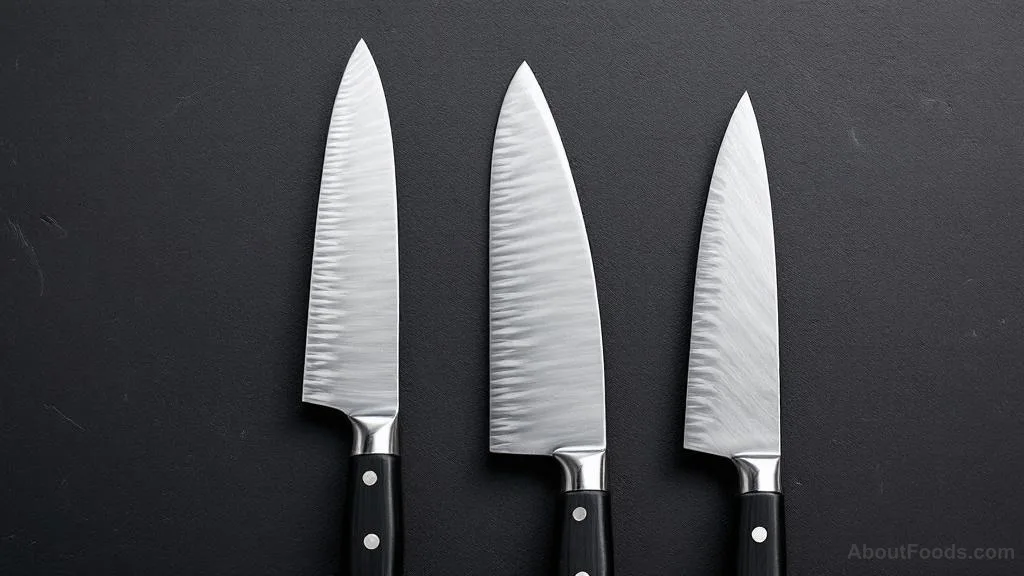
Think of it like the fermentation vessels in my kimchi cellar: different jars work better for different batches based on size, material, and what's inside. A German steel chef's knife used for chopping root vegetables needs a different edge than a Japanese carbon steel knife used for slicing fish. The 'perfect' angle is the one that balances sharpness and durability for your specific knife and tasks.
Practical Sharpening: Consistency Over Perfection
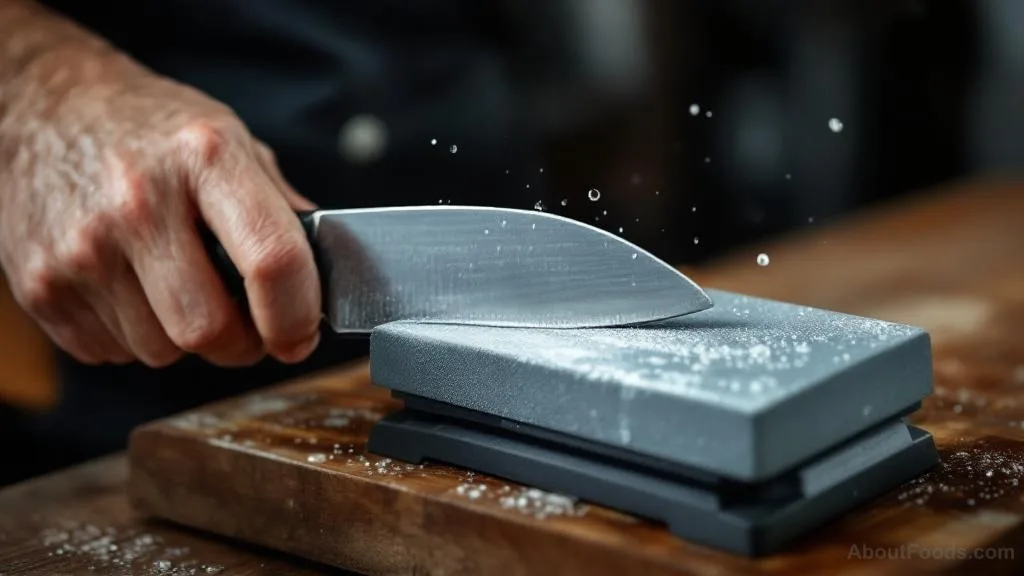
Here's the secret most experienced cooks know: consistency matters far more than the exact angle. Maintaining the same angle on both sides of the blade throughout the sharpening process creates a symmetrical edge that cuts efficiently. Whether you're at 17 degrees or 22 degrees matters less than whether you can hold that angle steadily. This is where practice and muscle memory come in—much like developing the consistent hand motions needed for perfect kimchi cuts.
Notice these are ranges, not single numbers. Within each range, you can adjust based on your specific knife and how you use it. A German chef's knife used primarily for vegetables might perform better at 20°, while the same knife used for chopping through chicken bones might need 22°. The key is observing how your knife performs and adjusting accordingly.
Common Sharpening Mistakes and How to Avoid Them
In my years teaching cooking classes, I've seen the same sharpening mistakes repeatedly. Most stem from overthinking angles rather than focusing on fundamental technique. Here are the most common issues and how to fix them.
Remember: A moderately sharp knife used confidently is better than a theoretically perfectly sharpened knife that you're afraid to use. Like kimchi that's fermented just enough for your taste rather than to some abstract standard, your sharpening should serve your cooking, not some ideal.
The Korean Perspective: Sharpness as Relationship, Not Number
In Korean kitchen tradition, which I learned from my halmeoni (grandmother), a knife isn't just a tool—it's a partner in cooking. She never measured sharpening angles; she judged by sound, feel, and result. The soft hiss of blade on stone, the resistance changing as the edge formed, the way garlic cloves surrendered without crushing. This embodied knowledge matters more than any number. Western kitchen science gives us useful concepts like edge geometry and steel hardness, but Eastern kitchen wisdom reminds us that tools serve the cook and the food. The best angle is the one that makes your knife feel like an extension of your intention.
This doesn't mean ignoring technical knowledge. It means integrating it with practical experience. Know that harder steels generally tolerate lower angles. Understand that slicing motions allow thinner edges than chopping. But then practice until sharpening becomes as natural as the wrist motion for perfect kimchi cuts. Your hands will learn what your brain overthinks.
Quick Reference: Sharpening Decision Guide
Instead of memorizing angles, use this flow to determine your approach:.
- Identify your knife's origin/style: Japanese → start 15-18°
- Western → start 20-22°
- Consider your primary tasks: Precision slicing → lower within range
- Heavy chopping → higher within range
- Evaluate your steel: Hard (feels glassy
- holds edge) → lower
- Soft (easier to sharpen
- less brittle) → higher
This approach acknowledges that the 'right' angle depends on your specific context—just as the right kimchi fermentation time depends on your cabbage, salt, temperature, and desired sourness.
FAQ: Knife Sharpening Angles Demystified
Do I need special tools to measure sharpening angles?
No. While angle guides can help beginners, they're not necessary. Focus on maintaining a consistent angle by feel. Many experienced sharpeners use their fingers as guides or simply develop muscle memory through practice.
Why do my knives dull so quickly even at recommended angles?
Quick dulling usually indicates either too low an angle for your steel/tasks, improper sharpening technique (not fully apexing the edge), or cutting on surfaces that damage edges (glass, stone, hard plastic). Try increasing your angle slightly and using proper cutting boards.
Should both sides of the blade have the same angle?
For most Western knives, yes—symmetrical edges cut straight. Some Japanese knives use asymmetrical edges (different angles each side) for specific cutting characteristics, but for beginners, symmetrical is simpler and more forgiving.
How often should I sharpen my kitchen knives?
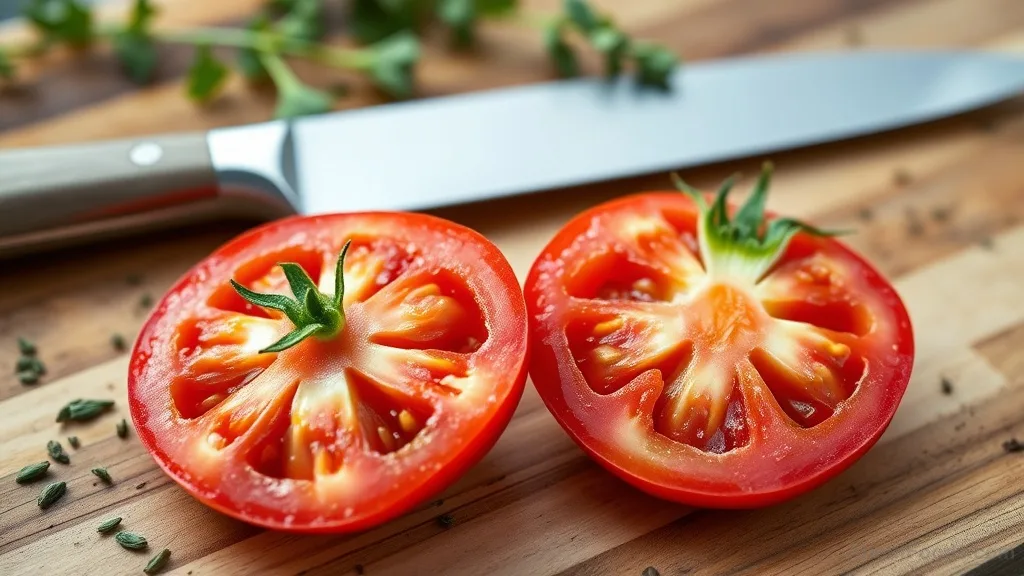
Depends on use, but generally: professional cooks daily/weekly, serious home cooks monthly, occasional cooks every few months. Regular honing with a steel maintains the edge between sharpenings. Listen to your knife—when it crushes tomatoes rather than slicing them, it's time.
Can I ruin my knife with wrong sharpening angles?
Not permanently. Unless you remove massive amounts of metal, 'wrong' angles just mean suboptimal performance. You can always re-sharpen at a different angle. The only real damage comes from extreme overheating during powered sharpening or removing so much metal you change the blade profile.
Rate this article
5 out of 5 from 21 ratings
Written by
Hyunwoo Kim
Specialises in Korean cuisineHyunwoo makes kimchi by hand in a traditional onggi pot. He speaks to it like a pet.
Describe yourself in three words: Devoted, fermented, kimchi whisperer.