Myth Busting
Why Room Temperature Eggs Are Overrated (And When It Matters)
The persistent myth that eggs must always be at room temperature for baking is largely unnecessary. This article explores the science behind egg temperature, revealing when it truly matters and when you can skip the waiting.
The Persistent Myth of Warm Eggs
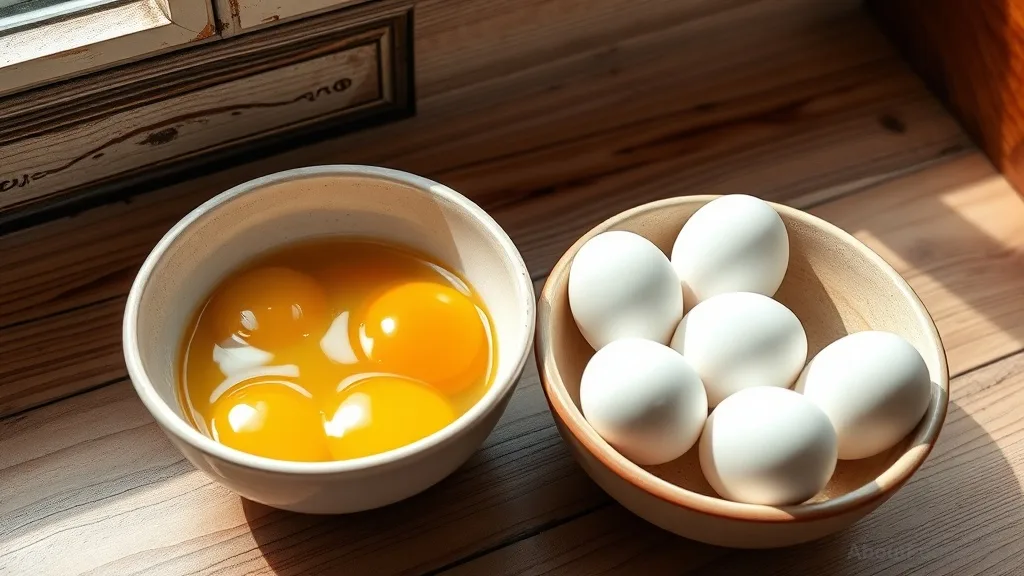
In my grandmother's kitchen in Provence, eggs lived in a ceramic bowl on the counter, absorbing the gentle warmth of the stone farmhouse. This wasn't culinary precision—it was simply how eggs were kept before refrigeration became commonplace. Today, this practice has been elevated to near-dogma in baking circles: 'Your eggs must be at room temperature.' But as someone who has spent years studying both the science and soul of cooking, I must tell you—this rule is largely overrated. Like many kitchen traditions, it contains a kernel of truth wrapped in layers of unnecessary anxiety.
The insistence on room temperature eggs stems from legitimate concerns about emulsification and aeration—processes where temperature can influence how ingredients combine. Cold eggs straight from the refrigerator can cause butter to seize when creamed with sugar, potentially creating a grainy texture. They might not whip to their full volume. But here's what most recipes don't tell you: modern kitchen tools and techniques have largely mitigated these issues, and for many applications, the temperature difference matters far less than we've been led to believe.
The Science of Egg Temperature: What Actually Changes
To understand when temperature matters, we must first understand what happens inside an egg as it warms. An egg at refrigerator temperature (about 4°C/39°F) has thicker, more viscous whites and yolks. The proteins are contracted, the fat in the yolk is more solid, and the entire structure is less fluid. At room temperature (about 21°C/70°F), the viscosity decreases significantly—the whites become more liquid, the yolk flows more freely, and the proteins are more relaxed.
- Viscosity: Cold egg whites are about 50% more viscous than room temperature whites
- Protein structure: Warmer proteins unfold more easily during mixing
- Fat dispersion: Yolk fat becomes more liquid and distributes more evenly
- Air incorporation: Warmer eggs can trap slightly more air when whipped
These physical changes affect how eggs interact with other ingredients. In emulsified mixtures like cake batters, warmer eggs blend more readily with fats. In foams like meringues, warmer whites can achieve slightly greater volume. But—and this is crucial—these differences are often marginal in home kitchen applications. The variance between a perfectly room temperature egg and one that's been out for 15 minutes is frequently smaller than the natural variation between eggs themselves.
When Temperature Truly Matters: The Exceptions
While I advocate for liberating yourself from the tyranny of the room temperature egg, there are specific situations where temperature control becomes important. These are the exceptions that prove the rule—the moments when a few degrees actually change the chemistry enough to affect your results.
Notice that even in these cases, we're not talking about perfectly calibrated room temperature. We're talking about eggs that aren't ice-cold. The difference between 15°C (59°F) and 21°C (70°F) is often sufficient. Perfectionism here is the enemy of good cooking.
When It Doesn't Matter: Free Yourself
Now for the liberation. In most everyday baking, egg temperature is remarkably forgiving. The anxiety we feel about taking eggs out an hour before baking is largely manufactured—a perfectionism that serves neither the cook nor the food.
I've conducted side-by-side tests with my pastry students for years: identical recipes, one with room temperature eggs, one with cold. In blind tastings of cookies, muffins, and even many cakes, the differences are either undetectable or attributed to normal batch variation. The emperor, as they say, has no clothes.
Practical Solutions: When You Need Warm Eggs Quickly
For those times when you do want warmer eggs—perhaps for that delicate génoise or French buttercream—there are faster, more reliable methods than letting them sit on the counter. These techniques respect both the science and the reality of spontaneous baking urges.
| Method | Time | Best For | Notes |
|---|---|---|---|
| Warm water bath | 5-10 minutes | Whole eggs for general baking | Place eggs in bowl of warm (not hot) tap water |
| Separated warming | 2-3 minutes | Egg whites for meringues | Separate first, then warm whites in a bowl over warm water |
| Microwave (carefully!) | 10-15 seconds | When you're truly in a hurry | Use low power, rotate eggs, never cook them |
| Pre-measured liquid | Instant | When recipe calls for beaten eggs | Beat cold eggs, then let sit at room temp—they warm faster when broken |
My personal favorite? The warm water bath. It's gentle, effective, and doesn't risk accidentally cooking the eggs. Place your cold eggs in a bowl, cover with warm tap water (about 40°C/104°F—comfortable to touch), and let them sit while you gather other ingredients. By the time you're ready for them, they'll be perfectly tempered.
A word of caution: never use hot water or attempt to rapidly heat eggs in the microwave without extreme care. Eggs can cook at surprisingly low temperatures, and once the proteins begin to coagulate, they won't perform properly in your recipe.
The French Perspective: Technique Over Temperature
In French culinary tradition, we focus on technique rather than rigid rules. My mentor, a third-generation pâtissier from Lyon, would say: 'It's not the temperature of the egg, but the hand that mixes it.' What he meant was that proper technique—creaming butter and sugar adequately, folding gently, understanding the texture you're aiming for—matters far more than whether your eggs spent an hour on the counter.
Consider the sabayon, that glorious French foam of egg yolks, sugar, and wine. Yes, we use room temperature eggs—but not because of dogma. Because in that specific application, with constant whisking over gentle heat, starting temperature affects how quickly and evenly the foam develops. It's a considered choice based on the specific chemistry of that dish, not a blanket rule applied to all baking.
This is the essence of true cooking knowledge: understanding why we do things, not just following instructions blindly. When you know that room temperature eggs help create a more stable emulsion in butter cakes, you can decide when that stability matters for your specific recipe. When you understand that cold eggs whip to nearly the same volume as warm ones (just slightly slower), you can adjust your technique rather than your schedule.
Frequently Asked Questions
Does using cold eggs really ruin cakes?
Almost never. In most cakes, any minor texture differences from cold eggs are undetectable once baked. The exception is delicate foam cakes where eggs provide the primary leavening.
How long do eggs need to be out to reach room temperature?
Small eggs (50g) need about 1-2 hours; large eggs (60g) need 2-3 hours. But remember: you rarely need true room temperature. Taking the chill off (15-20 minutes) is often sufficient.
Can I use eggs straight from the fridge for meringue?
Yes. Cold egg whites take slightly longer to whip and may achieve 5-10% less volume, but they're often more stable. Many professional bakers prefer cold whites for Italian meringue.
What about food safety? Are room temperature eggs safe?
In most modern kitchens, eggs at room temperature for 2-3 hours are perfectly safe. The risk comes from prolonged exposure (4+ hours) in warm environments. When in doubt, use the warm water bath method.
Do professional bakers always use room temperature eggs?
No. Many commercial kitchens keep eggs refrigerated until needed, then use quick warming methods. They focus on consistent technique and understanding each recipe's specific needs.
What's more important than egg temperature?
Proper measurement, mixing technique, oven temperature accuracy, and ingredient freshness all have greater impact on baking success than whether your eggs are exactly 21°C.
Rate this article
4.1 out of 5 from 7 ratings

Written by
Elodie Laurent
Specialises in French cuisineElodie is a Parisian who moved to the countryside to make cheese. She names her goats after French philosophers.
Describe yourself in three words: Earthy, philosophical, smells faintly of chèvre.