Myth Busting
Why You've Been Over-Salting Your Pasta Water (And Making Sauce Too Salty)
The old adage that pasta water should be 'as salty as the sea' is a culinary myth that leads to oversalted dishes. Understanding the science of salt diffusion and concentration reveals why less salt in the water creates better-balanced pasta and sauces. This article corrects the misconception with evidence-based guidance for perfect seasoning every time.
The Sea-Salt Myth: Where This Nonsense Began
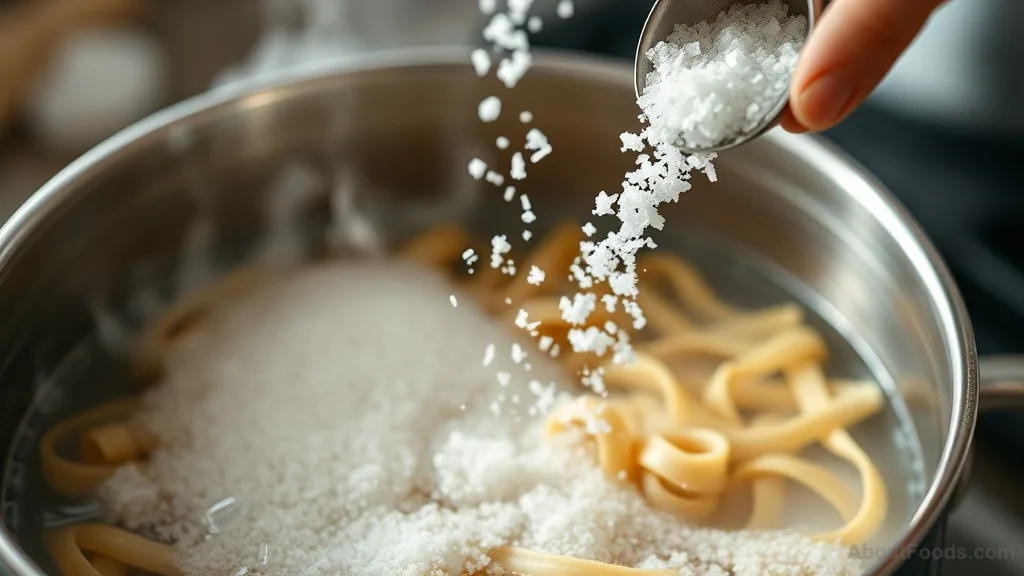
For generations, home cooks have been told—often by well-meaning but misguided nonnas and celebrity chefs alike—that pasta water must be 'as salty as the sea.' This poetic but profoundly inaccurate advice has ruined more plates of pasta than I care to count. The Mediterranean Sea contains approximately 35 grams of salt per liter of water. If you actually salted your pasta water to that concentration, you'd need about 1¾ cups of salt for a standard 4-liter pot. Your pasta would be inedible, your sauce would be a salt bomb, and your kidneys would stage a protest. The myth persists because it sounds authoritative and romantic, but it's culinary malpractice dressed up as tradition.
The origin likely stems from a misunderstanding of Italian cooking principles. Yes, pasta water should be seasoned—this is non-negotiable for any self-respecting cook. But 'seasoned' and 'seawater' are not synonyms. Proper seasoning enhances the pasta's flavor without overwhelming the delicate balance of the finished dish. The sea-salt myth represents the worst kind of culinary dogma: blindly followed, scientifically unsound, and guaranteed to produce inferior results. Let us leave this nonsense in the past where it belongs.
The Science of Salt Diffusion: How Pasta Actually Absorbs Salt
To understand why the sea-salt myth fails, we must examine what happens when pasta cooks in salted water. This isn't magic—it's simple food science based on principles of diffusion and osmosis. When dry pasta enters boiling water, two simultaneous processes occur: water hydrates the starch and gluten network, and dissolved salt ions (sodium and chloride) migrate into the pasta through diffusion. Diffusion is the movement of particles from an area of higher concentration to an area of lower concentration until equilibrium is reached.
The rate and extent of salt absorption depend on several factors: water salinity, cooking time, pasta shape and thickness, and the starch content. Thicker pasta like rigatoni absorbs salt more slowly than thin spaghetti. Fresh pasta absorbs salt differently than dried. But here's the crucial point: pasta doesn't absorb all the salt in the water—it reaches an equilibrium based on concentration. If your water is 3% salt (approaching seawater levels), your pasta will become extremely salty. If your water is 1% salt, your pasta will be pleasantly seasoned. The goal is equilibrium at a palatable concentration, not maximum salt saturation.
The Domino Effect: How Salty Pasta Water Ruins Your Sauce
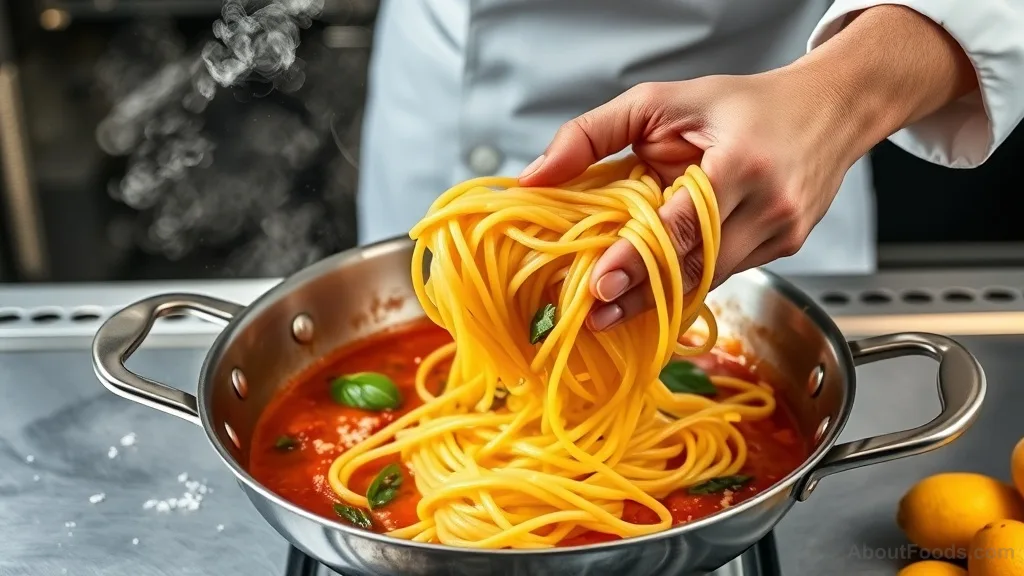
Here's where the real damage occurs. When you finish your pasta in the sauce—as any proper Italian cook does—you typically add a ladle of pasta water to help emulsify and bind the sauce. This technique is brilliant when executed correctly. The starch in the pasta water helps create a silky, cohesive sauce that clings to every strand. But if that pasta water is oversalted, you're not just adding starch—you're pouring concentrated brine directly into your carefully balanced sauce.
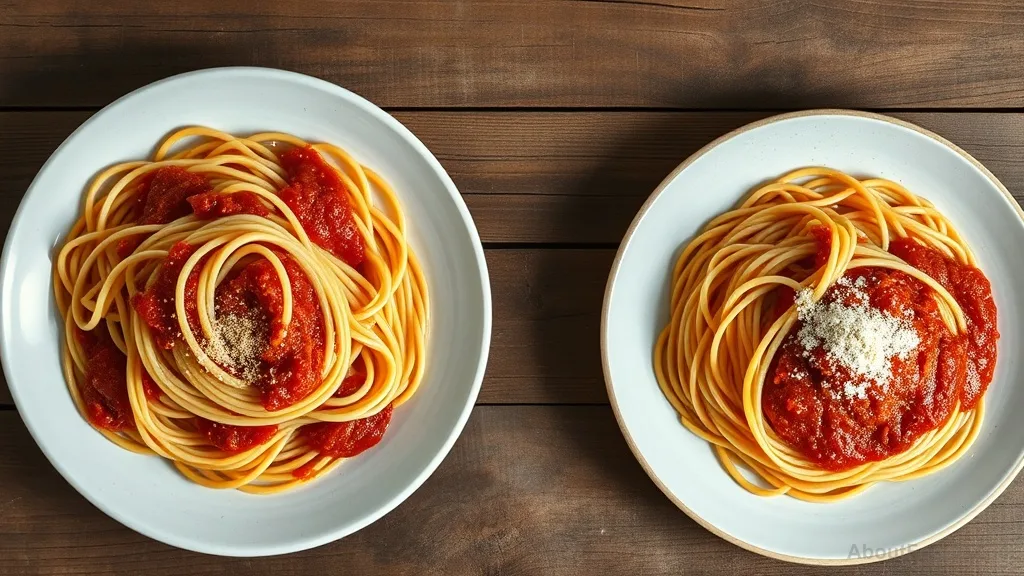
Consider the mathematics: if you use 1 cup of 3% salt pasta water in your sauce, you've added approximately 7 grams of salt. Most tomato-based sauces need only 1-2 grams of salt total for proper seasoning. You've just tripled or quadrupled the salt content before even considering the salt already in the pasta itself. The result? A sauce that tastes flat yet harshly salty, where the subtle flavors of tomatoes, garlic, herbs, and olive oil are obliterated by sodium chloride. You can't fix this by adding more ingredients—you've fundamentally unbalanced the dish at a chemical level.
- Tomato sauce loses its natural sweetness and acidity balance
- Cream sauces become one-dimensionally salty rather than rich and complex
- Pesto tastes harsh instead of fresh and herbal
- Aglio e olio becomes unpalatably salty rather than garlic-forward
- Cheese-based sauces overwhelm with salt before cheese flavor develops
The Goldilocks Principle: Finding the Perfect Salt Concentration
So what's the right amount? After extensive testing in professional kitchens and consultation with food scientists, I recommend 1% salinity for most dried pasta applications. For 4 liters of water (a standard large pot), this means 40 grams of salt, or about 2½ tablespoons of fine sea salt or kosher salt. This creates water that tastes distinctly salty but not overwhelming—think well-seasoned soup rather than ocean brine. The pasta will absorb enough salt to be flavorful on its own, while leaving the pasta water usable for saucing without destroying your dish's balance.
Adjust slightly based on your pasta and sauce: use 0.8% for delicate fresh pasta or very thin strands, or up to 1.2% for whole wheat pasta or when making very simple preparations like cacio e pepe where the pasta water plays a more prominent role. Always taste your pasta water after adding salt—it should taste like properly seasoned food, not like you're gargling seawater. Remember: you can always add more salt to the finished dish if needed, but you cannot remove excess salt once it's been absorbed.
Practical Application: A Step-by-Step Guide to Perfectly Seasoned Pasta
Let's translate this science into kitchen practice. Follow these steps religiously, and you'll never serve oversalted pasta again.
Advanced Considerations: Salt Type, Timing, and Special Cases
While the 1% rule works for most situations, several factors merit additional consideration. First, salt type matters. Table salt (fine iodized salt) is denser than kosher salt or flaky sea salt. If measuring by volume rather than weight, you must adjust: 1 tablespoon table salt ≈ 1½ tablespoons kosher salt ≈ 2 tablespoons flaky sea salt. For precision, always weigh your salt or use the same type consistently.
Second, consider your sauce's salt content. If using very salty ingredients like capers, olives, anchovies, or Parmesan cheese, reduce pasta water salinity by 20-30%. The pasta will still be properly seasoned, but the finished dish won't become overwhelmingly salty. Third, for stuffed pasta like tortellini or ravioli, use slightly less salty water (0.7-0.8%) since the filling contributes additional seasoning.
Finally, understand that salt does more than season—it slightly raises the boiling point of water (a colligative property), though this effect is minimal at culinary concentrations. More importantly, salt strengthens the gluten network in pasta, resulting in slightly firmer texture. This is why completely unsalted pasta water produces pasta that tastes flat and has inferior texture, but oversalted water creates an unpleasant eating experience. Balance, as in all things Italian, is key.
FAQ: Answering Your Pasta Salt Questions
Does salt make pasta water boil faster?
No, this is another common myth. Salt actually raises the boiling point of water very slightly (about 0.5°C/1°F for seawater concentration), meaning it takes marginally longer to reach a boil. The effect is negligible for culinary purposes—add salt for flavor, not for cooking speed.
What if I accidentally oversalt my pasta water?
If you catch it before adding pasta, simply remove some water and replace with fresh boiling water. If pasta is already cooking, your best option is to drain completely, rinse briefly with hot water (yes, I'm suggesting this sacrilege as emergency measure), and then finish in sauce with minimal or no pasta water. The pasta will be slightly compromised but salvageable.
Should I salt water differently for gluten-free pasta?
Yes, slightly. Gluten-free pasta (made from rice, corn, or legume flours) often has different absorption properties. Start with 0.8% salinity and adjust based on taste. These pastas may absorb salt more readily due to different starch structures.
Is there any truth to 'salty as the sea' for other cooking?
For blanching vegetables, a similar principle applies—water should be well-salted but not seawater-level. For boiling potatoes, use 1-2% salinity. For seafood poaching, you might approach 2-3% to mimic briny environments. But for pasta, the sea comparison is always excessive.
How does altitude affect pasta water salting?
At high altitudes, water boils at lower temperatures, which slightly slows salt diffusion. Increase salinity by about 10% (to 1.1%) if cooking above 1,500 meters/5,000 feet. The pasta will cook longer at lower temperature, allowing more time for salt absorption.
Rate this article
4.5 out of 5 from 13 ratings

Written by
Luca Lombardi
Specialises in Italian cuisineLuca Rossi is a pasta maker who uses a bronze die for texture. He is insufferable about it but correct.
Describe yourself in three words: Snobby, correct, pasta purist.