Myth Busting
Does Adding Baking Soda to Onions Make Them Brown Faster? A Chemistry Test
We investigate the claim that a pinch of baking soda speeds up onion browning. Through the lens of food chemistry, we explain why it works (but with a trade-off) and how to do it right.
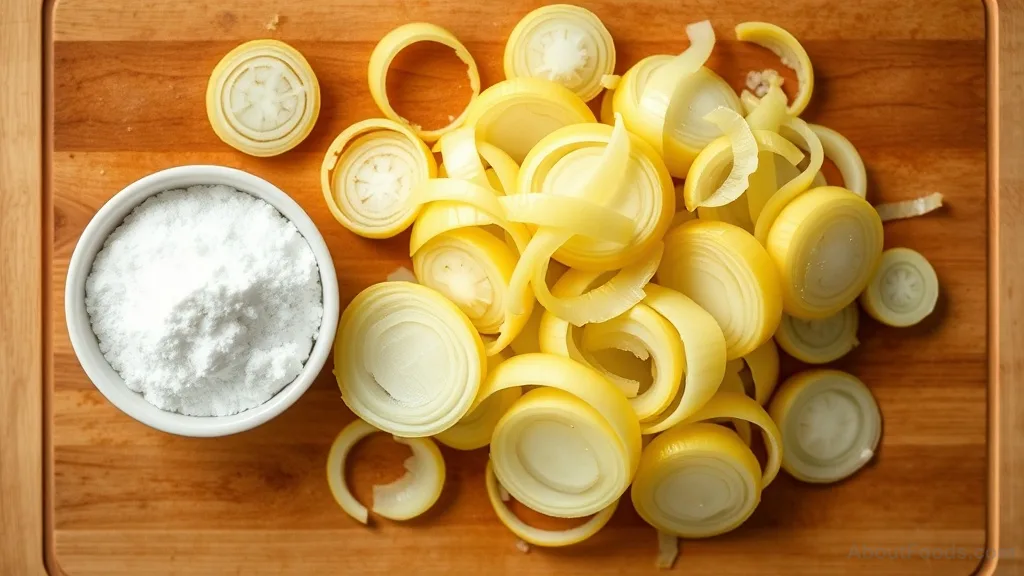
The Viral Hack in Question
You've seen the tip floating around cooking forums and TikTok: add a pinch of baking soda to your onions to get them caramelized in record time. It sounds like a magic shortcut, but does it really work? And more importantly, should you actually do it? In this article, I walk through the chemistry behind the claim and run a head-to-head test so you know exactly what you're getting into.
What Happens When Onions Brown? A Quick Chemistry Primer
Browning onions involves two main reactions. First, there's caramelization: sugars in the onions break down under heat, forming new compounds that give that deep amber color and rich flavor. Caramelization kicks in around 230-350°F (110-177°C), but it's slow. Second, the Maillard reaction—more famous for searing steaks—also contributes when amino acids and reducing sugars react at temperatures above 285°F (140°C). Both reactions thrive hotter and faster in a slightly alkaline environment.
Onions are naturally acidic, with a pH around 5.5. That acidity slows down browning because it encourages sugars to hold their structure. Baking soda (sodium bicarbonate) is alkaline, with a pH around 8.5. So the theory is: add baking soda to raise the pH, and you speed up those browning reactions.
The Test: Plain Onions vs. Baking Soda Onions
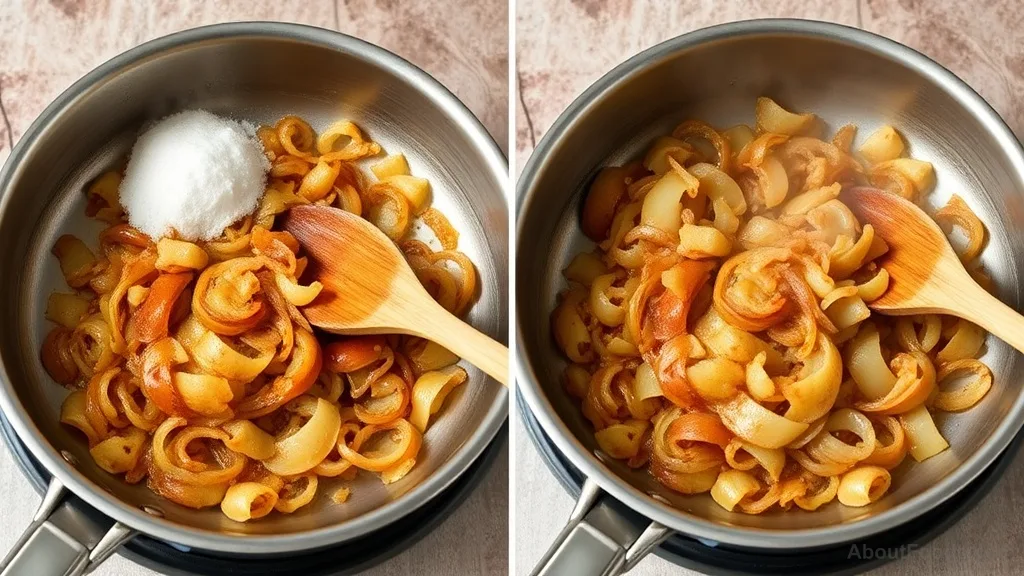
To verify the claim, I caramelized two batches of yellow onions side by side in identical pans over medium heat. For the control batch, just a tablespoon of butter and a pinch of salt. For the test batch, same butter and salt, plus 1/4 teaspoon of baking soda stirred in halfway through cooking.
After only 15 minutes, the baking soda batch was noticeably more golden brown. The plain onions were still pale. At the 30-minute mark, the test batch had reached a deep mahogany color that the control batch didn't achieve until 45 minutes. Visually, the trick undeniably works—the browning does happen faster.
Where the Hack Falls Apart: The Texture and Taste Trade-Off
But faster browning comes with compromise. The same alkaline environment that accelerates browning also breaks down onions' cell walls more aggressively. The result? Onions that are significantly mushier—almost jammy—losing that classic silky, tender-but-not-soggy texture. You can see it in the pan: the baking soda batch turned into a loose, pulpy mess, whereas the control held gentle strands.
Worse, the flavor suffered. While the control developed a sweet, rounded caramelized taste, the baking soda batch held a noticeable edge of bitterness and flatness. Part of the problem is that baking soda speeds up browning at the cost of breaking down more complex sugar structures into simpler, less flavorful compounds. Some sources even report a faint "soapy" or metallic aftertaste if you use too much.
- Soft
- mushy texture instead of silky strands
- Bitterness and less nuance in flavor
- Overcooks quickly—easy to burn if you look away
- Not suitable for recipes needing texture (e.g.
- onion topping for burgers)
Should You Ever Use This Hack? A Practical Verdict
If you're truly short on time and purely need a concentrated brown onion flavor for a sauce or soup—where texture doesn't matter—then yes, the hack can be handy. Use a light hand: no more than 1/8 teaspoon of baking soda per large onion. Add it after the onions are already softened to minimize texture damage. But if you're caramelizing for a French onion soup, or topping a burger or flatbread, skip the baking soda. You'll trade a few extra minutes for a much better texture and genuine sweet flavor.
The Science Behind the Trade-Off: Why pH Matters
Why does pH have such a dramatic effect? Browning reactions depend on the availability of reducing sugars and amino acids. In acidic conditions (like onion's natural state), the reactive groups in sugars are less available because they exist in protonated forms that don't participate as readily in browning. Raising pH deprotonates these groups, making them much more reactive. Hence, the reaction speeds up. But this same chemical openness wreaks havoc on pectin (the cell-wall glue), dissolving it and turning your delicate onion strands to mush.
In the kitchen, every chemistry hack is a trade-off. Speed versus texture. Deep color versus sweetness. Understanding that balance empowers you to decide when the shortcut is worth it—and when it isn't.
FAQ
Rate this article
No ratings yet. Be the first to rate it.

Written by
Nina Reyes
Specialises in Asian Fusion cuisineNina is a meticulous fusion cook who makes miso carbonara balanced enough to bring a tear to your eye.
Describe yourself in three words: Calm, precise, secretly competitive.