Myth Busting
Myth Busted: Why Cold Water Does Not Boil Faster Than Hot Water
It's a common kitchen saying, but does cold water really boil faster than hot? Science says no—hot water always wins. In this article, we debunk the myth with clear physics, explain why it persists, and share practical kitchen insights for home cooks.
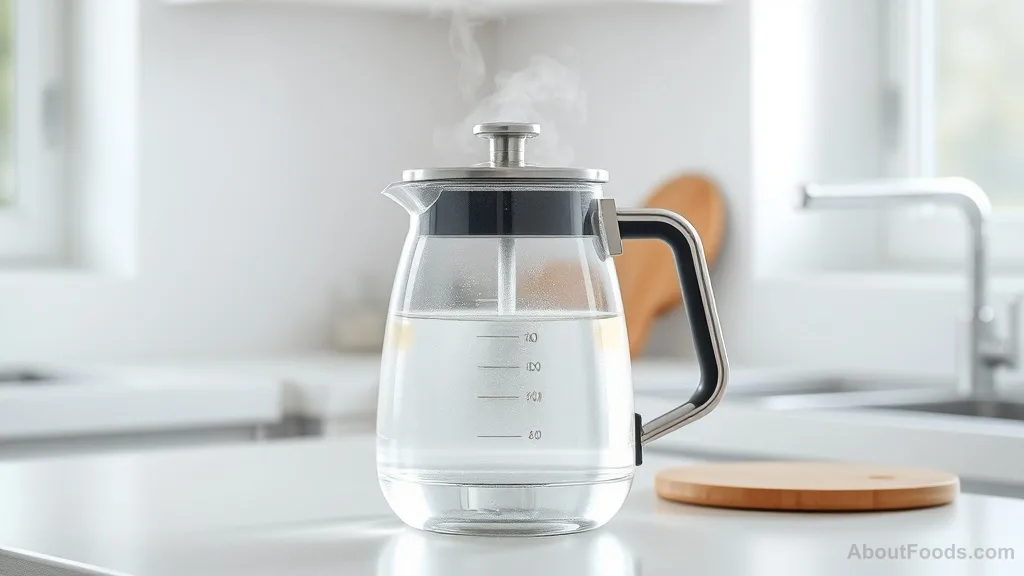
The Myth That Refuses to Die
If you've spent any time in a kitchen, you've heard it said with certainty: "Cold water boils faster than hot water." Maybe an aunt told you, or you read it in an old cookbook. The reasoning often sounds something like, "Cold water gets a head start because it's denser and absorbs heat more efficiently." Or perhaps, "Hot water is already close to boiling, so it somehow slows down." I've always found that a bit odd. You can add a single ice cube to warm tea, and feel how it chills the drink. Wouldn't adding cold to hot water simply make it take longer to boil?
Yet the persistence of this myth led me down a rabbit hole of kitchen science. And inevitably, thermometers, stopwatches, and a stovetop became my testbed. This article is about the physics of boiling, why the myth is so alluring, and why, counter to what you may recall, hot water always boils faster.
Quick Test: The Thermometer Never Lies
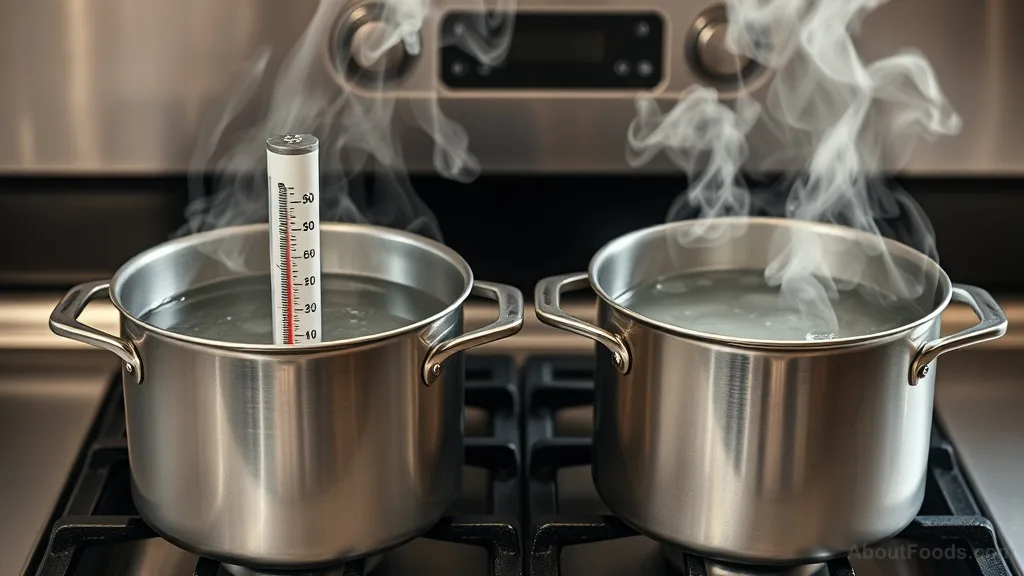
A simple experiment reveals the truth. I filled two identical pots: one with cold tap water (about 15°C) and one with hot tap water from my kitchen faucet (about 48°C). Both went onto separate burners set at the exact same heat level. I watched my timer.
The cold pot took nearly six minutes to reach a rolling boil. The hot pot started boiling in just over three minutes. That's almost double the time difference. Unless you believe the kitchen has unusual heat laws, the outcome is clear: starting hotter means finishing faster.
What the Physics Says About Heat Transfer
The core principle here is deceptively simple, yet it's often worth a walkthrough. To boil water, you must raise its temperature from where it starts to 100°C (give or take dependent on altitude). The energy required to raise 1 gram of water by 1°C is known as its specific heat capacity. For water, that constant is precisely measured: 4.184 Joules. This means every gram of water needs a certain kick of energy to warm up.
Thus, if you have identical masses of water at different starting temperatures, the pot that starts at 45°C needs many fewer Joules per degree than the pot at 10°C. Same flame, same vessel, but less total energy is required. As long as no other factor is weirdly skewed—like if cold water absorbed heat at a wildly faster rate, which it does not—hotter water will always reach 100°C first.
The rate of heat transfer from the flame to the pot and then to the water is determined by Fourier's law: it's proportional to the temperature difference. At the beginning, the cold pot technically absorbs heat slightly more rapidly because the difference with the flame is huge. However, that advantage fades quickly against the sheer size of the 'thermal debt' cold water must overcome. You might imagine chasing a bus: you sprint fast at first, but starting from a block behind still means you get left behind if the bus already left the stop.
So Where Did the Myth Come From?
Myths don't live this long without some seed of reason. I've traced whispers back to a common kitchen observation that cold water indeed seems to 'catch up' fast at the stove top. Because the temperature gap between cold water and boiling point is so huge, the initial fire under the pot feels palpably aggressive. For a short while, cold water is heating up at about twice the rate. But the total time to boil is still longer.
Another possibility arises from the Mpemba effect—a controversial idea that, under certain conditions, hot water freezes faster than cold. This is not analogous to heating. If anything, the analogous would be that hot water boils slower? That may contribute to confusion.
There's also the old 'hot water may be softer' argument. Some old-timers claim cold water has higher mineral content, but that does not affect boiling time to any perceptible degree. Tap water total dissolved solids (TDS) may shift the boiling point by less than 0.1°C. Not enough to flip the numbers.
Practical Kitchen Consequences
Should you throw away what you were taught and use hot tap water for boiling pasta or eggs? In terms of speed, yes. Boiling eggs? Start with hot water from the tap, and you'll pare minutes off the waiting time. And myth aside, there are genuine safety points: never use scary-hitting hot water for cooking with reduced heat if your water heater contamination risk colors unknown.
Water from a hot tap has typically sat in the heater, potentially leaching trace metals like lead (depending on pipes). The CDC recommends cold tap water for cooking and especially for mixtures consumed by infants. So—for flavor and most cooking—cold water may hold a very real benefit.
Then a special tip: For peak speed, you want your boil to heat as fast as possible? Fill a pot from the hot tap? But that's legally frowned upon, specifically I think, probably combine using a kettle.
FAQs: Your Myths, Answered
Is there any scenario where cold water boils faster than hot?
No. Any difference in starting temperature consistently pushes the hot water to finish faster. Experiments and physics align that it's not possible under normal kitchen conditions.
Should I use cold water for boiling pasta to make it more al dente?
No—texture differences from starting water temperature are negligible. One might delay placing the pasta until water reaches boiling (hot water might later). Still, boiling with hot water shaves minutes, cut down time.
What about the old wives’ tale: never boil cold water for tea?
That myth says just oxygen sat—traditionally the notion was dissolved oxygen impact, But modern taste in tea is mostly debated by mineral and freshness influences. Boiling any tap water reduces oxygen equally . However
Is boiling cold water safer? We heard check hot water piping.
Yes. For cooking and drinking considerer water from hot taps can contaminate systems if added. Use children warm water cold; heat water in
The Takeaway
Truth told: myths survive only because someone continues to believe interesting thought.
Sum.
Rate this article
No ratings yet. Be the first to rate it.
Written by
Mei Zhang
Specialises in Chinese cuisineMei Zhang is a dumpling artist who puts a pleat in each one to represent a year of her life. She is 32.
Describe yourself in three words: Nostalgic, artistic, slow but perfect.