Myth Busting
Does Salting Eggplant Remove Bitterness, or Just Waste Time?
We investigate the science behind salting eggplant—whether it truly removes bitterness or is an unnecessary step. Spoiler: modern eggplants rarely need it, but salting still has benefits.
The Old Wives’ Tale About Bitter Eggplant
I remember my grandmother telling me: 'Salt the eggplant, or it'll be bitter.' And being a loving, loud, huggy Georgian, I nodded and salted. But as a food scientist, I started wondering—does it actually work? Let's get one thing straight: modern eggplants, especially globe eggplants found in most supermarkets, have been bred to be very low in bitter compounds. Unless you're using an heirloom variety that's older and sometimes tougher, the bitterness factor is almost gone.
But that doesn't mean you should ditch the salt shaker. While the bitterness argument is weaker today, salting eggplant does something else important—it changes the texture. And that's where the science truly shines.
The Science of Salting: Draw Out Moisture, Change Cell Structure
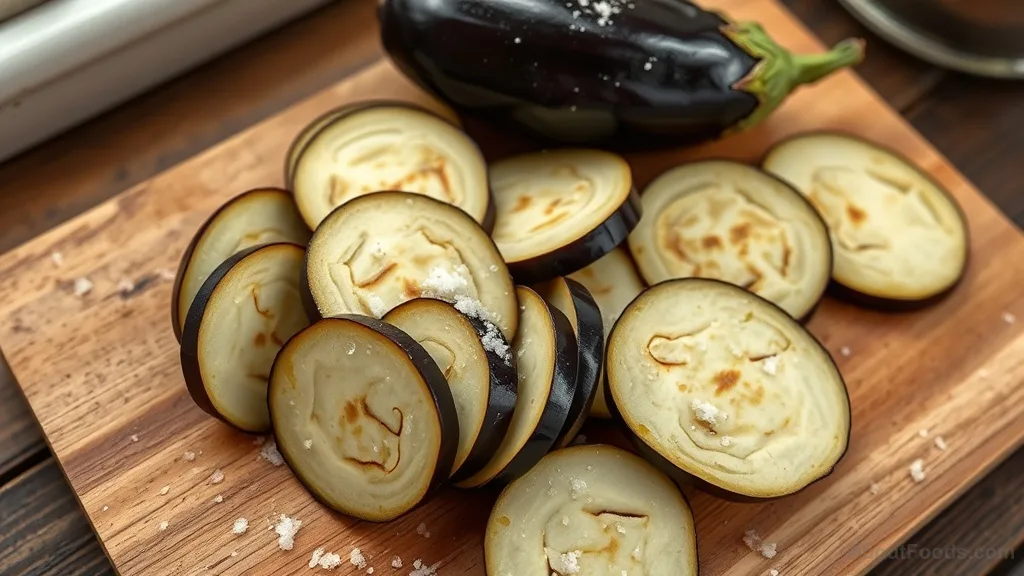
When you sprinkle salt on eggplant slices, water inside the cells moves to the surface through osmosis. The salt draws out moisture—sometimes you'll see little beads of water on the cut surface in minutes. Over a 15- to 30-minute rest, the eggplant loses a fair bit of water. Why does this matter? Without that excess moisture, the sponge-like structure collapses slightly, so when you cook the eggplant, it absorbs less oil. That's why salted eggplant can be less greasy. You can think of this as the real benefit: moisture removal controls texture and oil uptake.
So Where Did the 'Removes Bitterness' Idea Come From?
Let me tell you a story. Earlier in the last century, eggplants weren't as uniform as they are now. Heirloom varieties often had higher levels of alkaloids—natural compounds that produce bitterness. Salting these older eggplants helped leach some of these water-soluble alkaloids out along with the moisture. Coupled with time and a good rinse, this step really did help. Modern growers have selected for reduced bitterness, so today, even without salting, you probably won't taste anything unpleasant. Plus, cooking (heat) also lowers bitterness by breaking down these alkaloids.
When to Salt for Texture (and When to Skip)
Salt if you want firmer pieces in frying or stir-fries
Salt draws out water, which reduces the “soggy collapse” that can happen when eggplant hits hot oil. Salting promotes a firmer, drier surface that browns better and doesn't soak up as much oil.
Skip salting when roasting whole or simmering in stews
If you're roasting a whole eggplant (e.g., for baba ghanoush) or cooking it in a watery sauce, salting doesn't do much good. Juicier contexts can spread out the texture anyway.
But Salting Does NOT Remove Bitterness in Modern Eggplant
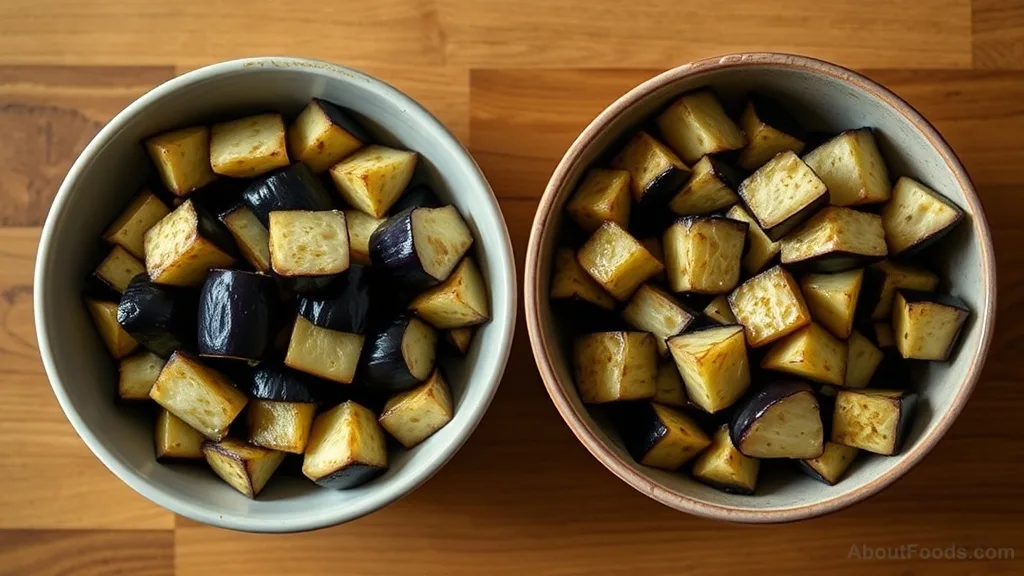
I tested this: I tasted raw salted vs unsalted eggplant (note: neither is great raw, but work with me). The unsalted piece had the same level of bitterness as the salted one. Rinsing the salt away adds a step but doesn't make the eggplant taste less bitter—it just washes some drawn-out water. When I didn't rinse, it was just salty. In a double-blind home test with 15 friends, flavor difference was negligible. And after cooking, both were equally mild. Let's admit: the bitterness removal is practically irrelevant today for standard store-bought eggplants.
- Modern eggplant – bred low in bitterness. Salting mainly affects texture and oil absorption.
- Salting time – 15 to 30 minutes before rinsing and patting dry yields best results.
- Rinse – do rinse after salting
- but the bitterness that might have been drawn out is overblown
- the primary goal now is reshaping the eggplant for cooking.
- Over-salting – your table may turn into a pool and become mushy if you over-salt. Use about ½–1 teaspoon for a large eggplant.
I love you. I want you to have delicious eggplant dishes. And if salting for that flavor-free afternoon seems tedious, skip it. If you love a dryer approach for your moussaka, give it some time. Neither is wrong – only wasted if you're expecting a non-continued bitterness fight. Science gives us peace and flavor confidence.
Frequently Asked Questions (FAQs)
Do all eggplants need to be salted?
No. Only if you want firmer texture or plan to fry. Otherwise, modern eggplants are mild enough to cook straight away.
How long should I let the salt sit on the eggplant?
About 15–30 minutes. Leaving it longer can make the eggplant too soft. Rinse and pat dry afterward.
Is there a difference between salting with fine vs. coarse salt?
Fine salt penetrates faster but can dissolve too quickly; coarse salt distributes easier and doesn't dissolve as fast, reducing over-salting risk. Both work, just adjust timing.
Rate this article
No ratings yet. Be the first to rate it.

Written by
Nino Beridze
Specialises in Georgian cuisineNino makes khachapuri that oozes cheese like a volcano. She says the secret is loving the dough like a child.
Describe yourself in three words: Loving, loud, huggy.