Myth Busting
Myth: You Must ‘Degas’ Your Sourdough Starter Every Day
Many believe that daily degassing is essential to a healthy sourdough starter. In reality, nature has its own rhythm. Here’s why gentle feeding matters more than forceful degassing.
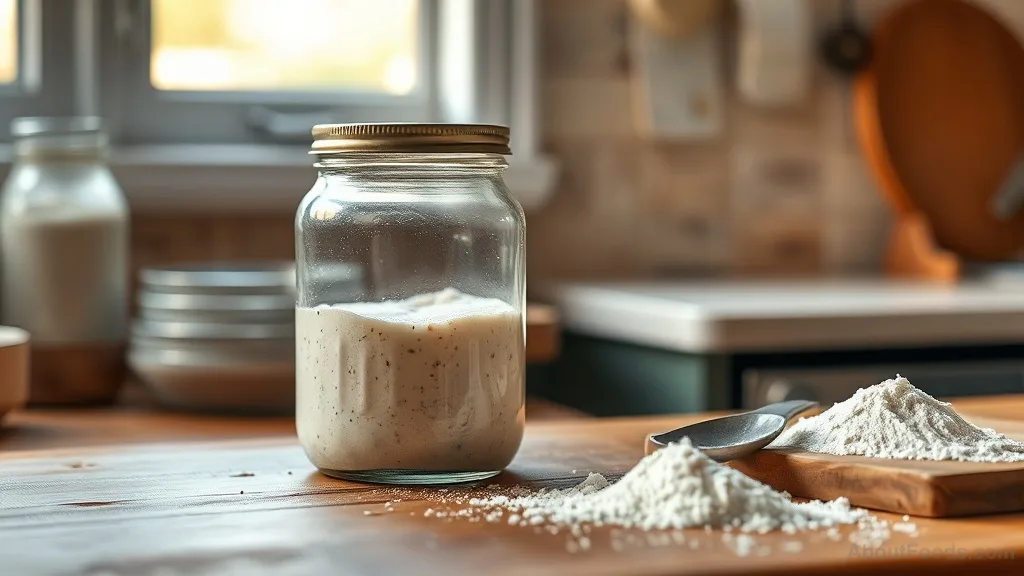

Grandma’s Little Heresy: The Origination
When I first took nurture of my own sourdough starter, I was told—with great seriousness—that you must ‘degas’ it every day, or else… the heavens would collapse. But I come from a land of grandmothers who whisper with their dough instead of wielding it. So, with dry humor and reverence for our wild little microbial tenants, let me set the record straight: No, you do not need to degas your sourdough starter daily.
This myth likely stems from old oral instructions that got tangled. Some recipe might have advised mixing the starter to redistribute yeast food, and over time that became “degas”. But the beautiful truth is that a starter is a symbiotic ecosystem of yeast and bacteria. Like any ecosystem, it does best with a gentle hand, not an aggressive policy of disruption.
The Science of Bubbles: Why Degassing Is Often Overdone
First, understand what that bubbling is: carbon dioxide gas produced by yeasts as they feast on sugars. Those bubbles are life, not laziness. When you degas—forcefully stirring or pressing—you release that precious gas and drop the airy structure. That structure is crucial for two reasons.
One: the trapped gas gradually stretches the gluten network in your starter, leading to a resilient sponge that can trap gas later in baking. Two: the oxygen-poor environment created deep inside those bubbles encourages the lactic acid bacteria to thrive, giving tang to your sourdough. That’s right—a slightly undisturbed starter actually favors a more complex flavor profile.
What Actually Needs ‘Degassing’?
When you refresh your starter, you naturally fold in air as you mix. That's sufficient. Unless you keep an oversize starter that develops a flour-y crust, a light stir before feeding is fine. Heavy degassing is like showing up at someone’s home with a vacuum cleaner before even offering them tea.
Trust the Peak, Not the Stir
What truly matters is understanding when to feed your starter. Instead of daily degassing, watch for signs: it doubles or more in volume, bubbles form a dome, the aroma switches from sweet and fruity to sour and tangy. That curve of activity is your starter saying, ‘Please feed me again.’.
Degassing might actually trick you: after pounding, the starter appears smaller and fewer bubbles, so you may think it’s time to feed—but you’ve just deflated an active culture. Feed timing is best read by peak rise and surface activity, not by a scheduled pound.
When (If Ever) Should You Degas a Starter?
If your starter has been sleeping in the fridge for weeks, it might separate (hootch on top). Yes, you could stir that layer back in—recommended to distribute the nutrients. That mild stir could be called degas, sure. But daily active starters on counter need no such treatment. Only if there’s visible mold and you need to push the healthy part away, but that’s cleaning, not feeding practice.
The bottom line: If you must touch your dough a lot, do it gently for gluten development—not for destroying perfect bubbles.
FAQ: Myths and Nuggets of Truth
Whenever you feed, watch. Feed more faithfully when the starter is alive but getting tired (peaking and starting to fall). As in life, things rise and things fall—and in sourdough, it’s better to let it be eloquent than to beat it into shape.
Rate this article
No ratings yet. Be the first to rate it.

Written by
Ines Silva
Specialises in Portuguese cuisineInes learned to cook bacalhau from her avó, who spoke only in proverbs. Ines now speaks only in proverbs too.
Describe yourself in three words: Mystical, grandmotherly wisdom with dry humor.