Myth Busting
Myth: ‘Pasta Water Should Taste Like the Sea’ — That’s Too Much Salt
You've heard the advice: salt your pasta water until it tastes like the Mediterranean. But that rule of thumb leads to overly salty pasta. We break down the science of salt in pasta water and give you the real numbers.
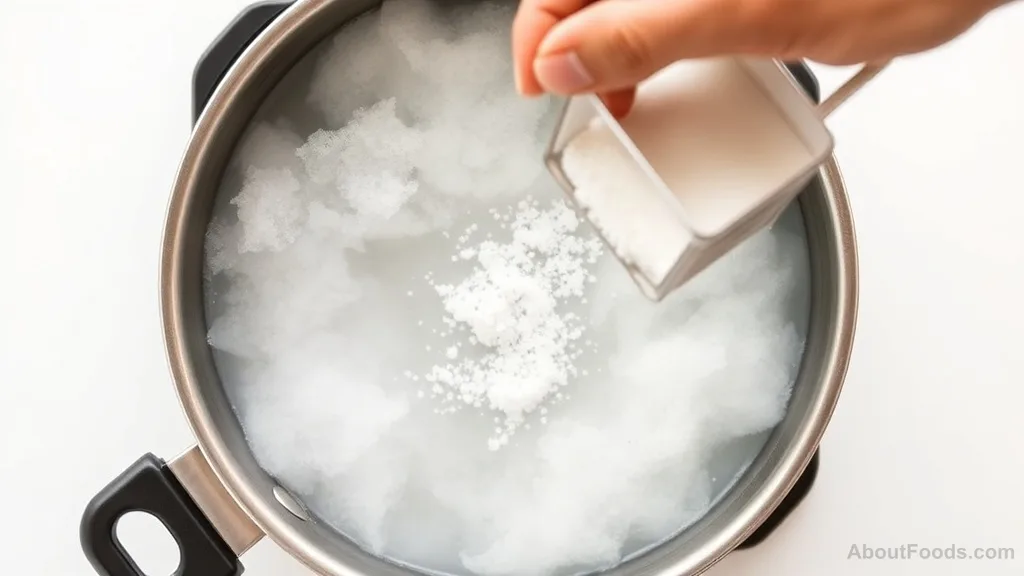
The Golden Rule — Questioned
Walk into any Italian nonna's kitchen (or even a serious chef's kitchen), and you'll hear the same chant: 'Salt your pasta water until it tastes like the sea.' It sounds poetic. It sounds ancestral. But if you actually taste seawater — which contains about 35 grams of salt per liter — and then taste your pasta water at that level, you'll realize something alarming: your pasta will come out inedibly salty.
I love salt. I put it on almost everything. But I also love pasta. And when I cook pasta in water that's as salty as the Adriatic, I end up adding more sauce, crying more tears, and wondering where it all went wrong. So let's bust this myth with some real science, real numbers, and a little bit of Italian stubbornness.
What Does 'Taste Like the Sea' Even Mean?
Seawater has an average salinity of about 3.5% (35 grams of salt per liter). The Mediterranean Sea is actually slightly saltier, averaging around 3.8%, so let's round it to 4% for our Italian context. That means for every liter (4.2 cups) of water, you'd need 40 grams of salt — that's 8 teaspoons of table salt or about 6 tablespoons of coarse sea salt.
Famous chef Mario Batali popularized this rule, saying salt until it tastes like the Mediterranean. And if you dip a spoon into the Pacific or Atlantic, sure, you'll get that ocean tang. But unless you plan to add 30 grams of salt per kilogram of pasta, your palate is lying to you — and your sodium levels will regret it.
That's your first clue: the 'sea' is around 3.5–4%. But most chefs (the smartest ones, anyway) recommend 1 to 2% salt for pasta water. That's 10 to 20 grams per liter — still a noticeable saltiness, but far from ocean levels. The sea: beautiful in a panorama, miserable in your pot.
The Science of Salt Absorption
Here's the problem: pasta absorbs water as it cooks. That water comes with dissolved salt. If you cook 100 grams of dry pasta, it will absorb about 100 grams of water (give or take). If the cooking water is 2% salt, then that absorbed 100 grams of water contributes 2 grams of salt to your pasta. Wait — but you also drain away most of the water, right?
Yes, but the pasta isn't a sponge that rinses out. The salt is locked in the starch matrix. Studies show that pasta retains 40–60% of the total salt from the cooking water after draining, depending on surface area and time. So if you start with a 3.5% brine, your al dente pasta ends up with around 1.4% salt by weight in the pasta alone. That's on par with potato chips.
Suddenly, the 'taste like the sea' advice means your pasta itself approaches salinity of olives or anchovies — without the funky protein to balance it. Add a salty sauce? Disaster. Uneatable.
A Better Rule: How Much Salt Should You Actually Use?
After sifting through the smoke of myth and nonna's opinions, the consensus from food science is clear: 1% to 1.5% salt in the water is the optimal zone. That's 1 to 1.5 tablespoons of table salt per 4 cups of water (1 liter). Or, for a full recipe: if you use 5 quarts (4.7 liters) of water to cook 1 pound of pasta, that's about 70 grams of salt at 1.5% — about 4.5 level tablespoons of Morton Salt.
But Won't It Be Too Bland?
Not at all. The pasta will taste seasoned, not salty. The water should taste like a lovely seasoned broth — clearly salty but not offensive. It should not make you pucker or recoil. If it makes your tongue tingle, you're probably perfect. If it makes your throat seize, back off.
Wait — 'table salt' versus 'kosher salt' cause different volumes (same weight!). So use a kitchen scale if you want perfection. But if you're a free-spirit home cook, one heaping tablespoon of kosher salt per gallon of water is your starting point, and taste as you go.
Objection: 'Nonna Says It Must Taste Like the Sea!'
Ah, the grand resistance. I'm Italian enough to respect tradition, but let's fact-check nonna's memory: maybe her 'sea' was less salty because she used less? Or maybe she oversalted and compensated with abundant cream sauce? It's time we separate nostalgia from biochemistry.
Traditional Italian home cooks often use about 10 grams of salt per liter — that's 1%. Their 'taste the sea' might be a mnemonic for 'this water is distinctly salty, not tepid.' Modern chefs, like Britain's Dan Doherty, have publicly denounced the 3.5% recommendation, calling it 'far too high for modern tastes.' Even America's Test Kitchen found that saltiness peaked around 1.5% for most dishes.
Variations come also from pasta type and sauce. For a cacio e pepe (rich, salty pecorino), you might reduce the water salt to 1%. For a water-based tomato sauce that's not super salty, you might bump to 2%. That's feedback, not a failure.
Visual Representation: What Different Salinities Look Like in Practice
Imagine a clean test kitchen, with three pots: one at 1% salt (10 grams per liter), one at 2% (20 g/L), and one at 3% (30 g/L). Blind taste test: my staff thought 1% was nicely seasoned, 2% was borderline, and 3% tasted like a bouillon cube that fell into the sea. At 4%, they spat it out.
Color clue: higher salt doesn't change water color; it just obliterates flavor nuance. Your pasta at 3.5% is no longer an absorbent canvas for sauce. It fights back. It cries salt in every bite. The sauce? That's just noise now.
A visual: salt crystals dissolving in steam. Think of salt pyramids being devoured by heat — the final concentration tells the story. No one's saying to cook pasta in distilled water (bleargh), but get a scale or a trusted spoon measure.
Practical Takeaways and Common Mistakes
Comparative Table: Salt Levels in Everyday Things
These numbers aren't just academic; they match taste reality. Your favorite deli ham often stays below 2% salt in the cooked product. A chip is 1–2% total weight. Don't turn your fettuccine into a chip just because an idiom told you so.
What About Pasta Water in Sauces?
This nuance: you often use a few spoonfuls of cooking water (with its starch) to loosen and emulsify the sauce. Great, but at seawater salt levels, you essentially add highly-salted salty slurry. You'd need more unsalted water or less salt elsewhere. Easier: salt at 1.5–2% and control your ingredients.
Conclusion: Just Eye-Opening Salt Advice
The sea is beautiful from a beach. In your pasta water? A pool of sodium. Instead, aim for 1–1.5% salt by weight. If that seems bland when you taste the raw water, remember: the pasta concentrates the salt. You are cooking for a final dish, not for a memory of a coastal vacation.
Let go of the myth. Embrace the scale. Your pasta will thank you by absorbing just enough salt to allow your sauce and ingredients to shine — no more, no less.
FAQ: Common Questions on Salting Pasta Water
Should I add salt after the water boils or before?
Add it to room-temperature water before heating, or as soon as it comes to a rolling boil. This ensures even dissolution and consistent penetration in the pasta.
Does adding salt help prevent sticking?
No. Chemical alteration by salt is negligible for stickiness. Stickiness is decreased by abundant water (1 gallon per pound), occasional stirring, and not rinsing starch off pasta after draining. Salt is purely flavor and protein enhancement — not a glue destroyer.
What type of salt should I use?
Kosher, sea salt, or table salt — but measure by weight (15 grams per liter = target). Diamond Crystal Kosher is about half as dense as Morton salt, so volumes differ.
Rate this article
No ratings yet. Be the first to rate it.

Written by
Luca Bellini
Specialises in Italian cuisineLuca Bianchi is a third-generation gelato maker who puts balsamic on strawberries and calls it dinner. He has no regrets.
Describe yourself in three words: Playful, sweet-toothed, a little mischievous.