Deep Dive
A Practical Guide to Deep Dive for Better Results in the Kitchen
Learn how to move beyond surface-level cooking and truly understand the science behind heat, moisture, and ingredients. This guide shows you how a deeper approach—observing, testing, and adapting—leads to consistently better results.
What It Means to Deep Dive in the Kitchen
Most of us cook by following recipes. We measure, mix, and hope for the best. But there's another way—a deeper approach where you observe, question, and understand the processes happening in your pan. Instead of chasing instructions, you chase principles. That is the deep dive: a systematic, curious, and patient exploration of how ingredients behave under heat, pressure, time, and technique.
Think of it as the difference between reading a map and learning to navigate by the stars. The map (a recipe) gets you somewhere, but the stars (understanding) let you travel anywhere. In this guide, I'll show you how to start that journey—without fancy equipment or a science lab. Just your senses, a notebook, and a willingness to slow down.
Why Observation Is Your Most Powerful Tool
Before you change anything in your cooking, learn to see what is already happening. The deep dive begins with observation: the sizzle when food hits the pan, the way bubbles form around a piece of fish, the color change in a roasting onion. These are not random events. They are signals—data points that tell you about heat transfer, moisture content, and chemical reactions.
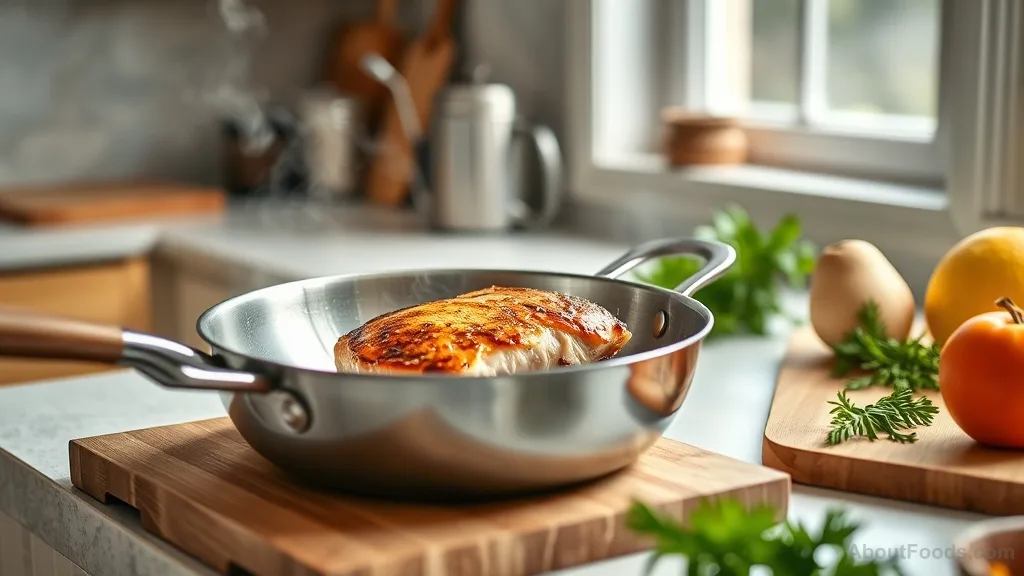
Start with a simple exercise. Next time you sear a chicken breast, watch the surface. Notice how the color changes from pale pink to white to golden brown. Listen to the sound: a gentle hiss means steady evaporation; a frantic sputter means the pan is too hot or too crowded. Touch the meat with a finger: firmness tells you doneness. These observations, when collected over time, build an internal library of cooking intuition.
I keep a small notebook in my kitchen. I note pan temperature, cooking time, visual cues, and final result. After a few entries, patterns emerge. Those patterns are the foundation of deep understanding.
The Science of Heat and Moisture
Heat and moisture are the two forces that govern nearly every cooking process. Heat drives chemical reactions; moisture moderates them. Understanding how they interact is the core of the deep dive.
- Heat transfer occurs through conduction (direct contact)
- convection (moving air or liquid)
- and radiation (infrared from a flame or broiler). Each behaves differently. Searing in a pan uses conduction
- roasting uses convection and radiation.
- Moisture acts as a temperature regulator. Wet surfaces cannot exceed 100°C (212°F) until all water evaporates. This is why steaming stays gentle and why searing requires a dry surface.
- The rate of heat transfer depends on the temperature difference. A hot pan transfers heat quickly
- a low oven transfers heat slowly. Matching the rate to your goal—fast for browning
- slow for tenderizing—is a key skill.
A useful experiment: cook two identical potatoes—one wrapped in foil (steams), one unwrapped (dry heat). Observe the difference in skin texture, interior moisture, and flavour. That is heat and moisture at work.
Experiments to Build Understanding
You don't need a lab to run experiments. The kitchen itself is a laboratory, and every meal is a trial. Here are three simple experiments that reveal foundational principles.
Perform each experiment at least twice. Note results. Over time, you will internalise these cause-and-effect relationships, and they will become second nature.
Adapting Recipes Through Understanding
Once you understand principles, recipes become flexible. You know why a recipe calls for a cold pan for certain tasks (rendering bacon fat slowly) or a hot pan for others (searing steak). You can adjust cooking times based on your equipment and ingredients.
For example, a recipe says 'cook until golden brown, about 4 minutes.' But your pan may be thinner, your stove less powerful. Instead of blindly trusting the time, you look for the colour and listen for the sound. When the surface turns golden and the sizzle becomes a steady crackle, you flip—regardless of the clock. That is adaptation born of understanding.
| Variable | What to Observe | How to Adapt |
|---|---|---|
| Pan material | Heating speed, heat retention | Thicker pans (cast iron) require lower heat; thinner pans (non-stick) need slower preheating |
| Ingredient temperature | Initial sizzle, cooking time | Cold meat directly from fridge requires longer sear; let it come closer to room temp for even cooking |
| Humidity | Evaporation rate, browning time | High humidity slows evaporation; increase heat slightly or pat ingredients drier |
| Altitude | Boiling point, cooking time | At higher altitude, water boils at lower temperature; increase cooking time for pasta and beans |
Common Mistakes and How to Overcome Them
- Relying solely on recipes: Recipes are guides
- not laws. Use them to learn techniques
- then rely on your senses.
- Overcrowding the pan: Crowding lowers pan temperature
- leading to steaming instead of searing. Cook in batches for browning.
- Ignoring carryover cooking: Food continues to cook after removal from heat. Rest meat and account for a temperature rise of 3–8°C (5–15°F).
- Not preheating properly: A pan that isn't hot enough causes food to stick and not brown. Use the water droplet test: drops should skate across the surface
- not sit and boil.
FAQ: Deep Dive Cooking
Final Thoughts: The Path of the Deep Diver
Deep diving in the kitchen is not about perfection. It's about connection—to your ingredients, to the heat, to the process. It requires patience and humility, because every ingredient behaves slightly differently. But the reward is freedom: the ability to walk into any kitchen and cook with confidence, adapting to what you see and feel.
Start small. Choose one dish you cook often and begin observing it as if for the first time. Note the sounds, smells, and textures. Run a simple experiment. Keep a notebook. Over time, you will develop a relationship with cooking that is not about following rules, but about understanding them. That is the deep dive. That is how you get better results in the kitchen.
Rate this article
No ratings yet. Be the first to rate it.

Written by
Anders Lindberg
Specialises in Scandinavian cuisineAnders is a forager who puts lingonberries on everything, including pizza. His neighbors have filed a complaint.
Describe yourself in three words: Stoic, nature-obsessed, quietly intense.