Myth Busting
The Truth About Activated Charcoal in Food: Health or Hype?
Activated charcoal has made its way into juices, ice cream, and even pizza dough. But does it live up to the detox hype? This article explains the science behind activated charcoal, its effects on digestion and nutrient absorption, and why top chefs are debating its place in the kitchen.

What Is Activated Charcoal?
Activated charcoal is not the same as the stuff in your BBQ grill. It's produced by heating carbon-rich materials – like coconut shells, wood, or peat – at very high temperatures with a gas that creates a porous internal structure. This process ‘activates’ the charcoal, increasing its surface area dramatically. A gram of activated charcoal can have a surface area equivalent to a football field. That's why it's so good at trapping things.
How Does It Work in Your Body?
In medical settings, activated charcoal is used as an emergency treatment for certain overdoses or poisonings. It works by binding to toxins in the stomach and intestines before they can be absorbed into the bloodstream. The charcoal–toxin complex is then eliminated in stool. But here's the key: this only works if the charcoal is taken very soon after the poison is swallowed. Plus, it's not selective. It will bind to anything it comes across – including nutrients from your food.
The Problem with Detox Claims
Most 'detox' claims around activated charcoal are exaggerations. Your liver and kidneys are already highly efficient at processing and removing toxins. There's very little scientific evidence that adding a tablespoon of charcoal to your smoothie or burger will 'detoxify' your body. In fact, it might work against you: studies show that activated charcoal can interfere with the absorption of vitamins and minerals, as well as prescription medications. If you regularly eat charcoal-sprinkled food, you could be reducing your intake of valuable nutrients.
Cooking with Activated Charcoal: What You Need to Know
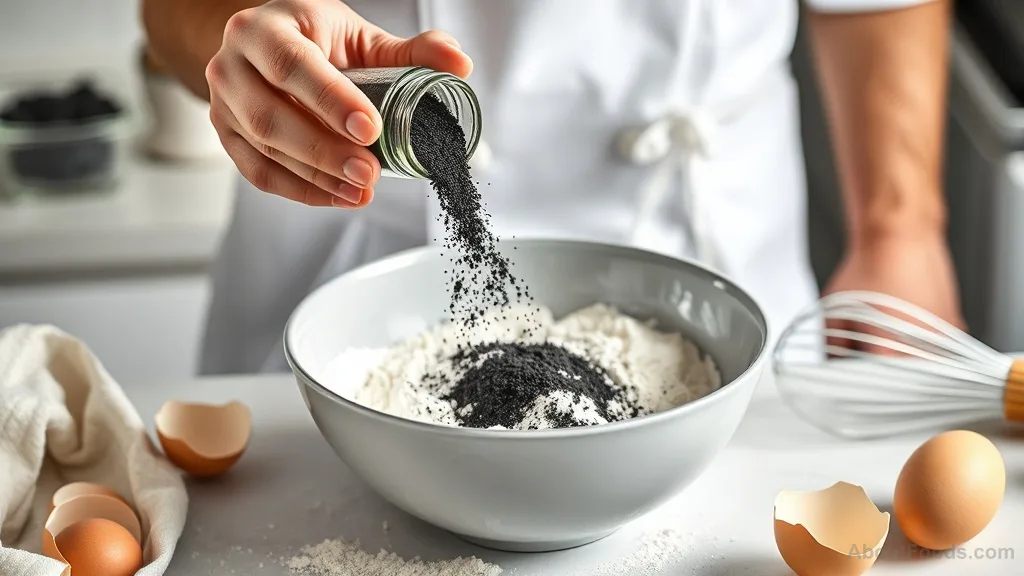
When added to food, activated charcoal does little more than turn it black. It has a slightly gritty texture and a neutral to slightly bitter taste. Chefs use it to create dramatic visual effects, but the health halo around it is undeserved.
One known risk in kitchens is contaminated charcoal. Some lower-quality products have been found to contain impurities like heavy metals. Always buy food-grade activated charcoal from a reputable source, and use it sparingly – it's a coloring agent, not a health supplement.
When Is Activated Charcoal Actually Used Medically?
In hospitals, activated charcoal is given only under strict supervision for specific types of poisoning, usually within an hour of ingestion. It's not something to self-prescribe with food. For everyday detoxing, the best 'detox' you can do is eat a varied diet rich in fiber, drink plenty of water, and let your liver do its job.
- Medical activated charcoal is dosed based on body weight (e.g.
- 50–100 grams for adults).
- It's mixed with water and administered as a slurry
- not part of a meal.
- It does not absorb alcohol
- heavy metals
- or certain corrosive substances well.
- It can cause side effects like vomiting and constipation.
Verdict: Should You Cook with Activated Charcoal?
Aesthetic wise, it's fun for Halloween treats or black burgers. But don't confuse the black color with health benefits. If you enjoy the look and taste, the occasional use is probably not harmful – provided you aren't relying on that meal for key nutrients or taking medication that could be affected. But the idea of charcoal as a 'detox' superfood is hype. Best advice: save your money, let your body do its natural cleansing, and use real veggies and herbs for color and flavor.
Frequently Asked Questions
Does activated charcoal actually remove toxins from your body?
Only in a medical emergency when given very quickly after a poisoning. In normal food amounts, it does not remove everyday 'toxins' or improve health.
Can eating activated charcoal interfere with medications?
Yes. Charcoal can bind to medications in your stomach, preventing them from being absorbed. It may reduce the effectiveness of birth control pills, antidepressants, and other drugs.
Is food-grade activated charcoal safe to eat?
Small amounts in occasional foods are likely safe. However, large or frequent consumption can block nutrient absorption. Always consult a doctor if you have health concerns.
Why do some trendy restaurants add charcoal to food?
Mainly for visual impact – it turns food intensely black. It's a novelty that attracts social media attention but generally doesn't improve flavor or nutrition.
Should I buy activated charcoal to add to smoothies?
It's your choice, but don't expect detox benefits. A handful of spinach or kale will provide real nutrients. Use charcoal only if you enjoy the aesthetic kick.
Rate this article
No ratings yet. Be the first to rate it.

Written by
Kasun Perera
Specialises in Sri Lankan cuisineKasun makes kottu roti on a griddle using two metal blades. The sound alone sells out his food truck.
Describe yourself in three words: Rhythmic, energetic, noisy cook.