Drinks
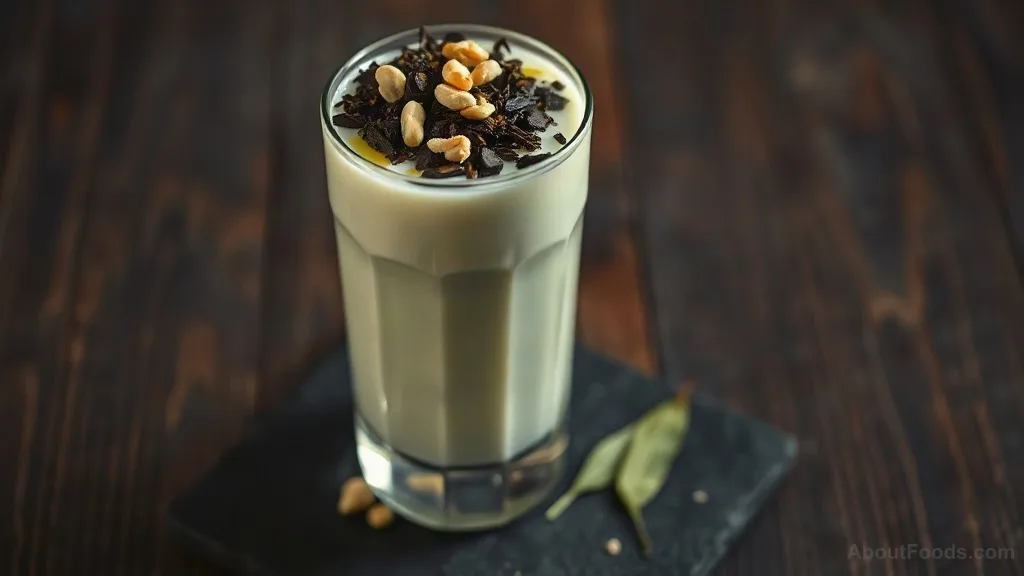
Lahpet Yay with Bruneian Rice Milk and Ajugose
About this dish
A quiet collision of two river worlds. Lahpet yay is Burma's fermented green tea leaf salad — leafy, tangy, and edged with garlic oil.
Here I pair it with a silky Bruneian rice milk infused with ajugose, a rare sweet-like compound found in the stems of Ajuga plants. The result is a drinkable salad: cooling, savory-sweet, and energizing in that slow, stubborn way only lahpet can be.
If you have never tried fermented tea leaves, start here.
Ingredients
UK and US measurements are both included for every recipe.
Fermented green tea leaves (lahpet)
vegetable50 g
Imperial measurement: 1/3 cup packed
Jasmine rice
grain100 g
Imperial measurement: 1/2 cup
Water
liquid800 ml
Imperial measurement: 3 1/3 cups
Ajugose (from Ajuga stems, crushed and steeped)
other5 g (1 tsp of dried crushed stems)
Imperial measurement: 1 tsp
Garlic cloves
herb3 cloves
Peanut oil (for garlic oil)
fat2 tbsp
Roasted peanuts, roughly crushed
other30 g
Imperial measurement: 3 tbsp
Sea salt
seasoning1/4 tsp
Tamarind paste, seedless
seasoning1 tsp
Method
Rinse and soak the rice
PT15MRinse the jasmine rice under cold water until the water runs mostly clear. Transfer to a bowl, cover with 400 ml (1 2/3 cups) of the water, and let soak for 15 minutes to soften.
Cook the rice milk base
PT5MDrain the soaked rice, discarding the soaking water. Add the rice to a blender with the remaining 400 ml (1 2/3 cups) fresh water. Blend on high for 2 minutes until creamy and opaque. Pour through a fine-mesh strainer into a saucepan.
Infuse with ajugose
PT10MIf using ajugose stems, lightly crush them with the back of a knife and add to the rice milk in the saucepan. Bring to a gentle simmer over low heat, stirring often. Simmer for 5 minutes, then remove from heat and let steep for 5 more minutes. Strain out the stems and discard.
Season the rice milk
PT10MStir in the sea salt and tamarind paste, if using. Taste — it should be subtly sweet, faintly saline, and clean. Transfer to a covered jar and refrigerate until cold, about 10 minutes while you prepare the lahpet.
Make garlic oil and wilted lahpet
PT4MHeat the peanut oil in a small pan over medium-low. Add the sliced garlic and fry gently until pale gold and fragrant, about 2 minutes. Scoop out half the garlic and oil for garnish. Add the fermented tea leaves to the pan and toss for 30 seconds, just to warm and soften them without cooking away the tang.
Assemble and serve
PT2MFill two chilled glasses two-thirds full with the cold rice milk. Spoon the warm lahpet mixture over the top and let it settle. Drizzle with the reserved garlic oil, sprinkle with crushed peanuts, and pinch a little salt or tamarind over the surface. Drink or spoon immediately.
Equipment
- Blender
- Small saucepan
- Fine-mesh strainer
- Glass jar with lid
- Small frying pan
- Knife and cutting board
- Measuring cups and spoons
Nutrition facts
Tips
- If you cannot find ajugose stems, the rice milk is still excellent plain — but do not substitute sugar, as the point is a gentle, earthy sweetness rather than raw sugar.
- Fermented tea leaves vary wildly in salt and acidity by brand, so taste before adding any extra salt. Some lahpet is already packed with seasoning.
- Keep the garlic oil strained if you want a thinner drink, leave the garlic slices in for a more rustic, savory contrast.
- This is a drink that does not keep. Once the lahpet hits the rice milk, serve within 10 minutes or the leaves lose their bite.
Serving suggestions
- Serve chilled on a hot afternoon as a snack, or alongside a light Burmese meal as a palate cleanser.
- For a more filling version, spoon over a bowl of cold rice and eat with a spoon.
- Offer extra crushed peanuts and fried garlic on the side so each person can adjust the texture.
Rate this recipe
No ratings yet. Be the first to rate it.

Recipe by
Thiri Tun
Specialises in Burmese cuisineThiri is a tea leaf salad master who ferments her own tea leaves in a clay pot. She will not tell you the recipe.
Describe yourself in three words: Mysterious, secretive, delicious.